Beginner-Friendly Tarot Guide

Tarot Card Meanings for Beginners: All 78 Cards Explained

You do not need to memorize 78 definitions to understand tarot. Start with the card’s main idea, then consider your question, where the card appeared in the spread and whether it was upright or reversed. This guide gives you the traditional meaning of every card in plain language and helps you connect that meaning to a real reading without treating tarot as a fixed prediction.

Find a Tarot Card or Theme

Know the card you drew? Type its name. You can also search a theme such as love, work, boundaries, change, communication or money.
Showing all 78 tarot cards.

Start Here: How to Understand Any Tarot Card

A tarot card is easier to understand when you stop asking “What does this card always mean?” and instead ask “What part of this card’s theme fits this question and this position?” The same card can feel very different in a relationship spread, a career spread or a daily reading.

1

Find the Core Message

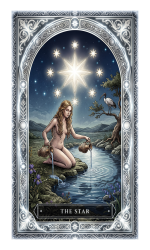
Begin with the card’s broad theme. The Star, for example, is usually connected with hope, renewal and rebuilding confidence.

2

Look at the Question

Ask what the theme means in the area you care about. Hope in love is different from hope in a job search.

3

Check the Spread Position

A card in “Challenge” is read differently from the same card in “Guidance,” “Your Energy” or “Opportunity.”

4

Notice Upright or Reversed

Reversed does not simply mean “bad.” It can suggest a theme that is blocked, delayed, internalized, resisted or overdone.

Simple example: The Chariot generally points to direction and determination. In a career reading it may highlight focused progress. In a love reading it may raise questions about whether two people are moving in the same direction. In a daily reading it may simply suggest choosing one priority and following through.

Why Tarot Meanings Change by Reading Type

Our free tools use the same 78-card Gilded Eclipse deck, but each tool asks a different kind of question. That changes how a card should be interpreted. Use the general meaning below as the foundation, then apply the context of the reading.

Daily Tarot

Focus on what the card suggests you notice, practice or approach differently today. Daily meanings are usually practical and short-term.
Browse Daily Tarot meanings → · Try the Daily Tarot Reading →

Love Tarot

Focus on your own needs, patterns, communication, boundaries and the relationship dynamic. A card does not prove another person’s private thoughts.
Browse Love Tarot meanings → · Try the Love Tarot Reading →

Career Tarot

Look at work, opportunities, obstacles, skills, practical choices and direction. Pentacles may feel especially literal here, but every suit can matter.
Browse Career Tarot meanings → · Try the Career Tarot Reading →

Yes or No Tarot

Use the card as a directional lean rather than a guarantee. The important part is why the card leans Yes, Maybe, Wait or No for the question asked.
Browse Yes or No meanings → · Try the Yes or No Tarot Reading →

Past, Present & Future Tarot Card Meanings

In a Past → Present → Future spread, the card itself keeps its core meaning, but the position tells you when to apply it. This is one of the simplest ways to make a three-card reading easier to understand.

Past

Read the card as something that already happened, a pattern you learned, or an earlier experience that may still affect the situation now.

Present

Read the card as what is most active now: your current situation, feelings, choices, pressure, opportunity or point of attention.

Future

Read the card as a possible next direction if the current pattern continues. It is not a fixed prediction; choices and new information can change what happens next.

If the Card Is Reversed

Keep the same Past, Present or Future position, but consider whether the card’s theme is delayed, blocked, internalized, resisted or needs a different approach.

Example: The Fool in the Past can point to an earlier new beginning or risk. In the Present it can show that you are entering something unfamiliar now. In the Future it can suggest a new opportunity or fresh start may be opening next.

The Tarot Deck in Plain English

You can understand a surprising amount of tarot by knowing what the five main groups represent. You do not need to memorize every card before using the deck.

Major Arcana
Bigger themes, turning points, identity, values and lessons that can feel more significant than an everyday event.
Wands
Action, motivation, ambition, creativity, attraction, momentum and how you use your energy.
Cups
Emotions, relationships, connection, intuition, care and how feelings are expressed or received.
Swords
Thoughts, communication, truth, conflict, decisions, mental pressure and the stories you tell yourself.
Pentacles
Work, money, resources, routines, the physical world, practical effort and long-term stability.
Court Cards
Pages, Knights, Queens and Kings can describe a person, a role, a behavior style or a quality you are being asked to develop.

A Quick Guide to the Numbers

The numbered Minor Arcana cards often follow a loose progression. The suit tells you the life area; the number helps describe the stage of that energy.

  • Ace: beginning, opportunity or new potential
  • Two: choice, balance, partnership or tension between options
  • Three: growth, expression, cooperation or early results
  • Four: stability, structure, pause or holding a position
  • Five: challenge, disruption, friction or adjustment
  • Six: movement, support, recovery or rebalancing
  • Seven: assessment, testing, strategy or uncertainty
  • Eight: movement, skill, restriction or concentrated effort
  • Nine: culmination, resilience, independence or nearing completion
  • Ten: completion, consequence, fulfillment or carrying a theme to its limit

How to Use the Upright and Reversed Meanings Below

Read the upright meaning first, even when your card is reversed. That tells you the card’s basic territory. Then use the reversed meaning to ask what may be blocked, delayed, internalized, avoided or overexpressed. A reversal is a modifier, not a completely different card.

After that, return to your actual question. If you drew a card in one of our free tools, pay attention to the position name shown with the card. “Challenge,” “Guidance,” “Connection” and “Opportunity” are interpretation instructions, not just labels.

Tarot is a symbolic and spiritual reflection practice. Card meanings cannot verify hidden facts, another person’s private thoughts or guaranteed medical, legal, financial, relationship, employment or other future outcomes.

Major Arcana Meanings

The 22 Major Arcana cards are commonly read as broad archetypal themes involving identity, values, change, choices and major life lessons.

The Fool

Upright meaning: new beginnings, openness, spontaneity and stepping into the unknown.

Reversed meaning: hesitation, recklessness, delayed beginnings or fear of taking a first step.

Question to ask yourself: What new possibility deserves curiosity without ignoring practical risks?

The Magician

Upright meaning: initiative, skill, focus, communication and using available resources.

Reversed meaning: scattered effort, manipulation, self-doubt or skills that are not being used well.

Question to ask yourself: Which ability or resource can you use more deliberately?

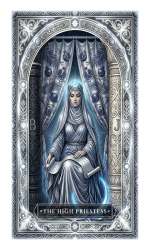
The High Priestess

Upright meaning: intuition, inner knowledge, patience, mystery and quiet observation.

Reversed meaning: disconnection from intuition, secrecy, confusion or information that remains hidden.

Question to ask yourself: What do you sense, and what still needs evidence or time?

The Empress

Upright meaning: nurturing, creativity, abundance, comfort and growth.

Reversed meaning: overgiving, creative blocks, dependence or neglect of your own needs.

Question to ask yourself: Where can care and creativity grow without becoming overextension?

The Emperor

Upright meaning: structure, authority, boundaries, stability and responsibility.

Reversed meaning: rigidity, control, weak boundaries or conflict with authority.

Question to ask yourself: What structure would support you without becoming too controlling?

The Hierophant

Upright meaning: tradition, teaching, shared values, institutions and established guidance.

Reversed meaning: questioning convention, rigid beliefs or choosing a less traditional path.

Question to ask yourself: Which traditions support you, and which deserve reconsideration?

The Lovers

Upright meaning: connection, values, attraction, alignment and meaningful choice.

Reversed meaning: misalignment, difficult choices, strained connection or values in conflict.

Question to ask yourself: Which choice best matches your values rather than only your immediate feelings?

The Chariot

Upright meaning: determination, direction, momentum, discipline and self-control.

Reversed meaning: loss of direction, competing impulses, aggression or stalled progress.

Question to ask yourself: What needs to be brought under one clear direction?

Strength

Upright meaning: courage, patience, compassion, resilience and quiet confidence.

Reversed meaning: self-doubt, depleted confidence, suppressed anger or difficulty regulating reactions.

Question to ask yourself: What would steady courage look like here?

The Hermit

Upright meaning: reflection, solitude, wisdom, searching and inner guidance.

Reversed meaning: isolation, withdrawal, avoidance or difficulty hearing your own perspective.

Question to ask yourself: Do you need useful solitude, or are you avoiding connection?

Wheel of Fortune

Upright meaning: change, cycles, turning points, timing and shifting circumstances.

Reversed meaning: resistance to change, repeated patterns, delays or feeling caught in a cycle.

Question to ask yourself: What is changing that you cannot fully control, and what can you influence?

Justice

Upright meaning: fairness, truth, accountability, consequences and balanced judgment.

Reversed meaning: bias, avoidance of accountability, unfairness or incomplete information.

Question to ask yourself: What facts, responsibilities and consequences need an honest review?

The Hanged Man

Upright meaning: pause, surrender, patience, perspective and intentional waiting.

Reversed meaning: stagnation, needless delay, resistance or sacrifice without a clear purpose.

Question to ask yourself: What could become clearer if you stopped forcing movement?

Death

Upright meaning: endings, transition, release, transformation and making space for change.

Reversed meaning: resistance to endings, prolonged transition, fear of change or difficulty letting go.

Question to ask yourself: What may need to end or change form so something else can develop?

Temperance

Upright meaning: balance, moderation, integration, patience and measured adjustment.

Reversed meaning: imbalance, excess, poor pacing or difficulty combining competing needs.

Question to ask yourself: Where would moderation or a better blend improve the situation?

The Devil

Upright meaning: attachment, temptation, compulsive patterns, material pressure and restriction.

Reversed meaning: recognizing an unhealthy pattern, loosening attachment or reclaiming choice.

Question to ask yourself: What feels binding, and where do you still have agency?

The Tower

Upright meaning: disruption, revelation, instability, sudden change and challenged assumptions.

Reversed meaning: avoided change, delayed disruption, fear of upheaval or rebuilding after shock.

Question to ask yourself: Which assumption or structure may no longer be stable?

The Star

Upright meaning: hope, renewal, inspiration, openness and restoration.

Reversed meaning: discouragement, disconnection from hope, unrealistic expectations or slow recovery.

Question to ask yourself: What would realistic hope look like in action?

The Moon

Upright meaning: uncertainty, intuition, ambiguity, imagination and hidden feelings.

Reversed meaning: confusion beginning to clear, ignored intuition, fear or distorted perception.

Question to ask yourself: What is known, what is felt, and what is still uncertain?

The Sun

Upright meaning: clarity, vitality, confidence, warmth and optimism.

Reversed meaning: temporary doubt, delayed joy, overconfidence or difficulty seeing the positive.

Question to ask yourself: Where is greater clarity available if you look directly?

Judgement

Upright meaning: review, awakening, accountability, reflection and a decisive call.

Reversed meaning: self-criticism, avoidance of a decision, doubt or difficulty learning from the past.

Question to ask yourself: What past experience is asking to be reviewed rather than repeated?

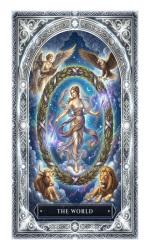
The World

Upright meaning: completion, integration, accomplishment, closure and a wider perspective.

Reversed meaning: unfinished business, delayed completion, lack of closure or difficulty recognizing progress.

Question to ask yourself: What is complete enough to acknowledge, and what remains unfinished?

Suit of Wands Meanings

Wands are traditionally associated with action, motivation, creativity, ambition, conflict and the use of personal energy.

Ace of Wands

Upright meaning: inspiration, creative spark, initiative and new energy.

Reversed meaning: delayed starts, low energy, scattered enthusiasm or a spark that needs direction.

Question to ask yourself: What idea deserves a practical first step?

Two of Wands

Upright meaning: planning, future options, personal power and choosing a direction.

Reversed meaning: fear of the unknown, weak planning, limited options or reluctance to commit.

Question to ask yourself: Which option becomes clearer when you consider the next two steps?

Three of Wands

Upright meaning: expansion, progress, foresight and waiting for results.

Reversed meaning: delays, narrow planning, frustration with progress or expectations that need adjustment.

Question to ask yourself: What progress is already visible, and what still requires patience?

Four of Wands

Upright meaning: celebration, stability, community, milestones and belonging.

Reversed meaning: tension around home or community, delayed celebration or unstable foundations.

Question to ask yourself: What deserves to be acknowledged or strengthened with others?

Five of Wands

Upright meaning: competition, friction, differing agendas and energetic conflict.

Reversed meaning: conflict avoidance, unresolved tension, internal competition or a need to de-escalate.

Question to ask yourself: Which disagreement is productive, and which is only consuming energy?

Six of Wands

Upright meaning: recognition, confidence, achievement and visible progress.

Reversed meaning: self-doubt, delayed recognition, dependence on approval or a private win.

Question to ask yourself: Whose approval matters, and what achievement can you recognize yourself?

Seven of Wands

Upright meaning: defending a position, persistence, boundaries and conviction.

Reversed meaning: feeling overwhelmed, defensive exhaustion, weak boundaries or giving up too soon.

Question to ask yourself: What boundary is worth maintaining, and what battle is not?

Eight of Wands

Upright meaning: speed, movement, messages, momentum and quick developments.

Reversed meaning: delays, crossed messages, rushed decisions or energy moving in too many directions.

Question to ask yourself: What needs a clear message before momentum increases?

Nine of Wands

Upright meaning: resilience, caution, perseverance and protecting what matters.

Reversed meaning: fatigue, hypervigilance, defensiveness or difficulty trusting after strain.

Question to ask yourself: How can you protect yourself without treating every situation as a threat?

Ten of Wands

Upright meaning: burden, responsibility, effort and carrying too much.

Reversed meaning: overload, delegation, releasing unnecessary weight or refusing one more burden.

Question to ask yourself: What responsibility can be shared, simplified or set down?

Page of Wands

Upright meaning: curiosity, enthusiasm, exploration and encouraging news.

Reversed meaning: restlessness, inconsistent effort, immature reactions or ideas without follow-through.

Question to ask yourself: What can you explore with beginner’s curiosity and real follow-through?

Knight of Wands

Upright meaning: action, passion, adventure, urgency and bold movement.

Reversed meaning: impulsiveness, frustration, inconsistency or acting before thinking.

Question to ask yourself: Where would a little more planning improve bold action?

Queen of Wands

Upright meaning: confidence, warmth, independence, creativity and social energy.

Reversed meaning: jealousy, insecurity, burnout or confidence that has become performative.

Question to ask yourself: What makes you feel genuinely capable rather than merely impressive?

King of Wands

Upright meaning: vision, leadership, enterprise and purposeful direction.

Reversed meaning: domination, impatience, impulsive leadership or vision without listening.

Question to ask yourself: How can you lead with direction while still hearing other perspectives?

Suit of Cups Meanings

Cups are traditionally associated with emotions, relationships, intuition, imagination and the way people give and receive care.

Ace of Cups

Upright meaning: emotional opening, compassion, affection, intuition and new connection.

Reversed meaning: blocked feelings, emotional overwhelm, disappointment or difficulty receiving care.

Question to ask yourself: What feeling is asking to be acknowledged rather than contained?

Two of Cups

Upright meaning: partnership, reciprocity, attraction, agreement and mutual exchange.

Reversed meaning: imbalance, disconnection, miscommunication or a relationship needing repair.

Question to ask yourself: Where is reciprocity present, and where is it missing?

Three of Cups

Upright meaning: friendship, celebration, support, community and shared joy.

Reversed meaning: social strain, overindulgence, exclusion or a friendship dynamic needing attention.

Question to ask yourself: Who genuinely supports you, and how can you support connection in return?

Four of Cups

Upright meaning: contemplation, emotional pause, dissatisfaction and overlooked options.

Reversed meaning: renewed interest, restlessness, emotional movement or finally noticing an option.

Question to ask yourself: What possibility might be overlooked because your attention is elsewhere?

Five of Cups

Upright meaning: loss, disappointment, grief and attention fixed on what went wrong.

Reversed meaning: healing, acceptance, renewed perspective or difficulty moving beyond regret.

Question to ask yourself: What has been lost, and what is still available to you?

Six of Cups

Upright meaning: nostalgia, memory, familiarity, kindness and the influence of the past.

Reversed meaning: being stuck in the past, unrealistic nostalgia, old patterns or moving beyond childhood roles.

Question to ask yourself: Which memory is useful to honor, and which needs a more realistic view?

Seven of Cups

Upright meaning: choices, imagination, fantasy, desire and unclear priorities.

Reversed meaning: clarity, narrowing options, disillusionment or choosing what is realistic.

Question to ask yourself: Which option is attractive because it is meaningful, and which because it is easy to imagine?

Eight of Cups

Upright meaning: walking away, emotional change, searching and leaving what no longer satisfies.

Reversed meaning: fear of leaving, returning, avoidance or uncertainty about whether to stay.

Question to ask yourself: What are you actually seeking that the current situation does not provide?

Nine of Cups

Upright meaning: satisfaction, pleasure, wishes, gratitude and emotional contentment.

Reversed meaning: overindulgence, hollow satisfaction, unrealistic wishes or gratitude that is hard to access.

Question to ask yourself: What would genuine satisfaction look like beyond getting exactly what you want?

Ten of Cups

Upright meaning: emotional fulfillment, family, harmony, belonging and shared wellbeing.

Reversed meaning: family strain, broken expectations, disconnection or an idealized picture of happiness.

Question to ask yourself: Which relationships create real belonging rather than an image of perfection?

Page of Cups

Upright meaning: sensitivity, imagination, emotional messages and openness.

Reversed meaning: emotional immaturity, insecurity, blocked creativity or messages that need discernment.

Question to ask yourself: What feeling or creative idea deserves gentle attention?

Knight of Cups

Upright meaning: romance, invitation, idealism, charm and following the heart.

Reversed meaning: unrealistic idealism, moodiness, mixed signals or promises without substance.

Question to ask yourself: What sounds appealing, and what evidence supports it?

Queen of Cups

Upright meaning: empathy, intuition, compassion, emotional depth and receptive awareness.

Reversed meaning: overwhelm, poor boundaries, emotional dependence or absorbing too much from others.

Question to ask yourself: How can compassion include a boundary for your own wellbeing?

King of Cups

Upright meaning: emotional maturity, calm, diplomacy, compassion and steady support.

Reversed meaning: emotional suppression, manipulation, volatility or calmness used to avoid honesty.

Question to ask yourself: What would emotionally mature communication require right now?

Suit of Swords Meanings

Swords are traditionally associated with thought, communication, decisions, conflict, truth and mental pressure.

Ace of Swords

Upright meaning: clarity, truth, insight, communication and a decisive idea.

Reversed meaning: confusion, misinformation, poor judgment or a truth that is difficult to articulate.

Question to ask yourself: What fact or conversation could bring the greatest clarity?

Two of Swords

Upright meaning: indecision, stalemate, guarded thinking and competing choices.

Reversed meaning: decision pressure, information emerging, avoidance ending or overwhelm.

Question to ask yourself: What information would help you move from avoidance to a real choice?

Three of Swords

Upright meaning: heartache, difficult truth, grief, separation and emotional pain.

Reversed meaning: healing, forgiveness, lingering hurt or pain beginning to be processed.

Question to ask yourself: What truth hurts, and what support would help you process it safely?

Four of Swords

Upright meaning: rest, recovery, contemplation, pause and mental restoration.

Reversed meaning: restlessness, burnout, returning too soon or difficulty allowing recovery.

Question to ask yourself: What kind of rest would actually restore you?

Five of Swords

Upright meaning: conflict, tension, ego battles, defeat and hollow victory.

Reversed meaning: reconciliation, resentment, unresolved conflict or choosing not to keep fighting.

Question to ask yourself: What would winning cost, and is the conflict worth that price?

Six of Swords

Upright meaning: transition, moving forward, distance, gradual recovery and change.

Reversed meaning: difficulty moving on, returning to an old issue, resistance to transition or unfinished baggage.

Question to ask yourself: What needs to come with you, and what can be left behind?

Seven of Swords

Upright meaning: strategy, discretion, independence, avoidance and acting indirectly.

Reversed meaning: truth revealed, poor strategy, self-deception or deciding to be more direct.

Question to ask yourself: Where is strategy useful, and where would honesty work better?

Eight of Swords

Upright meaning: restriction, self-doubt, limited perspective and feeling trapped.

Reversed meaning: release, new perspective, reclaiming choice or recognizing that some limits are changeable.

Question to ask yourself: Which limitation is external, and which may be a belief that can be tested?

Nine of Swords

Upright meaning: worry, rumination, anxiety, guilt and sleepless thought.

Reversed meaning: relief, seeking support, persistent worry or learning to interrupt a mental spiral.

Question to ask yourself: Which worry needs practical action, and which needs rest or support?

Ten of Swords

Upright meaning: painful ending, exhaustion, finality and reaching a limit.

Reversed meaning: recovery, resisting an ending, gradual improvement or fear that the worst will repeat.

Question to ask yourself: What is truly over, and what recovery step is available now?

Page of Swords

Upright meaning: curiosity, vigilance, questions, direct communication and learning.

Reversed meaning: gossip, defensiveness, scattered thinking or acting on incomplete information.

Question to ask yourself: What should you verify before speaking or acting?

Knight of Swords

Upright meaning: speed, determination, directness, argument and forceful action.

Reversed meaning: recklessness, aggression, poor timing or mental energy without direction.

Question to ask yourself: What needs to slow down before speed creates a mistake?

Queen of Swords

Upright meaning: discernment, independence, clear boundaries, honesty and perception.

Reversed meaning: harshness, cynicism, isolation or boundaries that have become walls.

Question to ask yourself: How can you be clear without becoming unnecessarily cutting?

King of Swords

Upright meaning: logic, authority, strategy, objectivity and disciplined judgment.

Reversed meaning: misuse of authority, rigid thinking, manipulation or intellect disconnected from empathy.

Question to ask yourself: What decision benefits from both evidence and humane judgment?

Suit of Pentacles Meanings

Pentacles are traditionally associated with work, resources, money, the body, routines, practical effort and long-term stability.

Ace of Pentacles

Upright meaning: practical opportunity, resources, stability and a tangible new beginning.

Reversed meaning: missed opportunity, poor planning, insecurity or resources not yet available.

Question to ask yourself: What concrete opportunity can be tested with a small practical step?

Two of Pentacles

Upright meaning: balancing priorities, flexibility, adaptation and managing competing demands.

Reversed meaning: overload, disorganization, dropped priorities or difficulty adapting.

Question to ask yourself: What must be prioritized instead of trying to keep everything moving?

Three of Pentacles

Upright meaning: teamwork, collaboration, skill, learning and building quality.

Reversed meaning: poor teamwork, weak standards, lack of recognition or skills needing development.

Question to ask yourself: Where would feedback or collaboration improve the quality of your work?

Four of Pentacles

Upright meaning: security, saving, control, boundaries and holding on.

Reversed meaning: fear of loss, possessiveness, overspending or beginning to loosen control.

Question to ask yourself: What are you protecting, and is that protection still useful?

Five of Pentacles

Upright meaning: scarcity, exclusion, material difficulty, insecurity and needing support.

Reversed meaning: recovery, accepting help, improving resources or fear lingering after hardship.

Question to ask yourself: What support or practical resource may be available but underused?

Six of Pentacles

Upright meaning: giving, receiving, generosity, support and fair exchange.

Reversed meaning: strings attached, unequal exchange, debt, overgiving or difficulty receiving.

Question to ask yourself: Is the exchange genuinely fair for everyone involved?

Seven of Pentacles

Upright meaning: patience, assessment, investment, long-term effort and waiting for growth.

Reversed meaning: impatience, poor return, wasted effort or reassessing where energy is invested.

Question to ask yourself: What deserves more time, and what may need a different strategy?

Eight of Pentacles

Upright meaning: practice, diligence, craftsmanship, learning and steady improvement.

Reversed meaning: perfectionism, boredom, cutting corners or effort without meaningful growth.

Question to ask yourself: Which skill improves only through repetition and feedback?

Nine of Pentacles

Upright meaning: independence, comfort, self-sufficiency, earned reward and enjoyment.

Reversed meaning: dependence, overwork, status pressure or difficulty enjoying what has been built.

Question to ask yourself: What have you earned that you can appreciate without proving anything to others?

Ten of Pentacles

Upright meaning: legacy, long-term stability, family resources, continuity and shared security.

Reversed meaning: family conflict, unstable foundations, financial strain or inherited expectations.

Question to ask yourself: What kind of long-term security do you actually want to build?

Page of Pentacles

Upright meaning: study, practical planning, opportunity, curiosity and learning by doing.

Reversed meaning: procrastination, poor planning, lack of follow-through or unrealistic practical expectations.

Question to ask yourself: What could you learn now that would make the next step more realistic?

Knight of Pentacles

Upright meaning: consistency, patience, reliability, routine and methodical progress.

Reversed meaning: stagnation, stubbornness, boredom or routine without purpose.

Question to ask yourself: Where does consistency help, and where has routine become inertia?

Queen of Pentacles

Upright meaning: resourcefulness, grounded care, practicality, comfort and dependable support.

Reversed meaning: self-neglect, overwork, insecurity or caring for others at your own expense.

Question to ask yourself: How can practical care include your own needs too?

King of Pentacles

Upright meaning: stability, stewardship, material mastery, reliability and responsible leadership.

Reversed meaning: greed, inflexibility, status fixation or poor use of resources.

Question to ask yourself: What does responsible success look like beyond accumulation or status?

Tarot Card Meanings FAQ

Do tarot cards have one fixed meaning?

No. Traditional meanings give you a starting point, but the question, spread position, nearby cards and your real-life context all affect how a card is read.

Are reversed tarot cards always negative?

No. A reversal can point to a theme that is blocked, delayed, internalized, resisted or overexpressed. It does not automatically turn a positive card into a bad one.

Do I have to read reversed cards?

No. Some readers use reversals and some do not. If you prefer not to use them, you can still read the full 78-card deck by looking at the range of each card’s upright meaning and the spread position.

Why can the same tarot card mean something different in love or career?

The core symbolism stays the same, but the question changes the area of life you are applying it to. The Chariot can describe focused career progress, while in love it may raise questions about whether two people are moving in the same direction.

What does it mean when several cards from the same suit appear?

Repeated suits can show where a reading is concentrated. Several Cups may emphasize emotions and relationships, Swords may emphasize communication or mental pressure, Wands may emphasize action and motivation, and Pentacles may emphasize practical or work-related matters.

How do I combine several tarot cards in one reading?

Start with each card’s basic message, then compare them. Look for repeated suits, similar themes, contrasts and the role of each spread position. Read the cards as a conversation rather than as separate definitions.

Are cards like Death, The Tower or The Devil always bad?

No. These cards can feel intense, but they usually describe themes such as endings, disruption, attachment or difficult change. They do not by themselves predict literal death, disaster or harm.

What if a tarot card does not seem to fit my situation?

Do not force it. Recheck the spread position, consider a broader interpretation and ask whether the card raises a useful question rather than giving a literal answer. Sometimes a card simply will not feel relevant.

What is the difference between Major and Minor Arcana?

The 22 Major Arcana are usually associated with broader archetypal themes and turning points. The 56 Minor Arcana are divided into Wands, Cups, Swords and Pentacles and often describe more specific patterns, choices or everyday situations.

How should court cards be interpreted?

Pages, Knights, Queens and Kings can represent a person, but they can also describe a behavior style, role, stage of development or quality that is important in the situation.

Can a tarot card predict an exact future event?

No card meaning can verify or guarantee an exact future event. Tarot is better used as symbolic reflection that helps you notice themes, questions and possible choices.

What should I do after looking up a card?

Return to the original question and spread position. Ask which part of the meaning fits what you already know, which part raises a useful question and what grounded next step is actually within your control.