

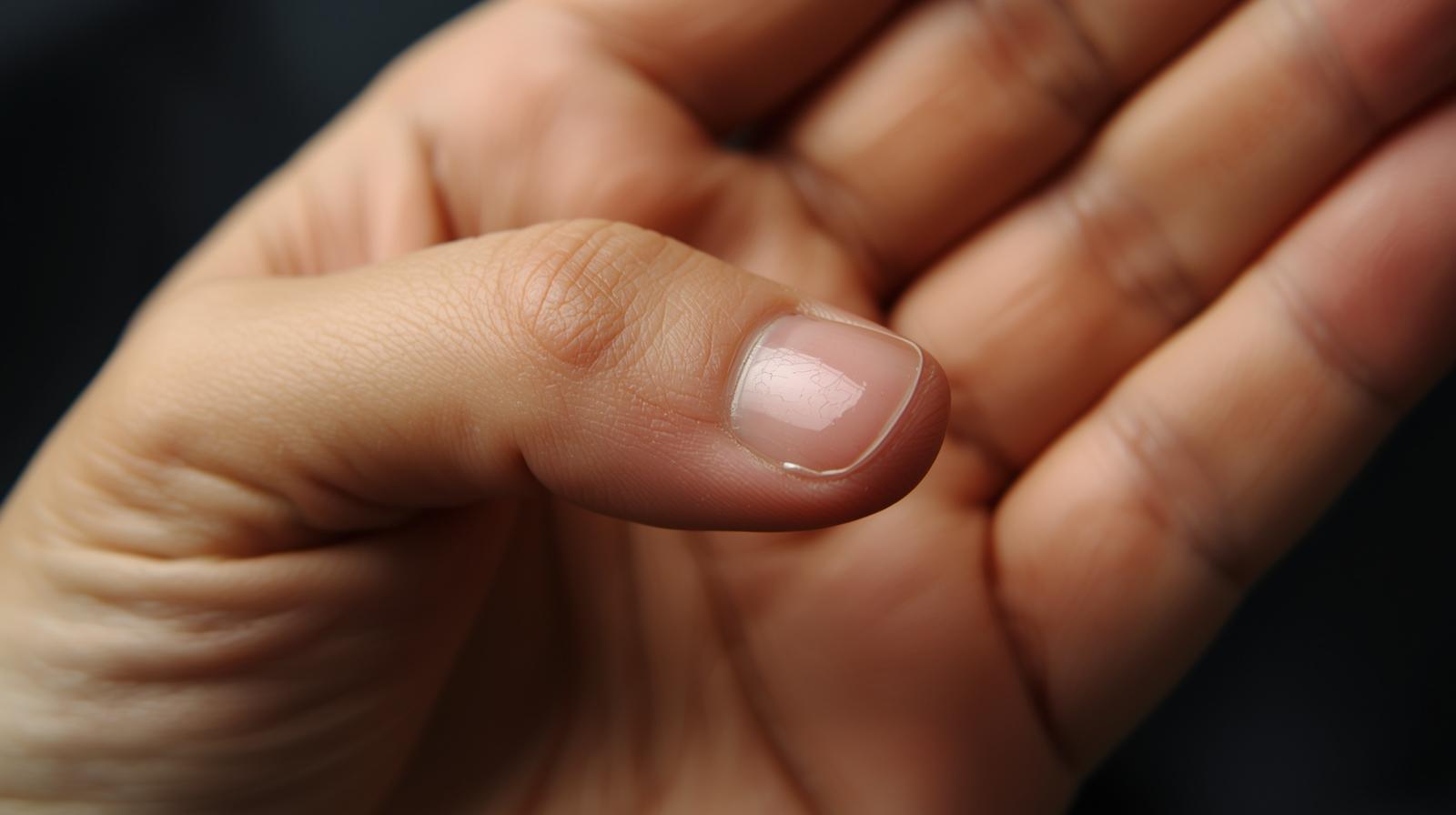
If palmistry had one of the most well-known features, it would be the thumb. People often talk about heart lines and fate lines, but palmists know that your thumb is often considered the steering wheel in your life, not your fate, not your luck, not your past life, not your karma, but your thumb that helps you to make decisions, especially when life gets hard, and you can’t find the answers.
When you get a palm reading, your thumb shows things like:- Self-control, such as handling fear, anger, or pressure.
- Desire, such as what you want.
- Logic, such as how you think through your problems.
- Willpower, which is how you choose things and how you move forward.
- Stubbornness.
- Determination.
- Leadership energies.
- Emotional stamina.
- Resilience after problems and situations.
- How you adapt.
- Emotional openness.
- How willing you are to negotiate.
- Your sensitivity.
- Your empathy levels.
Understanding Thumb Readings in Palmistry
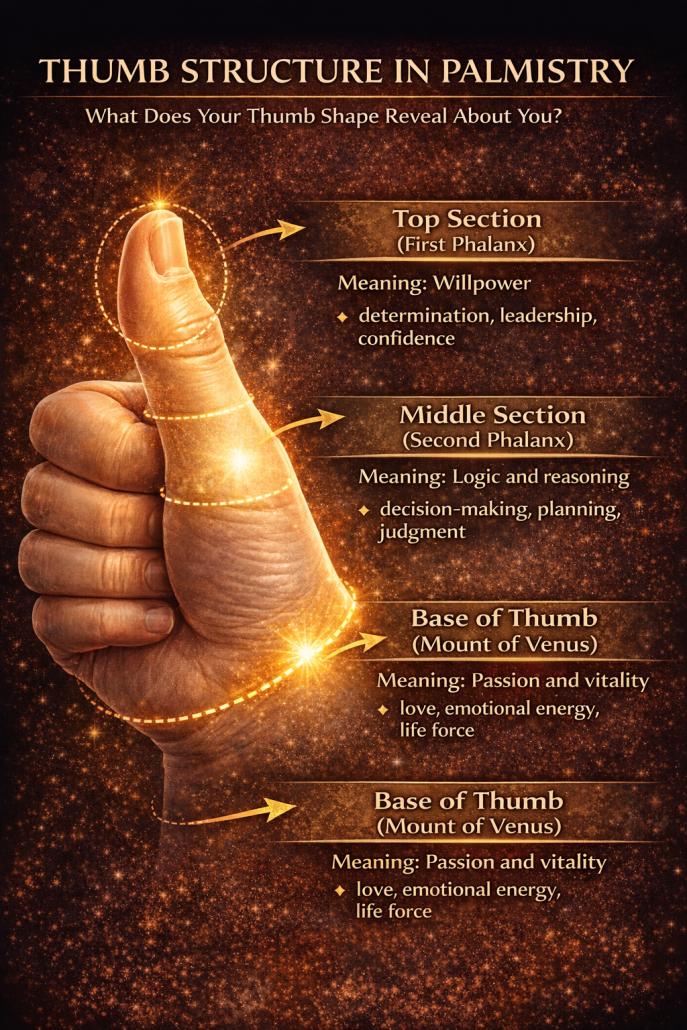 A thumb reading is part of palmistry because it focuses on the thumb’s traits, such as:
- The angle from the hand.
- Flexibility.
- Shape.
- Length.
- Lines and markings.
- Unusual features of the thumb.
- Mount of Venus, which is the fleshy part around the base of the thumb.
- The thumb sections are also called the phalanges.
The Thumb is Different Than the Other Fingers
Fingers show different qualities that people have, such as:- Communication.
- Personality.
- Social personality.
- Creativity.
- Emotions.
- Expressions.
- Knowledge.
- Emotional control.
- Survival.
- Instincts.
- Ambition and goals.
- Self-mastery.
- Leadership skills.
Using the Left and Right Thumb in Thumb Palmistry
In palmistry, both hands are studied side by side to understand a person more completely. A common approach is:The non-dominant hand (left for most people):
- Personality traits.
- Emotional temperament.
- Inner reactions.
- Instincts.
- The person who exists privately.
The dominant hand (right for most people):
- Habits through experience.
- How you handle things publicly.
- Career styles.
- Daily choices.
- The person you’ve become.
- The dominant hand means the active self.
- The non-dominant hand means the inner self.
- Personal growth as time goes on.
- Emotional recovery.
- Setting stronger boundaries.
- Having more self-confidence.
Psychics and Thumb Readings
Palmists today blend physical thumb analysis with intuitive perception. The thumb provides visible patterns, while intuition explains the emotional story behind them. For example, it can show:Thumb observation may suggest:
- Strong will paired with caution.
Intuitive insight may reveal:
- That caution developed after emotional betrayal rather than fear by nature.
What a Thumb Reading Looks At
Thumb reading focuses on several physical features, including:- Clear lines or markings.
- The Mount of Venus.
- The two thumb sections are called phalanges.
- The angle of the thumb.
- Flexibility.
- Stiffness.
- Shape.
- Length.
- Proportion.
- Attachment.
- Emotional desires.
- Personal power.
- Adaptability or resistance.
- Motivation.
- Persistence.
- Decision-making styles.
Why The Thumb Matters as Much as the Fingers
Fingers tend to show personality traits like:- Social behaviors.
- Thinking.
- Patterns.
- Emotional expression.
- Communication styles.
- Creativity.
- Self-control.
- Drive.
- Ambition.
- Leadership.
- Surviving.
- Instincts.
- Emotional openness.
- Emotional restraint.
Three Main Zones in Thumb Palmistry
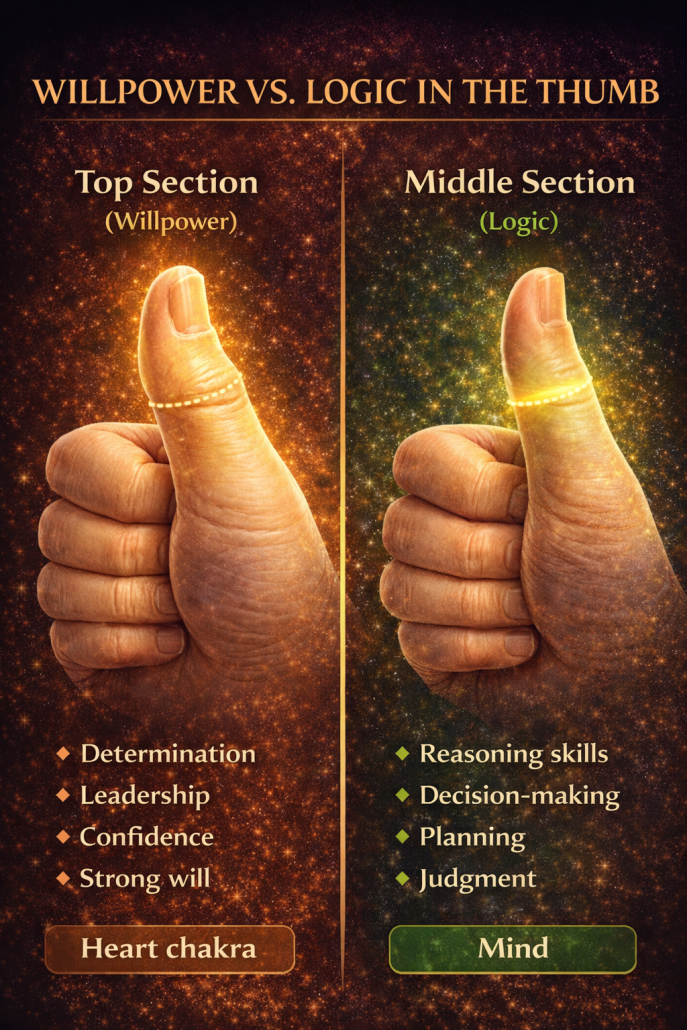 Traditional thumb reading looks at three key areas:
- The upper thumb section is linked to willpower.
- The lower thumb section is linked to reasoning and logic.
- The Mount of Venus, linked to desire and emotional warmth.
- Their drive.
- Their thoughts.
- Their emotions.
Upper Thumb Phalanx
The upper thumb phalanx can mean willpower and personal authority. This is the part of the thumb that is found closest to the thumbnail and can show:- Leadership qualities.
- How you choose and persist in life.
- Determination levels.
- Willpower.
- How you set boundaries.
- A straight and firm thumb.
- Longer upper phalanx.
- A thumb that isn’t floppy and keeps its shape.
- The thumb bends backward far.
- The thumb feels weak and soft.
- It has a short upper phalanx.
Lower Thumb Area and Thinking
The lower part of the thumb sits closest to the palm and is linked to logic, planning, and self-control. Palmists look at this part of the thumb to understand how people make decisions in their daily lives. Some people will take time to pause and think things through, while others listen to their gut feelings and then look at the details later. When this part of the thumb looks strong and developed, it often means the person likes structure. These are people that make plans ahead of time, and they are able to keep it together when feeling stressed. They don’t rush into making choices, and they like to know things before they take any kind of action. When the area looks shorter or less defined, it usually points to a more instinctive personality. These people move fast, follow their gut, and let emotions guide many of their decisions. This can be a beautiful strength, especially for creative or intuitive types. It only becomes difficult when quick reactions keep leading to problems that could have been avoided with a little pause.The Mount of Venus and Emotions
At the base of the thumb is a soft, padded area called the Mount of Venus. In palmistry, this zone connects to love, affection, physical energy, and how deeply someone bonds with others. It often explains why some people love intensely while others prefer calm, steady connections. When the Mount of Venus is fuller, it shows someone who feels things more deeply. These are people who are often loyal, caring, passionate, and loving in their relationships and in life. They have stronger emotions, and they like to be close to people that they care about. When this is flatter, it is often someone who wants space and emotional balance. They still love others in a deep way, but they are quieter about it. They might need time alone to recharge, and they want peaceful relationships over drama. need time alone to recharge and prefer peaceful relationships over dramatic ones. If the area is very prominent, emotions may run strong. These people often crave connection, attention, and deep attachment. When insecurity shows up, feelings can sometimes become intense or overwhelming. This single area of the hand often explains whether someone experiences love as steady and calm or powerful and consuming.Thumb Shape and Your Personality
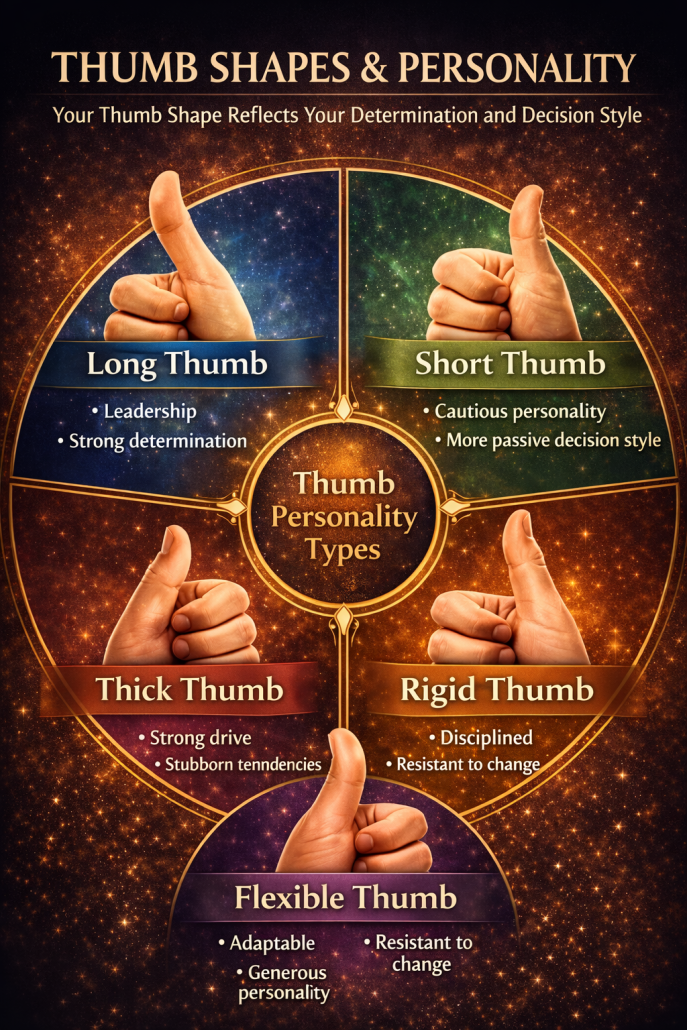 Thumb shapes are one of the fastest ways that palmists will read your hand. You don’t have to have special tools to do a palm reading; you just need your eyes. The thumb can show:
- How you use willpower.
- Logic versus your desires.
- How you deal with people.
- How you handle pressure.
- How you make decisions.
Long Verses Short Thumbs
A long thumb can show:- Strong authority.
- Discipline.
- Ambition.
- Confidence.
- Persistence.
- How you decide things.
- Stubbornness.
- Having a hard time admitting weaknesses.
- Pride.
- Relaxed relationships.
- Emotional decision-making traits.
- Adaptability.
- Sensitivity.
- Instincts and quick decision making.
- Being impatient.
- Being influenced by stronger personalities.
- Having a lack of follow-through on things.
Straight Thumb and Flexible Thumb
This is a thumb that shows how a person responds to change, control, and compromise.Straight Thumbs
A straight thumb can mean that you have a strong will, it can show:- Fixed opinions.
- Strong boundaries.
- Reliability.
- Consistency.
- Strong decision-making skills.
Flexible Thumb
A flexible thumb is often someone who has an adaptable will. A flexible thumb is one that can move easily or bend backward. A flexible thumb might mean:- Adaptability.
- A willingness to compromise on things.
- Diplomacy.
- Emotional openness.
- Generosity.
- Giving too much.
- Letting their emotions or guilt decide for them.
- Being people pleasers.
Empath Thumb Types
These are some of the thumb types that are often seen on empaths:Knotted Thumb or Smooth Thumb
These are a strong but subtle indicator of an empath:Knotted Thumb
A knotted thumb is one that has a lot of joints or bumps, especially in the middle of the thumb. It can mean:- Someone that has methodical thinking.
- Uses logic first.
- Planner.
- Someone that wants facts.
- Someone that takes their time to make decisions.
- They overthink things.
- They are skeptical.
- They use emotional distance.
Smooth Thumb
A smooth thumb is someone that is intuitive. This is a thumb that has less visible joint structures. It can mean that the person is:- Intuitive.
- They make fast decisions based on their intuition.
- They are problem solvers.
- Improvise life.
- Impulsive.
- Inconsistent.
- Get frustrated with details.
Spatulate Thumbs, Pointed Thumbs, and Clubbed Thumbs
These are the thumb shapes that palmists often get excited about because they reveal strong archetypes. These thumbs don’t tell if someone is good or bad, but it talks about energy styles.Spatulate Thumbs
A spatulate thumb is one that has a wide tip and can look like a paddle. This kind of thumb can represent:- Someone who is action-oriented.
- A practical person.
- Strong physical energies.
- A personality to make things happen.
- Builder.
- Creator.
- Dominance.
- Impatience.
- Taking action instead of talking about it.
Pointed Thumbs
These are people who have a tapered tip, and they are normally spiritual or imaginative. This kind of thumb can mean:- Emotional depth.
- Imagination.
- Artistic.
- Spiritual.
- Sensitive.
- Escapism.
- Avoiding hard things.
- Idealizing their partners.
Clubbed Thumb
A clubbed thumb is a thicker and shorter thumb with a rounded tip, and these are normally independent thinkers. This is also called the “murderer’s thumb,” which is part of palmistry folklore. Their name is a myth and should be looked at as a myth because there is no scientific evidence that says that a thumb shape is linked with mortality or with violence. A good psychic would say that a clubbed thumb can mean:- Independence.
- Strong will.
- Unconventional thinking.
- Living by their own rules, energy.
- Not being controlled by others.
- Taking unusual paths in life.
- Disliking authority.
- Succeed by being original.
- Refusing to follow social expectation rules.
Murderer’s Thumb and the Myth Behind It
In old palmistry books, a clubbed thumb can show that the person has violent tendencies. This is unethical, inaccurate, and fear-based information. A good thumb reading should be based on energy and personality patterns and never on criminal behavior. If you want to have a reading based on truth and not superstition, it’s important to remember that a thumb can mean logic, will, and desire, and is not about mortality or the destiny of a person.Thumb Angles and What They Mean
Thumb angles are also very important because they are easy to spot, and they can show how open or how guarded a person is in their life. If you look at your thumb when it is naturally resting, you can see its angle. A palmist might read the angle of the thumb like:- Wide angle can mean open energy.
- Narrow angle can mean cautious energy.
Wide Thumb Angle
A wide thumb angle naturally opens wide away from the palm. This can mean:- Generosity.
- Open-mindedness.
- Emotionally friendly.
- Independent.
- Willing to give love, time, and resources to others.
- Overgiving.
- Attract people who use them.
Narrow Thumb Angle
A narrow thumb stays closer to the hand, and it can mean:- Private.
- Emotionally guarded.
- Cautious.
- Has a hard time building trust.
- Being closed off.
- Appearing cold.
- Secretly caring deeply.
Thumb Markings and Lines
Not every thumb will have clear markings, and so it is important not try to force an interpretation. But if these are lines that are seen, they might be interpreted as:Mount of Venus Vertical Lines
- Love of nature.
- Strong attachment energies.
- Emotionally intense.
- Strong vitality.
Mount of Venus Cross Marks
- Found in fated relationships.
- Emotionally learning lessons in love.
- Experienced heartbreaks that shaped their soul.
- Growth through relationship challenges.
Grille Patterns
Grille patterns on the Mount of Venus can look like crisscross lines. It can show:- Sensuality.
- Relationship drama.
- Relationship patterns.
- Having a hard time with boundaries.
- Emotional over-simulation.
Rings or Bands
Palmists might interpret rings or bands as:- Having strong life lessons.
- Self-control.
- Tension between desires and having restraint.
- Deciding you want something or if you need to be careful.
Palmistry and the Thumb in Relationship Readings
When it comes to relationships in palmistry, most people focus only on the heart line. But experienced palmists pay just as much attention to the thumb. The thumb shows how you act in love, not just how you feel about it. It reflects how you commit, how you protect yourself emotionally, and how you handle conflict when things get hard. Your heart line may reveal emotions. Your thumb shows what you do with those emotions.Willpower and Commitment
The upper part of the thumb is connected to loyalty and follow-through. When this section looks strong, it often belongs to someone who takes relationships seriously. These people tend to commit deeply and stay steady once they choose a partner. They usually expect the same consistency in return. When the upper thumb looks softer or less defined, it often points to emotional sensitivity. These individuals may take longer to commit and need reassurance in relationships. It does not mean they are unreliable. It usually means they feel things deeply and are cautious with their heart.Thumb and Conflict
The lower part of the thumb connects to how someone handles disagreements. A strong lower thumb area often shows:- Reacting calmly during conflict.
- Thinking before speaking.
- Focusing on solving the problem instead of fighting.
- Reacting with emotions first.
- Being passionate in your responses when arguing.
- Having big feelings that come fast.
Intensity and the Mount of Venus
The fleshy area at the base of the thumb plays a huge role in relationship readings. It reflects affection, physical closeness, attachment style, and emotional warmth. A fuller Mount of Venus often points to someone who loves deeply, values closeness, and gives affection easily. These people are usually loyal, passionate, and protective of the people they care about. A flatter Mount of Venus often belongs to someone who prefers calm love over intense emotion. They still care deeply, but may need space, quiet time, and emotional balance. When this area is very prominent, feelings tend to run strong. Love can be powerful, consuming, and sometimes overwhelming when insecurity appears. None of these is good or bad. They simply show different love styles.Being Possessive Verses Being Devoted
This is where thumb readings become surprisingly accurate. Possessiveness often appears when a stiff thumb pairs with an intense Mount of Venus. This usually reflects someone who loves hard but struggles with the fear of loss. Devotion often shows when the thumb is strong but balanced, paired with a healthy Venus mount. These people love deeply while still trusting their partner. It reveals not just love, but attachment patterns.Real Life Relationships and the Thumb
Here is what the thumb can show about real-life relationships:Long and flexible thumb
These people are confident, warm, and emotionally open. In relationships, they value independence but remain deeply loyal. They tend to lead with love rather than control.Short and stiff thumb
Often passionate and extremely loyal, but stubborn during conflict. They rarely give up on relationships, though learning humility strengthens their connections.Pointed thumb
Sensitive, intuitive, and romantic. They crave emotional depth and soul-level connection. Their challenge is trusting intuition instead of idealizing potential.Clubbed thumb
Independent, loyal, and protective of their boundaries. They need honesty and respect in love and do not tolerate manipulation. Their strength lies in emotional integrity.Doing Your Own Thumb Reading
You don’t need experience to read your thumbs. A quick look can already show patterns in confidence, emotion, and how you move through life. The purpose isn’t to judge yourself. It’s important to notice tendencies. Here’s an easy method that takes just a few minutes.Step 1: Look at Both Thumbs
Place your left and right thumbs side by side and observe them carefully. Notice things like:- Which of the thumbs looks straighter or stronger?
- Which thumb feels more flexible?
- If one thumb goes wider at an angle than the other.
- When the dominant thumb appears stronger, it often reflects confidence and self-control that have developed over time.
- When the non-dominant thumb looks stronger, it usually points to natural inner strength that hasn’t been fully expressed outward yet.
Step 2: Length
Pay attention to whether your thumb feels long, average, or short compared to your fingers. A longer thumb is often linked to persistence and steady determination. A shorter thumb tends to reflect quick instincts, sensitivity, and spontaneity.Step 3: Flexibility
Without forcing it, lightly bend your thumb back. If it moves easily, this often shows adaptability, generosity, and emotional openness. If it feels firm or resistant, it usually points to strong boundaries and a steady, determined nature.Step 4: Shape of the Tip
Examine the very end of the thumb. Some tips appear wide, some taper to a point, and others look rounded. This area is often associated with different personality styles, such as practical builders, intuitive thinkers, or independent spirits.Step 5: Mount of Venus
At the base of the thumb is a padded area called the Mount of Venus. Look at whether it appears:- Full.
- Firm.
- Flat.
- Soft.
- Prominent.
Step 6: Look at Clear Markings
There’s no need to hunt for signs, but if certain markings stand out naturally, they can offer extra insight. These may include:- Vertical lines.
- Patterns that look like a grill.
- Cross shapes.