


Communication is the Core of the Relationship
Communication is the core of any relationship, but it is sometimes hard because of daily life demands. There are couples that struggle, not because they don’t care, but because they fall into patterns that limit their time and their understanding of how important communication is.
By being able to see these differences in communication style, stress and overwhelm can lessen, and couples can change their misunderstandings to make a stronger connection with their partners. With empathy, intentional practices, and structure, communication can help strengthen love and stop creating distance.Practicing Healthy Communication
Healthy communication isn’t something that just normally happens, but it’s something that builds and grows. When couples actively practice expressing what they need, listening, and creating a safe space for talking, their emotional bond strengthens. Trying different techniques like actively listening, reflective dialogue, and turning towards each other can help couples to:- Build trust.
- Have emotional safety.
- Reduce conflict.
- Reduce misinterpretation.
- Feel heard.
Common Communication Issues
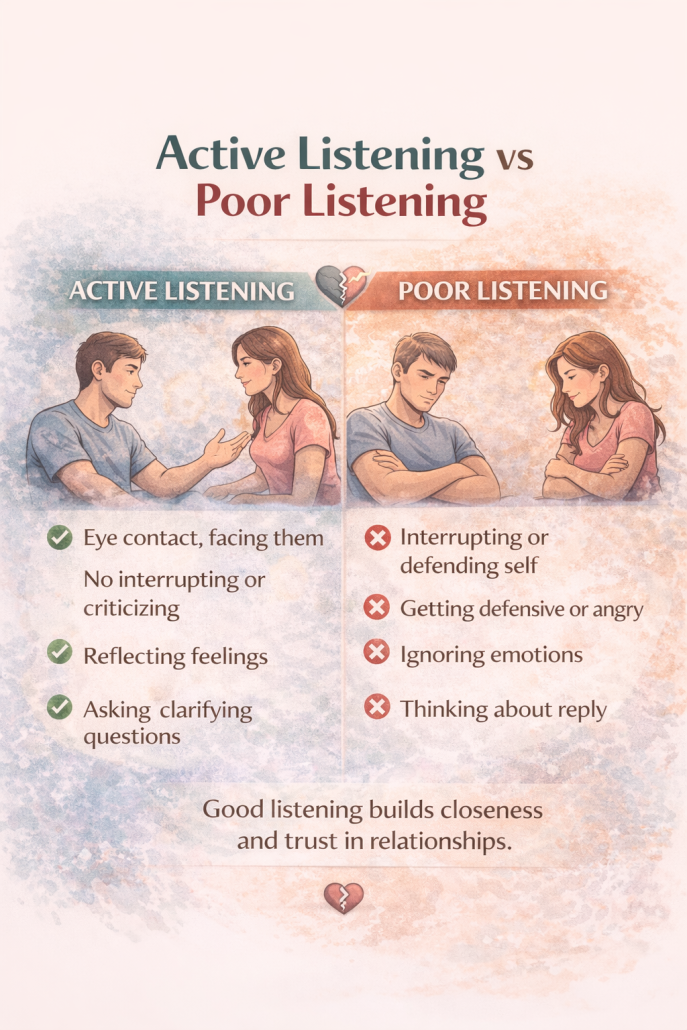 In every relationship, communication challenges can be more common than most people even realize. There are many couples that talk to each other, but they feel misunderstood or unheard. This isn’t because the partners don’t care, but it’s because they don’t know the right tools to use. Here are some common communication barriers that couples often have:
- Criticism instead of expressing things clearly.
- Shutting down during conflict.
- Assumptions based on past experiences.
- Responding defensively when feeling criticized.
- Lack of active listening skills (getting distracted or multitasking when communicating).
Knowing Communication Differences
Everyone has their own communication style, and this is normally shaped by how they were brought up from childhood. Here is an example:- One might like direct or immediate conversations.
- The other might want to process things before they talk about them.
What Causes Communication Barriers?
There are different communication issues that are sometimes influenced by things that are deeper. Here are a few examples:Mental or Emotional Situations
If someone has a mental health challenge, such as stress or anxiety, it can affect how they interpret and express what’s being said. When they have low emotional capacity, the misunderstanding can be high.External Situations
External situations can also affect communication. Family responsibilities, work, stress, and other daily pressures can go into the relationship without partners even being aware. This can cause partners to unintentionally direct their frustration toward each other instead of what’s really bothering them. This is why one of the most important things that couples can practice is learning how to separate their external stress from what’s happening inside their relationships.Stress-Reducing Exercise
In order to have a strong relationship, you need to have stress-reducing conversations. Here’s how:- Talk to each other about external stresses.
- Don’t talk about relationship problems.
- Look at your partner’s side.
- Listen to understand and not to try to fix the situation.
- Emphasize that you are a team and you’re in this together.
Why Communication Exercises Are Important
When communication starts breaking down, it can cause couples to feel upset and discouraged, but this is why these types of structured exercises can help. Research shows that when couples practice communication skills regularly, it can help them to:- Have higher relationship satisfaction.
- To handle conflicts better.
- To build stronger emotional bonds.
Communication Skills to Practice
Before doing exercises, it’s important to understand the skills that make the exercises stronger. Here are some key skills to practice:- Validating your partner’s feelings even if you don’t agree with them.
- Taking breaks when feeling overwhelmed.
- Being patient.
- Allowing for space.
- Asking open-ended questions.
- Using “I” statements instead of blaming.
- Reflecting back on what you’re hearing.
- Actively listening without multitasking or interruption.
Creating Safe Dialogue
You create safe dialogue when you create a safe space that allows your partner to talk and express themselves without being afraid of being judged or feeling defensive. Here are some things that create this safe space:- Emotional validation.
- Mutual respect for each other.
- Being willing to listen.
- Being open to understanding.
15 Simple Ways to Improve Communication in Your Relationship
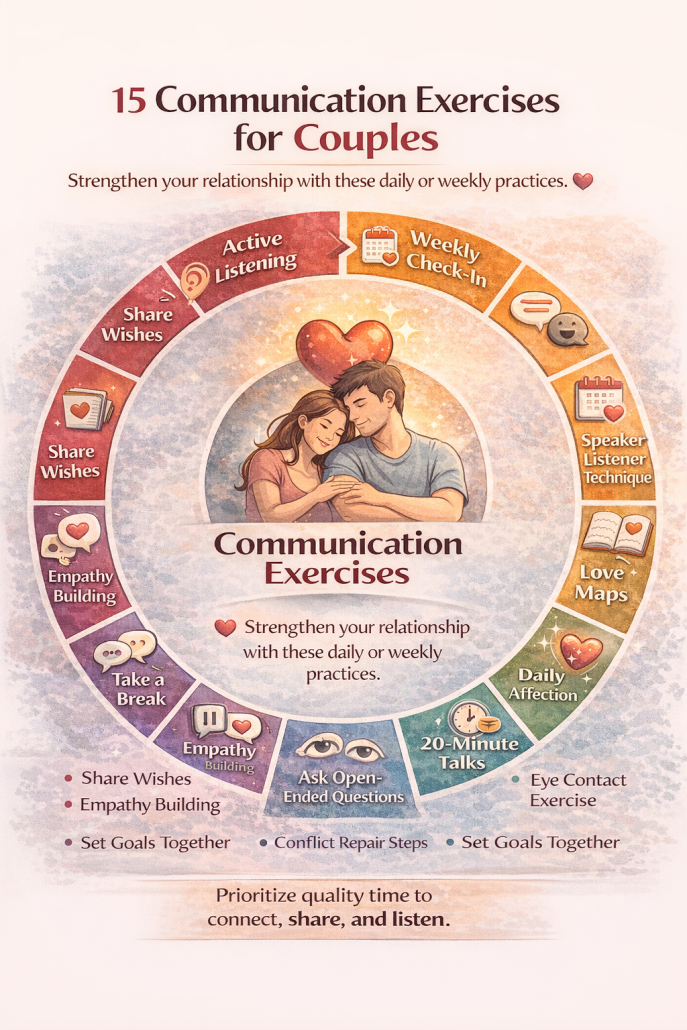 Here are practical communication exercises that can help couples build a stronger connection and better understanding over time.
1. Daily Stress Check-In
Take time each day to talk about outside stress. This helps you feel like a team instead of carrying everything alone.2. Practice Fully Listening
Give your full attention, don’t interrupt, and focus on really understanding your partner—not just waiting to respond.3. Reflect Back What You Hear
Repeat what your partner said in your own words. This helps avoid misunderstandings and shows you’re listening.4. Use “I” Statements
Speak from your own feelings instead of placing blame. This helps keep conversations calm and productive.5. Ask Questions That Go Deeper
Open-ended questions can lead to more meaningful conversations and help you understand each other better.6. Take a Break When Needed
If things feel overwhelming, pause the conversation and come back to it when both of you are calmer.7. Learn Your Partner’s World
Take time to understand their goals, fears, and experiences. This builds a stronger emotional connection.8. Set Weekly Check-Ins
Have a regular time to talk about how things are going in the relationship and what each of you needs.9. Validate Each Other’s Feelings
Even if you don’t agree, acknowledge how your partner feels. Feeling heard matters.10. Respond Instead of Ignoring
When your partner reaches out for connection, respond in a positive way instead of brushing it off.11. Show Appreciation Often
Say thank you and notice the small things. Appreciation goes a long way in a relationship.12. Don’t Assume but Ask
Instead of guessing what your partner means, ask for clarity. This helps prevent misunderstandings.13. Check in Emotionally
Ask questions like, “How are you really feeling?” to go beyond surface-level conversations.14. Work Together on Problems
Approach challenges as a team instead of feeling like you’re on opposite sides.15. Talk About the Future
Discuss your goals, plans, and dreams so you stay aligned and connected long-term.Why Consistency Makes a Difference
These exercises aren’t just one-time tools, but they work best when they become part of your routine. When practiced regularly, they can lead to: • A stronger emotional connection. • Healthier ways to handle conflict. • More trust and understanding. • A more stable and supportive relationship. Couples who use these consistently are often better prepared to handle challenges together.Listening With Intention
Listening isn’t just hearing words, but it’s about truly understanding your partner. When this becomes a habit: • Conflicts are easier to work through. • Both partners feel valued and heard. • Emotional connection becomes stronger over time.Clearly Expressing Needs
Sometimes, when expectations aren’t met, they come from unclear communication. Instead of just hinting that you need something, you need to say it directly, such as:- Try saying, “I feel (this) when (this happens), and I need (this).”
Final Thoughts: Improving Communication
Even in good relationships, it takes effort, patience, and consistency to improve communication. This isn’t about getting rid of conflict, but it’s about learning to handle it in a way that makes the connection stronger instead of damaging it. By building core communication skills and trying out these exercises, couples can create a relationship that is strong and is grounded in emotional closeness, empathy, and understanding. Each conversation is an opportunity to connect with one another.FAQ
- What are communication exercises for couples?
Communication exercises are simple, intentional practices that help partners listen better, express themselves more clearly, reduce misunderstandings, and build a stronger emotional connection. - Why are communication exercises important in a relationship?
They help couples build trust, create emotional safety, reduce conflict, lower misinterpretation, and help both people feel heard. - Can communication exercises really improve a relationship?
Yes. Practiced consistently, they can strengthen emotional bonds, improve conflict handling, and support a more stable and understanding relationship. - What are the most common communication problems couples face?
Common issues include criticism, shutting down during conflict, making assumptions, defensive responses, and not truly listening because of distractions or multitasking. - Why do couples misunderstand each other even when they talk often?
Many couples communicate regularly but still feel unheard because they may not be using healthy tools like active listening, reflection, validation, and clear expression. - What is active listening in a relationship?
Active listening means giving full attention, not interrupting, and focusing on understanding your partner instead of just waiting for your turn to respond. - How does reflecting back what you hear help couples?
It helps prevent misunderstandings and shows your partner that you are truly listening and trying to understand their point of view. - What are “I” statements and why do they matter?
“I” statements help you speak from your own feelings instead of blaming your partner, which keeps conversations calmer and more productive. - What kinds of questions improve communication in a relationship?
Open-ended questions help create deeper conversations and allow couples to better understand each other’s feelings, needs, and experiences. - Is it okay to take a break during a difficult conversation?
Yes. Taking a break when emotions feel overwhelming can help both partners calm down and return to the discussion in a healthier way. - What does it mean to learn your partner’s world?
It means taking time to understand their fears, goals, thoughts, and life experiences so you can build a stronger emotional connection. - How often should couples do communication check-ins?
A daily stress check-in and a weekly relationship check-in can both be helpful for staying connected and discussing needs before problems build up. - Why is emotional validation important in communication?
Validation helps your partner feel heard and respected, even when you do not fully agree with their perspective. - How can couples stop outside stress from harming the relationship?
They can talk openly about outside stress, avoid turning the discussion into relationship criticism, listen to understand, and remind each other that they are a team. - What creates a safe space for communication in a relationship?
A safe space comes from emotional validation, mutual respect, willingness to listen, openness to understanding, and less fear of judgment or defensiveness. - How does appreciation improve communication between partners?
Regular appreciation helps partners feel valued, noticed, and emotionally connected, which makes healthy communication easier. - Why should couples ask for clarity instead of assuming?
Asking for clarity prevents confusion and stops partners from reacting to guesses or past experiences instead of what was actually meant. - What does it mean to turn toward your partner?
It means responding positively when your partner reaches out for connection instead of ignoring, dismissing, or brushing them off. - How long does it take for communication exercises to work?
They usually work best over time. When practiced regularly, these habits can gradually lead to more trust, better conflict resolution, and a stronger emotional connection. - What is the most important communication habit for couples?
One of the most important habits is being intentional: listening with attention, expressing needs clearly, and practicing these skills consistently instead of only during conflict.
Communication exercises are intended for relationships where both people can participate safely. Review healthy soulmate signs such as consent, trust and boundaries.
When communication involves threats, control or fear, use relationship-abuse and safety resources before trying joint exercises.
Use a Love Tarot Spread as a Reflection Prompt
After trying the communication exercises above, the free 5-card Love Tarot Reading can provide a separate symbolic prompt around your energy, the connection, a challenge, a need or value and a direction to consider. It cannot verify another person’s private thoughts or guarantee a relationship outcome.