


When there are relationship conflicts, they’re not normally about surface-level issues. Underneath, withdrawal, criticism, defensiveness, irritation, and emotional shutdown are deeper emotions that help cause the conflicts. Two of the biggest emotions that are hidden under relationship struggles are fear and shame. These emotional patterns create painful cycles where:
- One partner might feel disconnected or anxious.
- The other partner might feel criticized or inadequate.
- One partner pushes for connection.
- The other partner withdraws or becomes defensive.
- Emotional distance grows.
- Both people feel misunderstood.
Understanding the Fear-Shame Relationship Cycle?
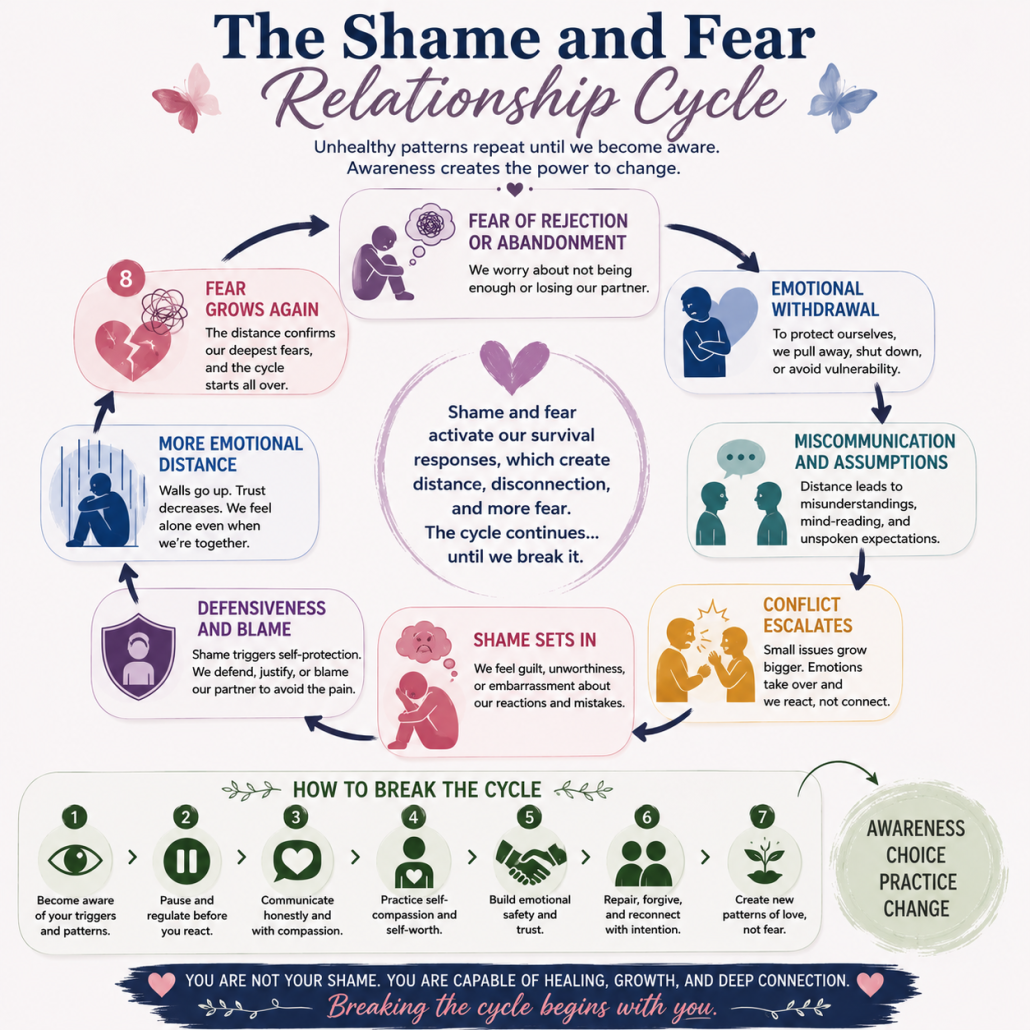 In some relationships, one of the partners might react strongly to emotional disconnection, lack of reassurance, or uncertainty. This can come from fear of things like:
- Fear of abandonment.
- Fear of rejection.
- Fear of emotional distance.
- Fear of not feeling loved.
- Fear of losing connection.
- Feeling like a failure.
- Feeling inadequate.
- Feeling blamed.
- Feeling emotionally attacked.
- Feeling unable to get it right.
- One partner says, “We need to talk.”
- The other immediately feels anxious or defensive.
- One pushes harder for emotional connection.
- The other withdraws emotionally or shuts down.
- Both people leave the interaction feeling hurt.
Fear Usually Exists Underneath Emotional Reactions
When people start feeling emotionally disconnected in relationships, fear is often sitting underneath the surface emotionally. That fear might show up through things like: • Anxiety. • Overthinking. • Emotional urgency. • Passive-aggressive behavior. • Emotional clinginess. • Frustration. • Constant reassurance-seeking. A lot of people don’t realize that what looks like anger or criticism may actually be fear of emotional loss underneath. Here are some examples: “Why don’t you ever listen to me?” might mean, “I’m scared we’re falling apart.” When fear only comes out through criticism or emotional pressure, the other person often hears rejection instead of vulnerability.Shame Often Creates Emotional Withdrawal
Shame is another powerful emotion that quietly affects relationships. Internally, shame often sounds like things such as: • “I’m not good enough.” • “I’m failing as a partner.” • “Nothing I do is enough.” • “I always disappoint you.” People experiencing shame in relationships may react through things like: • Emotional withdrawal. • Avoiding difficult conversations. • Defensiveness. • Emotional shutdown. • Irritation or anger. A lot of people don’t even realize shame is what they’re feeling because it often disguises itself as frustration or emotional distance instead.Couples Can Get Stuck in Emotional Loops
The fear-shame cycle becomes emotionally unhealthy because each person’s reaction unintentionally triggers the other person’s emotional wound. This might look like things such as: • One person fears emotional disconnection and pushes harder emotionally. • The other person feels criticized and emotionally withdraws. • The withdrawal increases the first person’s fear. • The increased fear creates more emotional intensity or criticism. • The cycle keeps repeating. Without awareness, couples can repeat these emotional patterns for years. A lot of times, the issue isn’t a lack of love. Often, both people simply don’t fully understand the emotional fears and triggers underneath their reactions.Vulnerability Usually Creates Healthier Communication
One of the healthiest ways to break the fear-shame cycle is through vulnerability instead of emotional attacks. For example, instead of saying, “You never care about this relationship,” a more honest response might sound like this: “I’ve been feeling disconnected lately, and I miss feeling close to you.” Instead of responding with, “Nothing I do is ever enough for you,” a better response might be, “I feel overwhelmed, and I’m scared I’m disappointing you.” Vulnerability often allows couples to respond with empathy instead of defensiveness.Appreciation Helps Reduce Emotional Distance
A lot of people underestimate how important appreciation is emotionally in relationships. Constant criticism often increases shame and emotional withdrawal. Appreciation usually helps people feel emotionally safer, more valued, and more connected. Simple appreciation might involve things like: • “Thank you for helping today.” • “I appreciate your effort.” • “I noticed what you did for us.” • “I know you’re trying.” Feeling appreciated often reduces defensiveness and strengthens emotional trust over time.Emotional Safety Is One of the Most Important Parts of a Relationship
Healthy relationships need emotional safety in order for vulnerability and communication to make it feel possible. Emotional safety usually involves things like: • Feeling heard. • Feeling respected. • Being able to express vulnerability safely. • Knowing mistakes won’t be weaponized later. • Feeling emotionally accepted. When emotional safety is missing, people often protect themselves through: • Defensiveness. • Emotional shutdown. • Criticism. • Avoidance. • Emotional distance. Healthy couples usually focus on creating an environment where both people feel emotionally secure enough to communicate honestly and openly.Physical Connection Can Help
Rebuilding an emotional connection isn’t always through long conversations, but it can be through small acts of physical and emotional closeness, such as:- Hugging.
- Holding hands.
- Going for walks together.
- Sitting quietly together.
- Sharing activities.
- Gentle touch.
- Spending device-free time together.
12 Ways to Break the Fear and Shame Cycle
Here are 12 ways to break the fear and shame cycle:1. Show Appreciation Often
Feeling appreciated helps reduce emotional distance and defensiveness in relationships. Small expressions of gratitude can make a huge difference emotionally over time. This might involve things like: • Saying thank you regularly. • Acknowledging effort. • Complimenting your partner. • Letting them know they matter to you. Feeling emotionally valued helps people stay emotionally connected instead of shutting down.2. Be Vulnerable Instead of Emotionally Attacking
A lot of people express fear through criticism, anger, or defensiveness instead of emotional honesty. Healthier communication often sounds more like: • “I feel hurt.” • “I’ve been feeling insecure lately.” • “I’m afraid of losing our connection.” Vulnerability usually creates more emotional closeness than emotional attacks do.3. Avoid Shaming Each Other
Humiliation, mocking, insults, and constant criticism slowly damage emotional safety in relationships. Shaming language often creates: • Defensiveness. • Withdrawal. • Emotional shutdown. • Fear of vulnerability. Healthy communication focuses more on understanding and problem-solving instead of emotional punishment.4. Listen Before Becoming Defensive
When emotions become intense, many people immediately start protecting themselves instead of listening fully. Pausing before reacting emotionally can help reduce conflict significantly. Healthy listening might involve things like: • Staying calm. • Asking questions. • Letting your partner finish speaking. • Trying to understand instead of immediately defending yourself. Feeling emotionally heard often lowers tension much faster than arguing does.5. Validate Each Other’s Feelings
Validation doesn’t mean you always completely agree with everything your partner feels. It means acknowledging that their emotions feel real and important to them. Helpful responses might sound like things such as: • “I understand why that upset you.” • “I can see why you feel hurt.” • “That makes sense emotionally.” Validation usually reduces emotional escalation and helps people feel emotionally safer.6. Learn What Emotionally Triggers You
A lot of emotional reactions come from older fears, insecurities, or painful experiences. Understanding your emotional triggers can help prevent impulsive reactions during stressful times. This might involve noticing things like: • Fear of rejection. • Fear of abandonment. • Fear of criticism. • Feeling emotionally ignored. • Feeling emotionally unsafe. Self-awareness often helps break unhealthy emotional cycles over time.7. Practice Calming Yourself Before Reacting
Emotional self-regulation is one of the healthiest relationship skills people can develop. Calming yourself before reacting helps prevent emotionally damaging arguments and impulsive behavior. This might involve things like: • Deep breathing. • Taking a short walk. • Pausing before texting back. • Stepping away briefly to calm down. • Journaling thoughts before reacting emotionally. Slowing down often creates space for healthier communication.8. Respect the Need for Temporary Space
Sometimes people need short periods of space when emotions become overwhelming. This doesn’t automatically mean rejection or emotional abandonment. Short pauses can help people: • Calm their nervous system. • Organize their thoughts. • Reduce emotional escalation. • Return to the conversation more calmly. A healthy space usually works best when both people communicate openly about reconnecting afterward.9. Focus on Solving Problems Together
Healthy relationships usually become stronger when couples approach conflict like a team instead of opponents. Blame often increases emotional tension, while teamwork usually creates emotional safety. Team-focused couples often ask things like: • “How can we fix this together?” • “What do we both need right now?” • “How do we move forward from this?” Working together emotionally strengthens trust and connection over time.10. Build Connection Outside of Conflict Too
Relationships can’t survive only through constantly fixing problems. Positive emotional connection matters just as much. This might involve things like: • Laughing together. • Affection. • Date nights. • Quality time. • Small daily check-ins. • Shared hobbies. • Emotional reassurance. Positive interactions help relationships feel emotionally safer during stressful times.11. Apologize Honestly When Needed
Sincere accountability helps rebuild trust and emotional safety after conflict. A healthy apology usually involves: • Taking responsibility. • Acknowledging emotional impact. • Showing empathy. • Making an effort to improve behavior moving forward. People usually heal emotionally faster when they feel genuinely understood and emotionally considered.12. Accept That No Relationship Is Perfect
Every relationship will experience misunderstandings, emotional stress, insecurities, and difficult times sometimes. Healthy relationships are usually built through growth, patience, and emotional effort instead of perfection. Strong couples stay willing to: • Understand each other better. • Stay emotionally present. • Repair conflict. • Practice compassion. • Continue growing together emotionally. Emotional connection usually becomes stronger when both people feel safe being imperfect while still feeling loved and respected. Harvard Health Publishing often highlights how emotional support, empathy, and healthy communication contribute to stronger long-term relationships.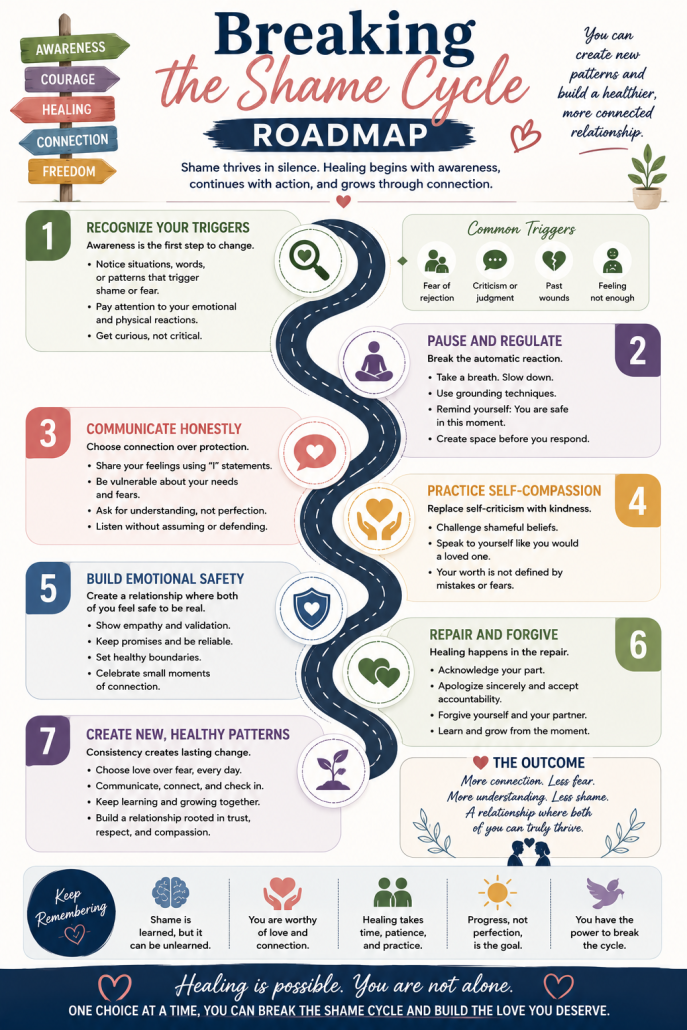
Final Thoughts: Fear-Shame Cycle
The fear-shame cycle is something that can damage emotional intimacy when the couple doesn’t see what’s happening under their own reactions. Fear might show up as anxiety, urgency, or criticism, and shame might show up as defensiveness, emotional shutdown, or withdrawal. When couples learn how to be open and vulnerable with their partner instead of reacting from emotional pain, the relationship can be safer, calmer, and more connected. Healthy relationships don’t come from avoiding emotional struggles, but they become healthier when the two people learn to deal with the struggles with understanding, honesty, compassion, and empathy.Frequently Asked Questions
1. What is the relationship cycle of shame and fear?
The relationship cycle of shame and fear is a repeating emotional pattern where one partner may react from fear of rejection while the other reacts from shame, defensiveness, or withdrawal.2. How does fear show up in relationships?
Fear may show up as anxiety, overthinking, criticism, reassurance-seeking, emotional urgency, clinginess, or frustration.3. How does shame show up in relationships?
Shame may show up as defensiveness, emotional shutdown, avoiding hard conversations, irritation, withdrawal, or feeling like nothing you do is enough.4. Why do couples get stuck in this cycle?
Couples often get stuck because each person’s emotional reaction triggers the other person’s deeper wound. One person pushes for connection while the other pulls away, and both feel misunderstood.5. Can shame and fear damage emotional intimacy?
Yes. When shame and fear go unrecognized, they can create distance, defensiveness, criticism, resentment, and emotional disconnection.6. What is an example of a fear-based reaction?
A fear-based reaction might sound like, “You never listen to me,” when the deeper feeling is really, “I’m scared we are growing apart.”7. What is an example of a shame-based reaction?
A shame-based reaction might sound like, “Nothing I do is ever good enough,” when the deeper feeling is really, “I feel like I’m failing you.”8. How can couples break the shame and fear cycle?
Couples can break the cycle by recognizing triggers, pausing before reacting, communicating vulnerably, validating feelings, showing appreciation, and repairing conflict with compassion.9. Why is vulnerability important in relationships?
Vulnerability helps partners express the real emotion underneath the reaction. It often creates more empathy than criticism, blame, or emotional withdrawal.10. How can I communicate without attacking my partner?
Use calm “I” statements, explain your feelings clearly, describe what you need, and avoid insults, labels, or blame-heavy language.11. What does emotional safety mean in a relationship?
Emotional safety means both partners feel heard, respected, accepted, and able to share vulnerable feelings without fear of being mocked, punished, or dismissed.12. How can appreciation reduce shame?
Appreciation helps people feel valued and seen. Small comments like “I noticed your effort” or “Thank you for helping” can reduce defensiveness and emotional distance.13. What should I do when I feel triggered?
Pause before reacting. Take a breath, notice what emotion is underneath, calm your body, and respond from clarity instead of panic, anger, or shame.14. Is taking space during conflict healthy?
Temporary space can be healthy when it is used to calm down, not punish or abandon the other person. It helps to agree on when you will return to the conversation.15. How can couples repair after conflict?
Healthy repair includes listening, taking responsibility, apologizing honestly, validating feelings, and discussing what both partners can do differently next time.16. What if my partner becomes defensive when I share feelings?
Try slowing the conversation down and using softer language. If defensiveness continues, focus on creating emotional safety before trying to solve the entire issue.17. Can fear look like anger in a relationship?
Yes. Fear can sometimes come out as anger, criticism, pressure, or frustration because the person feels scared of disconnection or rejection.18. Can shame look like withdrawal?
Yes. Shame often causes people to pull away, shut down, avoid eye contact, change the subject, or stop engaging because they feel inadequate or emotionally exposed.19. Do healthy couples still experience shame and fear?
Yes. Healthy couples still have emotional triggers, but they learn how to recognize them, talk about them, and repair instead of repeating the same painful cycle.20. What is the first step to breaking the cycle?
The first step is awareness. Once you recognize the pattern, you can pause, choose a healthier response, and begin creating more emotional safety.Use the 30-Day Breakup Recovery Plan when a relationship cycle has ended or contact keeps reopening distress.
Review karmic relationship labels and safety when intensity, fear or repeated reunion cycles are being treated as destiny.