
A Blue Moon Is a Calendar Label, Not a Prediction
A Blue Moon usually refers to the second full Moon in one calendar month. An older seasonal definition refers to the third full Moon in a season containing four full Moons. In either case, the name describes timing rather than the Moon’s ordinary color.
Blue Moon superstitions can be enjoyed as folklore, storytelling or personal ritual. They do not establish that the Moon causes pregnancy, madness, financial luck, delayed healing or changes in human behavior.
Correction: What Happened on May 31, 2026
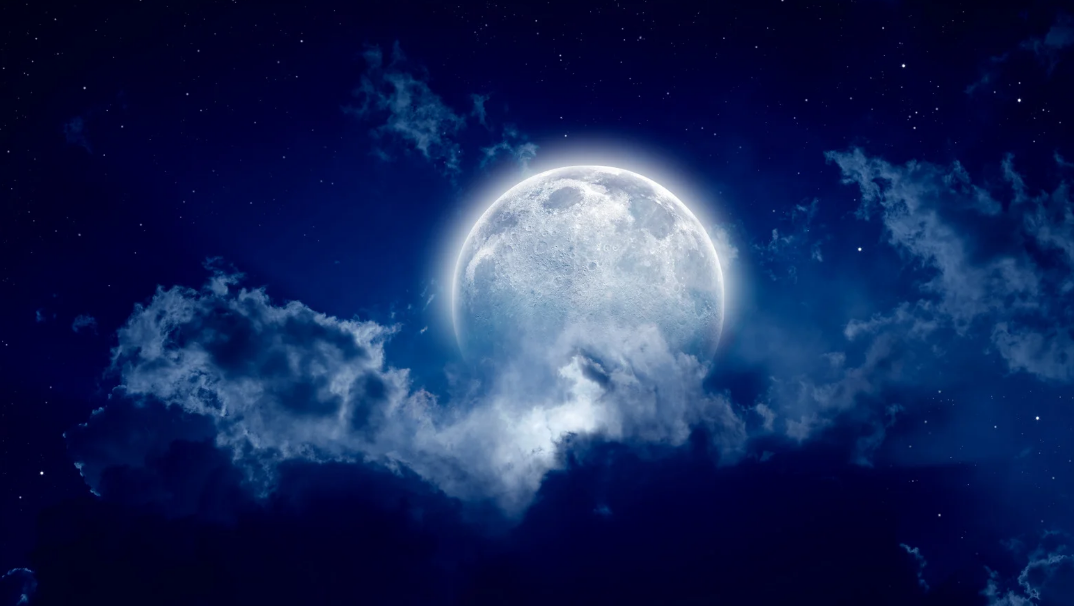
May 31, 2026 was a monthly Blue Moon because it was the second full Moon in May. It was not a supermoon and there was no lunar eclipse that night.
The full Moon occurred at 08:45 UTC and was near its farthest point from Earth, making it a Micro Full Moon rather than a Super Full Moon. NASA’s 2026 Moon guide lists the year’s total lunar eclipse on March 3, not May 31.
Blue Moon
The second full Moon in a calendar month, or under the seasonal definition, the third of four full Moons in one season.
Supermoon
An informal term for a full or new Moon occurring relatively near the closest part of its orbit around Earth.
Lunar Eclipse
An event in which Earth’s shadow falls across the Moon. It requires a specific Sun-Earth-Moon alignment.
Why the Moon Usually Does Not Look Blue
The phrase “Blue Moon” normally has nothing to do with visible color. A full Moon may look yellow, orange or red near the horizon because its light passes through more of Earth’s atmosphere.
Under unusual atmospheric conditions, smoke or volcanic particles of particular sizes can make the Moon appear bluish. That optical effect is different from the calendar meaning of Blue Moon.
Eight Common Blue Moon Folklore Themes
The following are folklore themes, not verified effects. Similar stories may appear in different places and periods, so they should not be assigned to a specific culture without a reliable historical source.
- Rare wishes. A Blue Moon is treated as a special opportunity to state an intention or make a wish.
- Good luck. Coins, flowers or small rituals are sometimes associated with attracting fortune.
- Release and forgiveness. The unusual calendar event may symbolize ending a feud or leaving an old burden behind.
- Fertility. Some stories connect moonlight with pregnancy or fertility, but moon viewing does not cause pregnancy.
- Dreams and intuition. Vivid dreams may be given spiritual meaning, although the Moon does not provide an objective dream code.
- Behavior and “lunacy.” Folklore links full Moons with unusual behavior, but broad claims about crime or madness are not established simply by repeating the story.
- Money and abundance. A ritual may symbolize a financial goal, but it cannot create income or replace practical planning.
- Bad-luck taboos. Pointing, looking, eating or sleeping in moonlight may be prohibited in some stories, but these taboos are cultural narratives rather than physical rules.
Viewing Safety: Full Moon, Lunar Eclipse and Solar Eclipse
- Full Moon or Blue Moon: safe to view with ordinary unaided eyes. Binoculars or a telescope may improve detail when used normally and safely.
- Lunar eclipse: safe to view without eclipse glasses because you are looking at the Moon, not directly at the Sun.
- Solar eclipse: requires specialized solar viewing protection except during the brief total phase of a total solar eclipse when the Sun’s bright face is completely covered.
- Regular sunglasses are not safe solar viewers.
- Never look at the Sun through binoculars, a telescope or a camera without a proper solar filter fitted to the front of the optics.
The old version of this article incorrectly suggested that using eclipse glasses for a solar eclipse could bring bad luck. Proper solar protection is a safety requirement, not a superstition.
Blue Moon Rituals Without Unsupported Claims
A personal ritual can be simple and non-predictive:
- Write one thing you appreciate about the previous month.
- Name one practical goal for the next month.
- Choose one action you can take within 24 hours.
- Spend a few minutes observing the sky or journaling.
- Close the ritual without treating the Moon as a guarantee.
For a science-first explanation of lunar phases and their spiritual symbolism, read Moon Phases: Science, Spiritual Meaning and Rituals.
Health and Pregnancy Myths
Looking at a Blue Moon does not cause pregnancy, mental illness, indigestion or abnormal bleeding. If someone is pregnant, has an injury or experiences concerning physical or mental-health symptoms, ordinary medical guidance applies regardless of the lunar phase.
Food-safety rules also do not change during a lunar eclipse. Cultural fasting may be a personal or religious practice, but anyone with a health condition, pregnancy or medication schedule should consider appropriate professional guidance before fasting.
Frequently Asked Questions
1. What is a Blue Moon?
It usually means the second full Moon in one calendar month. A seasonal definition identifies the third of four full Moons in one season.
2. Was May 31, 2026 a Blue Moon?
Yes. It was the second full Moon in May 2026.
3. Was the May 31, 2026 Blue Moon a supermoon?
No. It occurred near the Moon’s farthest orbital point and was a Micro Full Moon.
4. Was there a lunar eclipse on May 31, 2026?
No. NASA lists the 2026 total lunar eclipse on March 3.
5. Does a Blue Moon look blue?
Usually no. The name describes calendar timing, although unusual atmospheric particles can sometimes change the Moon’s apparent color.
6. How often do Blue Moons occur?
They occur roughly every few years, depending on which definition is used.
7. Is it safe to look at a Blue Moon?
Yes. A full Moon is safe to view with unaided eyes.
8. Do I need eclipse glasses for a lunar eclipse?
No. Lunar eclipses are safe to watch without solar viewing glasses.
9. Do I need eclipse glasses for a solar eclipse?
Yes, during partial phases and throughout partial or annular eclipses. Use specialized solar viewers that meet appropriate safety standards.
10. Can a Blue Moon cause pregnancy?
No. Moonlight does not cause pregnancy or increase fertility.
11. Does a Blue Moon affect mental health?
A Blue Moon is a calendar event. Concerning mental-health symptoms need appropriate assessment rather than a lunar explanation.
12. Does picking flowers during a Blue Moon bring money?
That is folklore, not a financial method or guaranteed outcome.
13. Is pointing at the Moon bad luck?
It is a superstition found in some stories, not a physical danger or universal rule.
14. Can I perform a Blue Moon ritual?
Yes, as a voluntary symbolic practice. Keep goals practical and avoid claims of guaranteed outcomes.
15. What is the difference between a Blue Moon and a Blood Moon?
Blue Moon normally describes timing. Blood Moon is an informal name for the reddish appearance of the Moon during a total lunar eclipse.
Astronomy and Safety Sources
NASA: May 2026 Skywatching Tips
Timeanddate: The Moon in May 2026
Folklore is presented as folklore and not as scientific, medical or financial fact. See the Expert Psychics Editorial Policy.
Corrected and last reviewed: August 18, 2026.