


Birthdays and celebrations often have a mix of dim rooms, flash, candles and reflective decorations. Those conditions can produce a round spot in a photo. Check which lights were on and how the picture fits with the shots before and after it. If the orb reminds you of someone who is absent, keep the memory in a caption you are comfortable sharing.
Look at the celebration in sequence
Open the original image and find what happened just before and after it. Perhaps the room lights were on while everyone gathered, turned off as the cake came in and switched back on after the candles were blown out. A photo in the middle has a different lighting setup. The flash or exposure may also have changed.
Shiny balloons, picture frames and windows can reflect small bright sources. Flash can light nearby dust, as Sony’s explanation of flash glare spots describes. Checking where the light was in each frame can be more revealing than comparing crops of the orb alone.
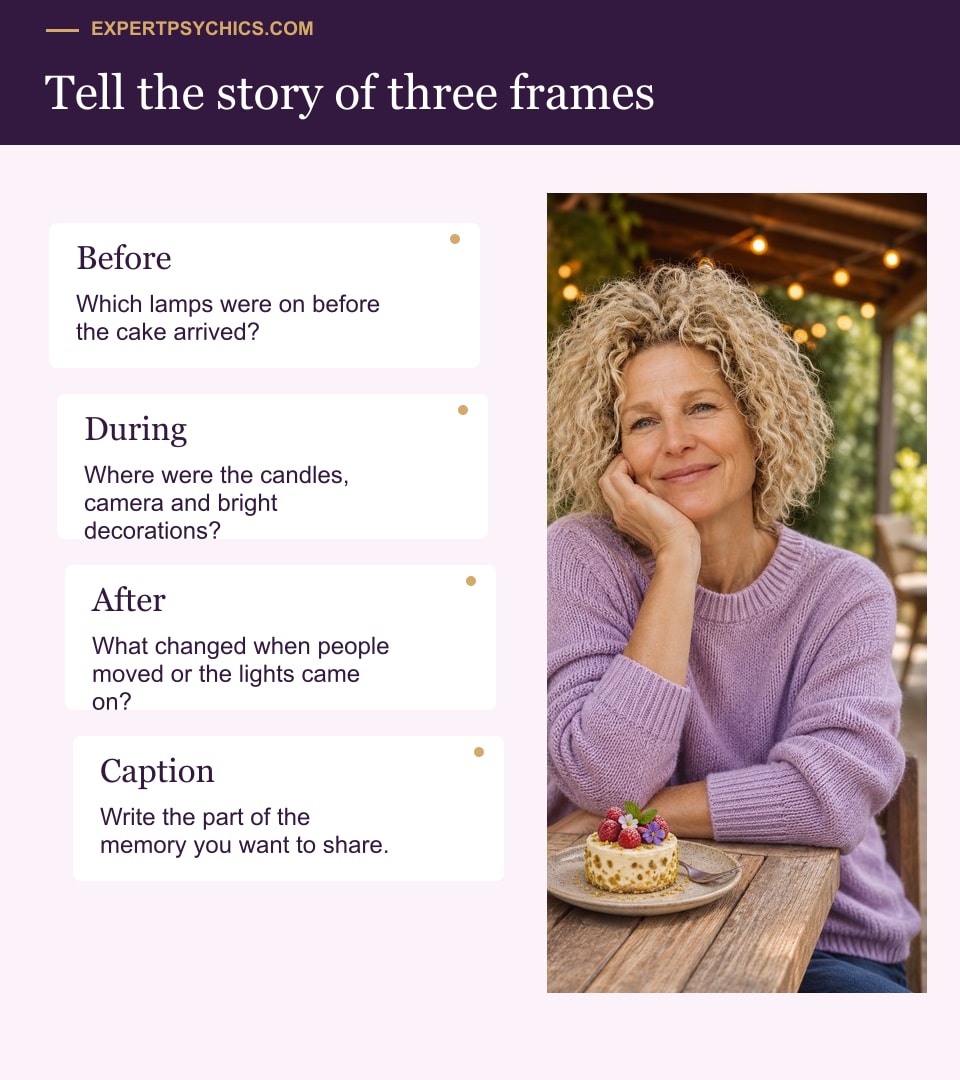
Read the visual guide as text
- Before. Which lamps were on before the cake arrived?
- During. Where were the candles, camera and bright decorations?
- After. What changed when people moved or the lights came on?
- Caption. Write the part of the memory you want to share.
A green orb above an empty chair
Imagine a green dot appears above an empty chair in the candle photo. A foil balloon is on the other side of the room. The spot disappears after the lights come on. You could try a similar angle toward the balloon and a steady lamp after the party, without recreating the whole scene. Notice what changes when you move the camera slightly or switch off the lamp.
Someone may say the empty chair reminded them of the guest of honor’s grandfather. A caption such as “We missed Grandpa at this table and told one of his favorite stories” can keep the association without telling the rest of the family what they saw.
Share less of the scene if that feels right
Some celebrations include children, private venues or guests who prefer not to appear online. Ask the people involved before posting identifiable faces. You can keep a personal album and share a photo of the cake or decorations instead. Preserve the original even if you make a shareable crop.
If another guest supplies a different explanation, ask what the day meant to them. Some of the pictures with no orbs may hold the details you most want to remember, such as who made the cake or what someone said after the candles went out.
Frequently asked questions
1. Why do orbs show up in birthday photos?
Dim rooms, candles, flash, airborne particles and reflective decorations can produce round spots under some camera angles.
2. What should I compare in photos of the cake?
Check how the room lights, candlelight, camera angle and exposure changed in the frames before, during and after the candles.
3. Could the orb mean someone who died was present?
You may associate it with someone you miss. A photo alone cannot establish their presence.
4. Can I repeat the conditions after the party?
Try a still setup with one similar light or reflection and vary one condition at a time. Keep any comparison separate from the original.
5. What is a considerate way to share the photo?
Ask permission to share identifiable guests, especially children, and use a caption that describes the memory from your point of view.