

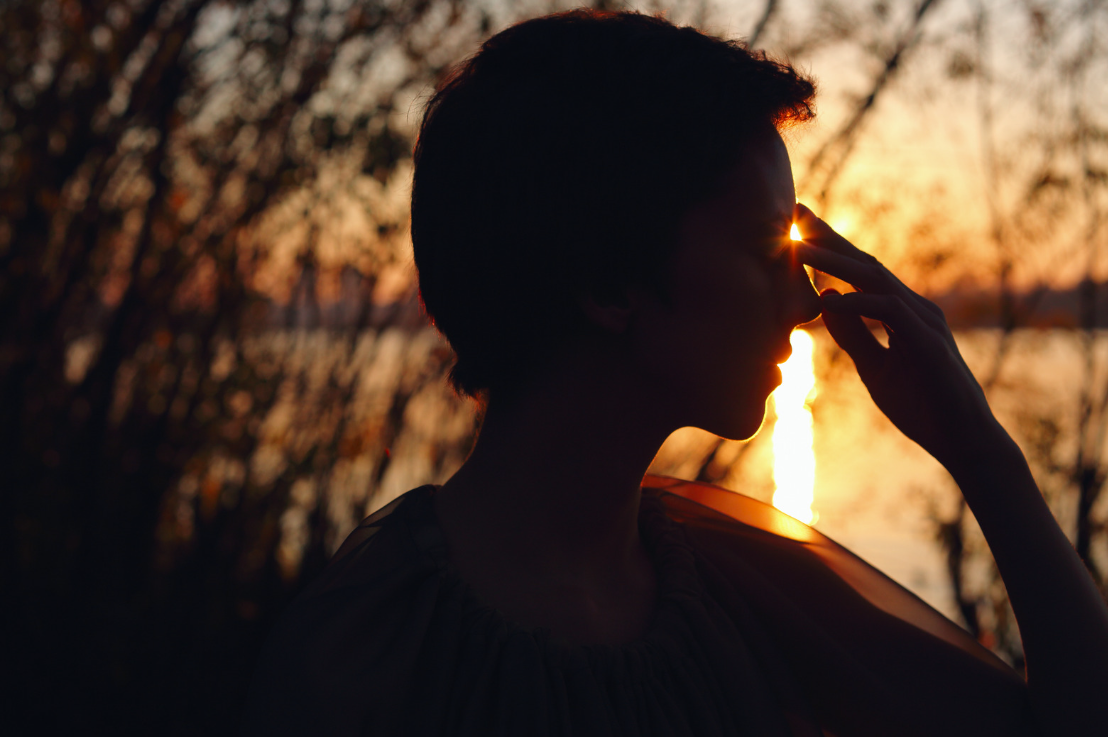
Some people practice third eye visualization before sleep because the quiet transition into dreaming can make imagery feel vivid and meaningful. The same timing can also blur the boundary between meditation, dream imagery and normal sleep-transition experiences. A safe bedtime practice protects sleep first, stays brief and treats images as material for reflection rather than commands or predictions.
Can you meditate on the third eye before bed?
Yes, when the practice is short, calming and easy to stop. Use natural breathing, avoid bright-light staring and end with a clear closing routine. Move the exercise earlier or discontinue it if it causes alertness, fear, repeated waking, vivid distressing dreams or reduced sleep.
Why nighttime imagery can feel unusually real
As a person falls asleep, the brain moves through a transition in which brief images, sounds, body sensations and dreamlike fragments may occur. These are often called hypnagogic experiences. Similar experiences can occur when waking and are called hypnopompic. They can be vivid without being supernatural or dangerous.
Attention and expectation matter. Reading lists of activation signs before bed can prime a person to notice colors, faces, voices or sensations and interpret them within that framework. Record what occurred before assigning meaning.
A four-part bedtime routine
Settle
Dim ordinary room light, silence notifications and feel the support under your body.
Soften
Relax the jaw, eyes and forehead. Let breathing remain natural and quiet.
Visualize
Imagine a small soft point of light or simply notice darkness without forcing imagery.
Close
Let the image fade, state that the exercise is finished and return attention to sleep.
Step-by-step visualization
- Decide in advance that the session will last no more than five minutes.
- Use a comfortable position that does not strain the neck or face.
- Notice the room, bed and sounds before closing your eyes.
- Take three ordinary breaths without making them deeper or faster.
- Bring gentle attention to the area between the eyebrows, but do not press or squint.
- Imagine a small, non-bright point or a calm open space. No image is required.
- Ask a reflective question such as, “What emotion needs kindness tomorrow?”
- Observe one or two impressions without analyzing them in bed.
- Say, “The practice is complete. I can review this after I wake.”
- Release the exercise and allow ordinary sleep.
If journaling wakes you up, use one or two words on paper and return to sleep. A detailed interpretation can wait until morning. The dream journal guide explains how to capture details without turning every dream into a fixed prediction.
Sleep comes before spiritual intensity
A practice is not helpful when it repeatedly reduces sleep. Sleep loss can increase anxiety, irritability, emotional intensity, unusual perception and poor judgment. It can also contribute to mania or psychosis in vulnerable people. Do not stay awake waiting for signs, guides or visions.
Continue or shorten
- You feel calm and sleepy afterward.
- You can stop without compulsion.
- You wake rested and function normally.
- You can hold several possible interpretations.
Pause the practice
- You become alert or afraid at bedtime.
- You repeatedly check the clock or search meanings.
- You sleep less or wake frequently.
- Images continue while fully awake and are hard to reality-check.
What different nighttime experiences may reflect
| Experience | Possible context | Useful response |
|---|---|---|
| Colors or patterns with closed eyes | Normal visual activity, afterimages, migraine aura or expectation | Avoid certainty; seek eye care for sudden or concerning visual changes |
| A face or scene appears briefly | Hypnagogic imagery, memory or imagination | Record it in the morning as dreamlike material |
| A bang, voice or name at sleep onset | Sleep-transition experience, stress or sleep disruption | Restore sleep; seek care if persistent while fully awake or distressing |
| Feeling unable to move on waking | Sleep paralysis | Focus on slow natural breathing and small movements; discuss recurrent episodes with a clinician |
| Falling or floating sensation | Sleep transition, muscle relaxation, anxiety or vestibular sensation | Orient to the bed and room; stop visualization if it increases panic |
| Repeated nightmares | Stress, trauma, medication, sleep disorder or other factors | Track patterns and seek professional help when frequent or impairing |
Third eye dreams and interpretation
A dream after meditation may feel connected to the question asked before bed. That connection can be explored symbolically, but it does not prove future events, telepathy, spirit contact or another person’s private intentions. Dreams often combine recent events, emotions, memories and imaginative material.
Use three columns in the morning:
- What happened in the dream?
- What emotions and recent events may connect with it?
- What low-risk action would be useful even if the spiritual interpretation is wrong?
For example, a dream about a locked door could prompt reflection on boundaries. It should not be treated as proof that a particular person is hiding something.
Lucid dreaming is different from guaranteed guidance
Lucid dreaming refers to awareness that one is dreaming while the dream continues. Some people use reality checks or dream journals to increase lucid-dream awareness. Lucidity does not make dream information objectively true. A lucid dream remains a dream and should not direct medical, legal, financial or emergency decisions.
Why sleep paralysis may be interpreted spiritually
Sleep paralysis can involve awareness without normal voluntary movement, sometimes with pressure, a sensed presence or vivid imagery. Cultural and spiritual interpretations vary, but a sleep explanation should be considered. Recurrent or highly distressing episodes deserve discussion with a healthcare professional, particularly when accompanied by significant daytime sleepiness or other sleep symptoms.
Do not use bright-light or flame staring at bedtime
Staring at a candle or bright source can create afterimages and eye strain, and open flame adds a fire hazard when a person is sleepy. Never look at the sun to activate the third eye. Use a mental image or a safe non-bright object earlier in the evening instead.
Sudden flashes, many new floaters, a curtain-like shadow or loss of vision require prompt eye care. See the National Eye Institute guidance on flashes and floaters.
Nighttime anxiety and compulsive checking
If you wake and immediately search the meaning of a number, dream or sensation, the search itself may train your attention to scan for more signs. Set a morning review window rather than checking through the night. Keep the phone away from the bed when possible.
A morning review rule
Wait until you are fully awake, have eaten and can consider alternatives. Read your original notes before searching interpretations. Choose no more than one practical, reversible action.
When to stop and seek help
Important warning signs
Stop the practice and seek qualified support for persistent insomnia, panic, severe nightmares, escalating suspiciousness, racing thoughts, unusual energy with little sleep, voices or visions while fully awake, confusion or reduced ability to work and care for yourself. Use urgent or emergency help when there is immediate danger, self-harm risk, sudden vision loss, seizure or severe neurological symptoms.
The National Institute of Mental Health describes psychosis warning signs. In the United States and its territories, call or text 988 for crisis support. Elsewhere, use the local crisis service or emergency number.
Who should be especially cautious?
People with a history of trauma, panic, dissociation, bipolar disorder, psychosis, seizures, migraine or serious sleep problems may need a modified approach. Eyes-open grounding earlier in the day may be more suitable. A clinician who knows your history can help assess whether meditation is contributing to symptoms.
A non-visual bedtime alternative
Place one hand on a comfortable surface, notice three sounds and think of one quality you want to practice tomorrow. Then release the question. This keeps the exercise connected to values rather than imagery and may be less stimulating.
How this guide differs from the other third-eye pages
This page focuses on bedtime, sleep-transition imagery, dreams and sleep protection. For the broader spiritual concept, read Third Eye Meaning: Beliefs, Symbols and Reflection. For a daytime practice, use Third Eye Meditation: A Safe, Grounded Beginner’s Guide. For detailed warning signs, see Third Eye Risks: Sleep, Anxiety and Reality Checks.
Frequently asked questions
1. Is it safe to meditate on the third eye before sleep?
It can be lower risk when brief, calming and voluntary. Stop or move it earlier if it disrupts sleep or increases anxiety.
2. How long should bedtime visualization last?
Three to five minutes is enough. Avoid prolonged sessions that delay sleep.
3. Do vivid images before sleep mean the third eye is opening?
Not necessarily. Hypnagogic imagery is a common sleep-transition experience.
4. Should I journal immediately after the practice?
Only if it does not wake you further. A few keywords may be enough until morning.
5. Can third-eye meditation cause vivid dreams?
Focusing on dreams and imagery may increase recall or perceived vividness, but many factors influence dreaming.
6. Are dreams after meditation predictions?
No. Dreams can support reflection but do not reliably predict future events or reveal private facts.
7. What is hypnagogic imagery?
It is brief dreamlike imagery, sound or sensation that can occur while falling asleep.
8. What is sleep paralysis?
It is temporary inability to move during a sleep-wake transition, sometimes accompanied by pressure or vivid imagery.
9. Should I use a candle at bedtime?
No open flame should be left near a sleepy person, and prolonged staring can create afterimages. Use a mental image instead.
10. Why do I see colors with closed eyes?
Normal visual activity, afterimages, migraine and other causes can produce colors. Sudden visual changes need appropriate eye care.
11. What if meditation makes me afraid to sleep?
Stop the practice, restore a simple bedtime routine and seek professional support if fear persists.
12. Can lack of sleep intensify spiritual experiences?
Sleep loss can intensify emotion, imagery and unusual perception, but that does not make the interpretation more accurate.
13. Can I ask about a relationship before sleep?
You may reflect on your own feelings and boundaries, but a dream cannot verify another person’s thoughts or consent.
14. When should I contact a doctor?
Seek care for persistent insomnia, recurrent sleep paralysis with daytime symptoms, severe nightmares, unusual visual changes or other concerning symptoms.
15. What is the safest closing step?
State that the exercise is finished, release the image, orient to the bed and room, and allow sleep without further interpretation.