

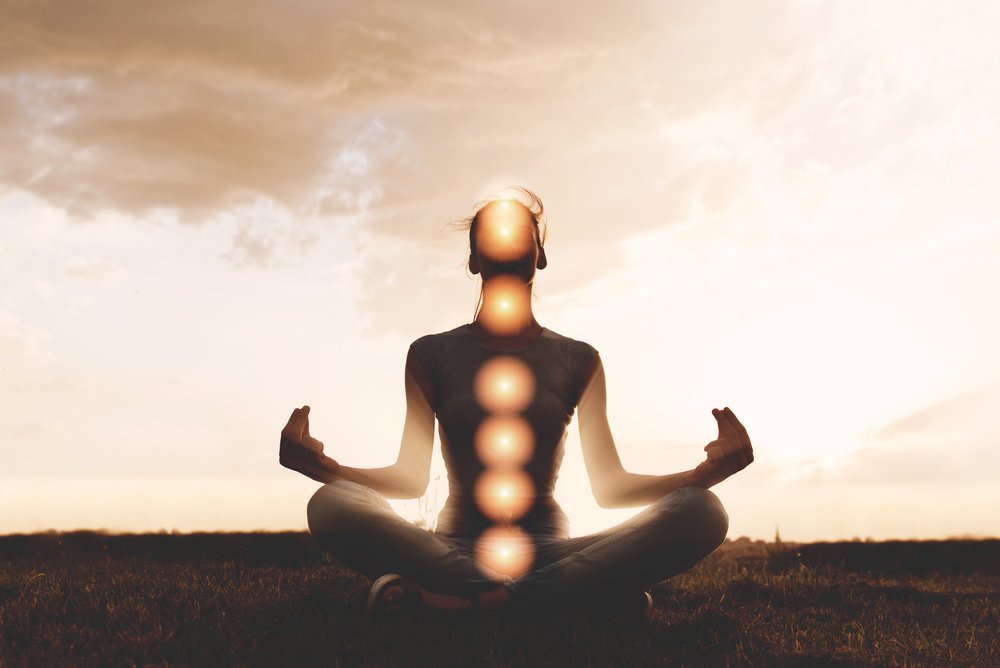
What Chakras Mean in Spiritual Traditions
Chakras are spiritual concepts found in Hindu, Buddhist, yogic and later Western wellness traditions. Different texts and lineages describe different numbers, locations and meanings; the modern seven-chakra rainbow system is only one influential model.
Chakras are not anatomical organs, and there is no medical scan or laboratory test that diagnoses a blocked chakra. Use the system for symbolism, meditation or reflection—not as a replacement for health care.
Symptoms Need Ordinary Health Assessment
Digestive problems, high blood pressure, thyroid symptoms, reproductive concerns, headaches, breathing trouble, pain, anxiety and depression should not be assigned to a chakra blockage.
Seek appropriate medical or mental-health care for persistent, severe or concerning symptoms. Do not stop treatment, medication or therapy because of a chakra reading.
Traditional Meaning
A symbolic center used in meditation, yoga, philosophy and spiritual practice.
Modern Use
A framework for journaling about security, creativity, agency, compassion, communication, insight and meaning.
The Seven-Chakra System
Root Chakra — Muladhara
Common location: base of the spine or pelvic floor. Modern color: red.
Theme: security, belonging, stability and material needs. Reflective question: Which practical part of my life needs greater safety or structure?
Sacral Chakra — Svadhisthana
Common location: lower abdomen or pelvic area. Modern color: orange.
Theme: creativity, pleasure, emotion and relationship to desire. Reflective question: What helps me experience enjoyment while respecting consent and boundaries?
Solar Plexus Chakra — Manipura
Common location: upper abdomen. Modern color: yellow.
Theme: agency, confidence, choice and responsibility. Reflective question: Which decision can I take responsibility for today?
Heart Chakra — Anahata
Common location: center of the chest. Modern color: green or sometimes pink.
Theme: compassion, grief, connection and boundaries. Reflective question: How can I care without abandoning my own safety?
Throat Chakra — Vishuddha
Common location: throat area. Modern color: blue.
Theme: expression, listening and integrity. Reflective question: What needs to be said clearly, and what do I need to hear?
Third Eye Chakra — Ajna
Common location: between the eyebrows. Modern color: indigo.
Theme: discernment, imagination and insight. Reflective question: Which part of this belief is observation, and which part is interpretation?
Crown Chakra — Sahasrara
Common location: crown of or above the head. Modern color: violet or white.
Theme: meaning, transcendence and connection. Reflective question: Which values help me live responsibly within something larger than myself?
Colors, Foods and Crystals
The rainbow color sequence widely used today is a modern interpretive convention. Wearing a color, eating a yellow fruit or carrying a crystal can serve as a reminder of an intention, but it does not medically “open” an organ or treat a disease.
- Choose food for nutrition, preference, allergy and health needs—not chakra color alone.
- Do not ingest crystals or drink homemade crystal water.
- Keep small stones away from children and pets.
- Do not use a stone instead of medication or professional care.
Movement and Yoga Safety
Walking, stretching, dancing and yoga can support general well-being when appropriate for the individual. They do not prove that a chakra was blocked or cured.
- Choose movement suited to your health, mobility and experience.
- Stop for pain, dizziness, breathing trouble or injury.
- Seek qualified instruction when a condition requires modification.
- Avoid exhausting exercise merely because an article says it is required for the Root chakra.
A Simple Seven-Minute Reflection
- Root: notice physical contact with the chair or floor.
- Sacral: name one emotion without judging it.
- Solar plexus: identify one choice within your control.
- Heart: name one act of compassion and one boundary.
- Throat: write one honest sentence.
- Third eye: separate a fact from an interpretation.
- Crown: name one value you want to practice.
Stop meditation if it increases panic, intrusive thoughts, dissociation or other distress. Shorter or eyes-open practices may feel safer for some people.
What “Blocked” or “Overactive” Means
In modern chakra language, “blocked” and “overactive” are metaphors used to describe a theme that feels restricted or excessive. They are not clinical diagnoses.
For example, difficulty speaking up may be described symbolically as a Throat chakra issue, but it could also involve anxiety, conflict, trauma, language, hearing or an unsafe relationship. The practical cause matters.
Chakra Practitioners and Ethical Limits
A responsible teacher should not:
- Diagnose disease from a chakra or aura.
- Promise a cure or guaranteed awakening.
- Demand repeated payment to remove a block or curse.
- Discourage medical or mental-health care.
- Use touch without informed consent.
- Tell a client that illness is their fault for having “low vibration.”
Read the more detailed Chakra Balance Explained: Meanings, Practices and Safety and Psychic Reading Ethics: Skepticism, Safety and Trust.
Chakras Across Traditions
The word and concept have long histories, and the modern Western seven-color system should not be described as the only authentic version. When studying a particular tradition, use sources from knowledgeable practitioners and scholars of that lineage rather than combining every system into one universal map.
Frequently Asked Questions
1. What is a chakra?
It is a spiritual concept used in several South Asian and modern wellness traditions, often described as a subtle center.
2. Are chakras physical organs?
No. They are not anatomical organs and cannot be diagnosed through ordinary medical imaging.
3. Are there always seven chakras?
No. Different traditions describe different systems. The seven-chakra model is one influential version.
4. Are chakra colors ancient and universal?
No. The modern rainbow sequence is a widely used later convention rather than one universal ancient rule.
5. Can a blocked chakra cause disease?
A chakra blockage is not a medical diagnosis. Health symptoms need appropriate professional assessment.
6. Can food open a chakra?
Food can support nutrition, but eating a color does not medically open a chakra.
7. Can crystals balance chakras?
Crystals may be used symbolically, but they are not proven medical treatments.
8. Can yoga balance chakras?
Yoga may be used within a spiritual practice and can have general wellness benefits, but it does not verify a chakra diagnosis.
9. What does “blocked chakra” mean?
It is usually a metaphor for a theme that feels restricted, avoided or difficult.
10. What does “overactive chakra” mean?
It is a symbolic way of describing a theme that feels excessive or unbalanced, not a clinical condition.
11. Can meditation open the Third Eye?
Meditation may support reflection and imagination, but it does not prove paranormal vision.
12. Is chakra meditation safe?
It has few risks for many people, but meditation can sometimes increase anxiety or other distress. Stop and seek guidance when needed.
13. Can a practitioner diagnose my chakras?
They may offer a spiritual interpretation, but it should not be presented as a medical or psychological diagnosis.
14. What is a chakra scam warning?
Warnings include guaranteed cures, escalating fees, fear, secrecy and pressure to stop professional care.
15. How can I use chakras responsibly?
Use the themes for reflection, keep practices low-risk and address practical health and safety needs directly.
Health and Editorial Resources
NCCIH: Yoga Effectiveness and Safety
NCCIH: Meditation and Mindfulness Safety
This guide respects chakra traditions while separating symbolism from medical evidence. See the Expert Psychics Editorial Policy.
Corrected and last reviewed: August 18, 2026.