

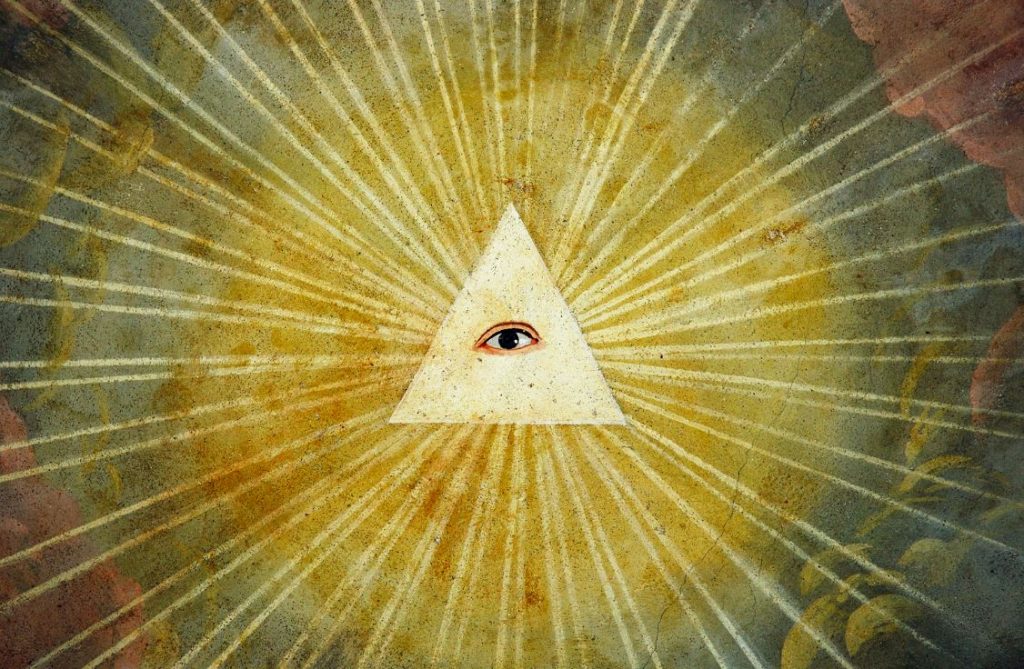
A third-eye journal is a structured record of intuitive impressions, meditation images, dreams, symbols and later outcomes. Its value is not in proving that every impression is psychic. A good journal reduces hindsight editing, shows how mood and context affect intuition, records misses as carefully as matches and turns spiritual reflection into small, testable actions.
How do you keep a useful third-eye journal?
Timestamp the entry before the outcome is known. Separate what you observed from what you interpreted, write a specific prediction only when appropriate, list alternative explanations, choose a low-risk action and return later to score the result without changing the original wording.
The six-part third-eye journal method
Record
Write the exact image, word, sensation or dream before researching it.
Define
State what the impression would mean in clear, limited language.
Compare
List context, ordinary sources and at least two alternatives.
Act
Choose only a safe, reversible and consent-respecting step.
Check
Review the outcome at a preset time using evidence.
Learn
Count matches, misses, vague entries and useful decisions.
Why timestamping matters
After an event occurs, memory naturally shifts toward details that fit. A timestamped entry preserves what was actually written before the result. Use the date, time and a fixed note that you do not later edit. If you need to add information, create a new dated section.
Original entry
“August 18, 8:10 a.m. I pictured a red folder and felt concern about the afternoon meeting.”
Later review
“August 19. A red slide appeared, but no problem occurred. Partial visual match; emotional prediction missed.”
Do not replace the original with “I knew the presentation would involve red.” The unedited wording is the evidence.
Separate five kinds of information
| Journal field | What belongs there | Example |
|---|---|---|
| Observation | The raw image, word, body sensation, dream or event | “Blue door, tight jaw, word ‘delay.’” |
| Interpretation | The possible symbolic meaning | “I may be hesitant about entering a new role.” |
| Prediction | A specific outcome, only when you intentionally test one | “The interview will be postponed before Friday at 5 p.m.” |
| Action | A practical response within your control | “Confirm the interview time and prepare anyway.” |
| Result | What happened, including non-matches and uncertainty | “No postponement. Prediction missed; preparation was still useful.” |
A complete journal template
Date and time:
Type of experience: meditation, dream, spontaneous thought, body signal, card, coincidence or other
Exact observation:
Emotion and intensity, 0–10:
Sleep, stress, substances, medication and recent triggers:
First interpretation:
Two alternative explanations:
Specific prediction, if any:
Deadline and what counts as a match:
Low-risk action:
Review date:
Outcome and score:
Define a prediction before testing it
A prediction such as “change is coming” can fit nearly any week. A fair test specifies the event, deadline and matching rule. It should also be safe to ignore.
| Vague statement | Testable version |
|---|---|
| Someone will contact me. | A person I have not messaged in thirty days will send me a direct message before Sunday at 8 p.m. |
| I see travel. | I will receive a specific invitation involving overnight travel within fourteen days. |
| Money is coming. | An unexpected payment not already owed or scheduled will arrive before month-end. |
| There will be conflict. | A planned Thursday meeting will include a direct disagreement documented in the minutes. |
Do not create predictions about death, diagnosis, pregnancy, crimes, missing people or another person’s private behavior. Some questions are too harmful or unverifiable to test casually.
Count misses, not only hits
A journal becomes misleading when only dramatic matches are highlighted. At the end of each month, count:
- Specific predictions that matched the prewritten rule
- Specific predictions that missed
- Partial matches
- Entries too vague to score
- Predictions that relied on information already available
- Actions that were useful even when the prediction missed
This prevents one memorable success from overshadowing many forgotten non-matches.
Check base rates and common events
An event can feel striking while still being common. Dreaming that someone will text is more likely to appear accurate when you communicate with many people every day. Feeling that a work problem is coming may reflect known deadlines and prior patterns. Ask how often the event would happen without the impression.
Useful intuition does not require supernatural certainty
An impression can direct attention to a real pattern even when its source is experience, memory or ordinary reasoning.
Track the conditions surrounding intuition
Add context so you can see when impressions are more or less reliable:
- Hours and quality of sleep
- Stress and emotional intensity
- Hunger, pain, illness and hydration
- Alcohol, cannabis, stimulants or other substances
- Medication changes
- Recent media, conversations and search history
- Relationship hopes or fears
- Time pressure and financial stakes
Strong impressions during sleep deprivation, panic or intoxication should not be treated as commands.
Observation versus body alarm
A “gut feeling” can reflect experience, but anxiety and trauma can also create intense body signals. Write both the sensation and the evidence.
Body signal
“My chest tightened when I opened the email.”
Evidence check
“The sender previously criticized my work, but this email contains only a scheduling request.”
You may still choose a boundary or support, but avoid treating the sensation as proof of hidden danger.
How to test low-risk impressions
- Choose a question with no medical, legal, financial or safety consequence.
- Write the impression before obtaining the answer.
- Define one clear match rule.
- Do not repeatedly redraw cards or meditate for a preferred answer.
- Reveal the answer through an ordinary method.
- Record the result immediately.
- Review a group of trials rather than one example.
Examples include predicting which of several sealed colored cards will be selected or which song from a short randomized list will play. Even a streak of matches needs repeated testing and does not establish a broad ability to diagnose or predict life events.
Relationship questions and consent
Do not use a journal to build a case that someone secretly loves you, is cheating or wants contact. Dreams, numbers and sensations cannot speak for another person. Record direct words and behavior separately from spiritual impressions.
| Impression | Consent-based reality check |
|---|---|
| “They are my twin flame.” | Have they freely chosen contact and the relationship? |
| “They are sending signs.” | Is there direct communication, or am I interpreting public content? |
| “They will return.” | What boundary protects me if they do not? |
| “They are hiding something.” | What observable behavior and respectful question are available? |
Health, legal and financial limits
- Do not diagnose a symptom from a journal image.
- Do not stop medication based on a dream or color.
- Do not predict a legal ruling instead of preserving evidence and seeking advice.
- Do not invest, gamble or borrow based on numbers received in meditation.
- Do not locate a missing person through journaling instead of contacting authorities.
- Do not accuse someone of a crime based on intuition.
Do not let the journal become a command system
Pause if entries feel like orders, every event becomes a coded message, you lose sleep recording signs, or you feel responsible for preventing disaster. Seek qualified help when fear, confusion or reality testing changes. In the United States, call or text 988 for crisis support; use local services elsewhere.
Review without cherry-picking
Use a monthly table:
| Category | Count | What you learned |
|---|---|---|
| Clear matches | Enter total | Were details specific and timestamped? |
| Misses | Enter total | What expectation or context may have shaped them? |
| Partial matches | Enter total | Would the match still seem strong to a neutral reader? |
| Too vague to score | Enter total | How can future entries become clearer? |
| Useful actions | Enter total | Which steps helped regardless of prediction? |
Use prospective rather than retrospective interpretation
Prospective journaling records the impression first and outcome later. Retrospective interpretation begins after an event and searches old dreams or symbols for a match. Retrospective meaning may be emotionally useful, but it cannot fairly test prediction because memory and selection occur after the fact.
Keep spiritual and practical columns
Spiritual reflection
- Color or symbol
- Personal meaning
- Prayer or value
- Sense of connection
Practical review
- Evidence
- Alternative explanations
- Consent and privacy
- Cost, risk and next step
Neither column has to erase the other. The separation makes the journal more trustworthy.
Digital privacy
A third-eye journal may contain intimate thoughts about health, relationships and spiritual beliefs. Protect it:
- Use device encryption and a strong passcode.
- Review cloud backup and shared-account settings.
- Do not store another person’s private records without need or permission.
- Remove names when sharing examples publicly.
- Do not upload a full journal to an untrusted reader or app.
- Keep emergency, medical and legal evidence in the appropriate secure system rather than only in a spiritual journal.
When journaling becomes rumination
Set a ten- to twenty-minute limit. Stop when you are rewriting the same fear, searching for certainty or neglecting action. Shift to a practical task, movement, social support or professional care. A journal should clarify patterns, not require endless decoding.
A seven-day beginner experiment
- Day 1: record one spontaneous impression without prediction.
- Day 2: add two alternative explanations.
- Day 3: test one harmless, clearly defined outcome.
- Day 4: record a miss without explaining it away.
- Day 5: compare intuition before and after adequate sleep.
- Day 6: use an impression only to choose a reversible action.
- Day 7: review usefulness, misses and emotional impact.
Frequently asked questions
1. What is a third-eye journal?
It is a structured record of intuitive impressions, dreams, symbols, interpretations, actions and later outcomes.
2. Why should I timestamp entries?
A timestamp preserves what was written before the result and reduces hindsight editing.
3. Should I edit an old prediction?
No. Add a new dated note while keeping the original wording unchanged.
4. What counts as a hit?
Only an outcome that meets the clear match rule and deadline written before the event.
5. Should partial matches count?
Record them separately. Do not convert a partial resemblance into a complete success.
6. Why record misses?
Misses are necessary to evaluate patterns fairly and prevent memorable hits from dominating.
7. Can I test intuition with cards?
Yes, using harmless randomized trials with the choice recorded before reveal. A small streak does not prove broad psychic ability.
8. Can a journal reveal another person’s thoughts?
No. It records your impressions, not another person’s private mind or consent.
9. Can I use it for health questions?
Use it to note concerns for a healthcare visit, not to diagnose or change treatment.
10. Can I record dreams in the same journal?
Yes. Label dream entries clearly and separate the dream account from later interpretation.
11. How often should I review entries?
A weekly or monthly review is usually enough. Constant checking can increase rumination.
12. What is confirmation bias?
It is the tendency to notice and favor information that supports an existing belief while discounting contrary evidence.
13. What is hindsight bias?
It is the feeling after an event that it was more predictable than it actually was beforehand.
14. When should I stop journaling?
Pause when it worsens sleep, fear, compulsive checking, confusion or daily functioning.
15. What is the best outcome from the journal?
Better self-awareness, clearer decisions and more honest tracking—not certainty about every symbol.