

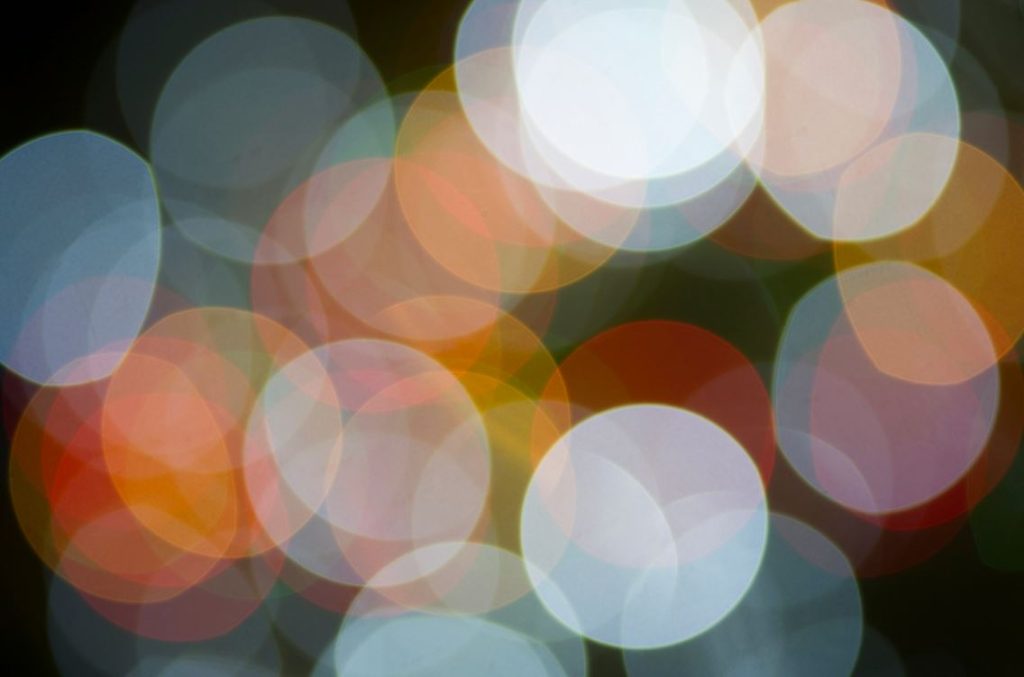
Angel orbs are round or translucent lights that some people interpret as angels, loved ones, guides or protective spiritual presences. In photographs, orb-like circles are also commonly produced when flash reflects from dust, pollen, moisture or insects close to the lens, or when a bright source causes lens flare. A photo can hold personal spiritual meaning without proving what created the light.
How can you tell whether an orb is a camera effect?
Check whether flash was used, whether the air contained dust or moisture, whether the circle is out of focus, whether similar spots appear in neighboring frames and whether changing the camera angle or turning off flash makes it disappear. Keep the original file and metadata before adding filters or enlarging it.
The six-check orb photo review
Flash
Was the built-in flash used in a dim setting?
Air
Was there dust, pollen, rain, mist, snow or smoke?
Lens
Was the lens clean, uncovered and away from hair or straps?
Light
Was a lamp, sun, mirror or reflective surface in the scene?
Sequence
Do nearby frames show the spot moving or disappearing?
Original
Review the unedited file, crop and camera information.
Why flash creates round white orbs
When a tiny particle is very close to the camera, it is too near to be in focus. A built-in flash can light the particle strongly, creating a soft round circle while the distant subject remains sharp. Sony’s camera support documentation explains that floating dust illuminated by flash can appear as white round glare spots known as orbs, especially in low light when flash is close to the lens.
| Appearance | Common photographic cause | Simple test |
|---|---|---|
| Large pale circle with soft edges | Dust, pollen or moisture very close to the lens | Retake without flash or with an off-camera light. |
| Many circles in a dark room | Flash reflecting from airborne particles | Ventilate safely, wait and compare another frame. |
| Bright polygon or ring near a lamp | Lens flare or internal lens reflection | Change angle or block the light source from the lens. |
| Long translucent streak | Moving insect, hair, strap, raindrop or camera motion | Inspect the lens area and compare shutter speed. |
| Colored fringe around a bright spot | Lens optics, sensor processing or chromatic effects | Compare with another camera and unedited file. |
| Face-like pattern inside a circle | Random texture enlarged and interpreted as a familiar face | View at normal size and ask independent viewers before suggesting a face. |
Dust, moisture, insects and snow
Orbs are especially common at night, in old buildings, outdoors after rain, near beaches, in dusty rooms and during snowfall. A tiny insect can reflect flash and create an orb or curved streak. Breath, fog and water droplets can produce many overlapping circles. These conditions are useful clues rather than proof that a location is spiritually active.
Lens flare and ghost images
A strong light source inside or just outside the frame can reflect between lens elements, creating circles, rings, polygons or haze. Move a few steps, change the angle or shade the lens. If the shapes move in a predictable relationship to the light, lens flare is likely.
Why people see faces in orbs
The brain naturally looks for familiar patterns, especially faces. Enlarging a low-resolution circle increases pixels, compression blocks and random texture that can look like eyes or features. This tendency is called pareidolia. It does not mean the comfort is false; it means the face alone cannot identify a spirit or deceased person.
Personal meaning and photographic cause can coexist
A dust orb may still remind you of someone or mark an emotionally important moment. The symbolic meaning does not require claiming that the particle was physically an angel.
Common angel-orb color meanings
Modern spiritual color keys vary widely. Use them as optional journal prompts, not fixed classifications.
| Color | Common spiritual theme | Practical caution |
|---|---|---|
| White | Protection, clarity, peace or sacred presence | White is also the most common flash-reflection color. |
| Blue | Calm, courage, faith or communication | Color balance and nearby blue surfaces can influence the image. |
| Green | Growth, compassion, nature or healing symbolism | It cannot diagnose health or prove healing ability. |
| Pink | Affection, tenderness or comfort | Do not treat it as proof of a romantic or deceased person’s identity. |
| Purple | Spirituality, imagination or transformation | Digital processing may add purple fringing around bright areas. |
| Gold | Wisdom, purpose or sacred value | Warm lighting and white balance can create gold tones. |
| Red or orange | Action, warmth, strength or warning | Do not use the color alone to predict danger. |
| Black or brown | Mystery, shadow, fear or protection in some systems | A dark spot does not prove evil; it may be dust on the sensor or underexposure. |
Do dark orbs mean evil spirits?
No photograph can establish that a dark circle is evil, dangerous or demonic. Dark spots may come from sensor dust, shadows, underexposure or objects in the scene. Fear is also not a reliable identification method. Check physical safety, lighting and the original file before any spiritual interpretation.
Do not let an orb photo create a paid emergency
Be cautious when someone says a photo proves a curse, demon or dangerous attachment that requires immediate payment. Do not send intimate images, account details, valuables or repeated fees for “removal.”
Orbs after a loved one dies
An orb in a meaningful family photograph can feel comforting during grief. It cannot identify a deceased person by shape or color. You can honor the moment through a memory, story, candle used safely or memorial practice without claiming certainty.
For a broader grief-centered approach, read How to Feel Connected After the Death of a Loved One.
How to preserve a photo for analysis
- Keep the original file and do not overwrite it.
- Export a copy before cropping or adjusting contrast.
- Record date, time, location, weather and whether flash was used.
- Save the frames immediately before and after it.
- Note nearby lights, mirrors, windows, rain, smoke and dust.
- Clean the lens and retake from the same place with flash off.
- Compare with another camera if available.
How to run a controlled retest
Photo A
- Same room and angle
- Built-in flash on
- Ordinary settings
- Record airborne dust or mist
Photo B
- Same room and angle
- Flash off
- Tripod or stable support
- Use room light safely
If circles occur mainly with built-in flash, near-camera reflection is a strong explanation. A result that remains unexplained is still unexplained—not automatically paranormal.
What about orbs seen with the naked eye?
Brief spots, flashes, halos or floaters can have visual causes. Seek urgent eye care for many sudden new floaters, flashes, a curtain or shadow, sudden blur or vision loss. The National Eye Institute explains these warning signs. Do not interpret a sudden vision change only as an angel.
Ethics when sharing orb photos
- Ask permission before posting identifiable people or private homes.
- Do not label someone’s deceased relative without consent.
- State whether an image has been edited or filtered.
- Do not claim a child attracts spirits.
- Remove location metadata when privacy or safety is a concern.
- Respect people who prefer a photographic explanation.
A balanced interpretation template
Use wording such as: “This round light may be consistent with flash reflecting from dust or moisture. Because the photograph was emotionally meaningful, I also associate the white color with comfort. I cannot verify that it represents an angel.”
Frequently asked questions
1. What is an angel orb?
It is a round light interpreted spiritually as an angel or protective presence. In photos, many orbs are flash reflections from nearby particles.
2. Why do orbs appear mostly at night?
Low light encourages flash use, and particles close to the lens become strongly illuminated.
3. Can dust make a large orb?
Yes. A tiny particle very close to the lens can appear as a large soft circle because it is out of focus.
4. Can rain or snow create orbs?
Yes. Water droplets and snowflakes can reflect flash and form circles or streaks.
5. Can insects create orbs?
Yes. An insect near the lens may appear as a circle, blur or curved trail.
6. What is lens flare?
It is reflection or scattering within the lens caused by a bright light source, often creating rings, polygons or haze.
7. Does a white orb prove a guardian angel?
No. White can be spiritually meaningful, but it is also the common appearance of flash-reflected dust.
8. Does a black orb mean evil?
No. Dark spots can come from sensor dust, shadows or underexposure and do not prove a dangerous spirit.
9. Why do I see a face inside an orb?
The brain readily finds face-like patterns in random texture, especially after enlargement or contrast adjustment.
10. Can an orb be a deceased loved one?
It may be interpreted that way personally, but a photograph cannot identify a deceased person with certainty.
11. How do I test an orb photo?
Retake the scene with flash off, change angle, clean the lens, review nearby frames and preserve the original file.
12. Are colored orbs always edited?
No. Lighting, optics, white balance and processing can create colors, and editing can as well. Check the original and metadata.
13. Can phone cameras create orbs?
Yes. Small lenses, nearby flash, low light, moisture and computational processing can all contribute.
14. Should I pay for an orb cleansing?
Do not pay because someone threatens danger from a photo. Seek independent advice and protect your finances.
15. When do visual orbs need eye care?
Seek urgent care for sudden new floaters, flashes, a curtain or shadow, blur or vision loss.