

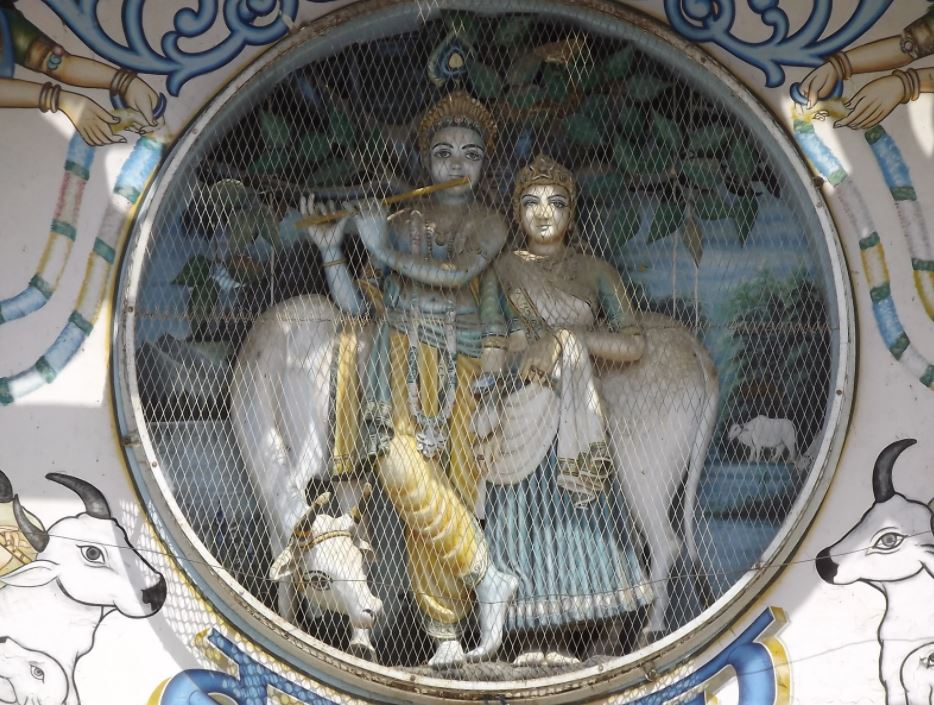
A patron deity is broadly understood as a god, goddess or sacred figure associated with a person, family, place, community, occupation or devotional path. The exact meaning depends on the religion and culture. Modern witchcraft communities sometimes use “patron deity” for a personally significant deity, but no universal rule requires every witch, pagan or spiritual practitioner to choose one.
How do you find a patron deity respectfully?
Begin with the tradition rather than a personality quiz. Define what kind of practice you are considering, study reliable histories and living community guidance, distinguish a meaningful impression from proof, start with modest nonhazardous devotion and review how the practice affects ethics, daily life and mental health. You may remain undecided or practice without a patron deity.
The six-part patron-deity discernment path
Define
Clarify the religion, goal and meaning of “patron.”
Research
Study history, myths, ritual context and living practice.
Respect
Check community boundaries, initiation and cultural authority.
Begin
Use a small, safe and reversible devotional routine.
Discern
Record signs while considering coincidence and bias.
Review
Assess ethics, functioning, cost and freedom to stop.
Patron, tutelary, household and chosen deities
These terms overlap in ordinary speech but are not interchangeable across religions.
| Term | Possible meaning | Important caution |
|---|---|---|
| Patron deity | A deity linked with a person, occupation, city, institution or area of life | The relationship may be communal rather than privately selected |
| Tutelary deity | A guardian or protector connected with a place, lineage, institution or devotee | Protection beliefs and obligations vary by tradition |
| Household or family deity | A sacred figure honored within domestic or inherited practice | Family tradition is not the same as an online personal-deity method |
| Chosen or preferred deity | A deity toward whom a devotee directs particular love or practice | The concept must be understood inside its own religious framework |
| Spirit guide, ancestor or saint | Other sacred or devotional relationships | Do not relabel every sacred being as a patron deity |
Museum collections show how varied personal and household devotion can be. A Ming-period figure of Zhenwu was made for personal veneration on a home altar, while a portable Jagannatha household shrine served devotees within a specific Hindu context. These examples demonstrate diversity, not a universal selection method.
You do not need a patron deity
Witchcraft and pagan practice appear in religious, devotional, magical, philosophical and nonreligious forms. Some practitioners honor several deities, one deity, ancestors, nature, an impersonal sacred reality or no supernatural being. Not having a patron does not make a practice incomplete, powerless or less authentic.
Uncertainty is a valid position
You may study for months or years, participate in community worship without claiming a private relationship, or decide that deity devotion does not fit you.
Start with the tradition, not a list of traits
Online quizzes often match a deity with favorite colors, hobbies, zodiac signs or personality traits. That may generate a reading list, but it does not establish a devotional relationship. Begin with questions such as:
- Which religious or cultural tradition is involved?
- How do practitioners in that tradition understand the deity?
- Are there temples, clergy, elders, initiates or recognized communities?
- Which myths, hymns, prayers or historical sources are central?
- Are names, images or rituals restricted?
- What ethical expectations accompany devotion?
- Am I seeking belonging, power, reassurance, healing or identity?
Use layered research
Primary and traditional sources
Read translated hymns, myths, liturgy and texts with notes explaining date, language and context.
Living community guidance
Listen to practitioners who hold recognized roles, while remembering that no community is internally uniform.
Scholarly and museum sources
Use universities, museums and qualified historians to check dates, objects and cultural settings.
Personal reflection
Journal what attracts you without treating preference as historical authority.
Social posts, short videos and commercial deity profiles can supplement study but should not be the only sources.
Respect closed, initiatory and community-held practices
Some sacred roles, names, songs, offerings, divination systems or ritual objects belong to initiated practitioners, hereditary communities or specific peoples. Public information does not automatically grant permission to reproduce every practice.
A Metropolitan Museum description of a Yoruba ilé-orí shrine notes that its care occurred under the guidance of a babaláwo. The example illustrates why community-specific authority matters.
- Ask whether a practice is public, initiatory or restricted.
- Do not claim priesthood, lineage or initiation you do not have.
- Do not sell rituals copied from a marginalized community.
- Use correct names and pronunciation when reasonably possible.
- Distinguish appreciation, study, attendance and formal participation.
- Accept “this is not open to outsiders” without arguing for spiritual entitlement.
What if a deity seems to be contacting you?
A dream, repeated symbol, animal, name, song or strong feeling may be interpreted spiritually. It may also reflect recent study, attention, algorithms, memory, emotion or coincidence. Record the raw event before deciding what it means.
| Raw event | Possible spiritual meaning | Alternative context | Low-risk response |
|---|---|---|---|
| A deity’s name appears twice | An invitation to learn | Recent searches increased exposure | Read a reliable introduction |
| A vivid dream includes an animal | A symbolic encounter | Memory, stress or recent media | Journal before interpreting |
| A candle flickers during prayer | A sense of presence | Airflow, wick or wax | Check fire safety first |
| You feel sudden certainty | A devotional calling | Emotion, expectation or identity need | Wait and compare over time |
| A reader names a deity | A possible prompt | Cold reading or a broad association | Research independently; do not pay from fear |
Use Signs from the Universe: Meaning, Bias and Grounding for a broader reality-check framework.
“Chosen by a deity” is not objectively testable
A believer may use calling language as part of a sincere spiritual life. No universal test proves that a particular god selected someone, assigned a mission or granted authority over others. Safer wording preserves both faith and humility:
“I experience these symbols as an invitation to study and practice respectfully” rather than “This deity chose me, so my interpretation cannot be questioned.”
A modest thirty-day study period
- Days 1–5: learn the deity’s names, cultural setting and major stories.
- Days 6–10: study how worship is practiced by living communities.
- Days 11–15: identify public versus restricted practices.
- Days 16–20: try a brief prayer, reading or silent reflection without vows.
- Days 21–25: record dreams and signs alongside ordinary explanations.
- Days 26–28: review cost, sleep, mood, relationships and daily responsibilities.
- Days 29–30: decide whether to continue studying, seek community guidance, pause or stop.
A study period is not a contract. Do not promise lifelong devotion during an emotionally intense first week.
A simple low-risk devotional practice
- Choose a clean, stable place that does not obstruct exits or shared space.
- Place a lawful, respectfully sourced image or written name if appropriate.
- Use ordinary light or a battery candle.
- Offer clean water, flowers, a poem, study time or charitable action when suitable.
- Read a short public prayer, hymn or passage.
- Reflect for five to ten minutes.
- Thank the sacred figure according to your belief.
- Remove food and water before they spoil.
- Return to ordinary responsibilities.
The purpose is devotion and reflection, not producing a dramatic sign on demand.
Altar and fire safety
Keep ritual physically safe
- Never leave a flame unattended.
- Keep candles away from fabric, paper, hair, children and pets.
- Do not burn unknown herbs or resins.
- Ventilate smoke and respect asthma, allergies and housing rules.
- Secure heavy statues and sharp objects.
- Do not place food where it attracts pests.
- Keep water away from electronics.
- Do not use blood, bodily fluids or self-injury.
Devotion does not become more authentic because it is painful, dangerous or secret.
Offerings without harm
Offerings vary widely. Research what is appropriate within the actual tradition. Lower-risk possibilities may include water, flowers, incense where safe, food, music, study, cleaning, charity or ethical conduct.
- Do not leave glass, food or objects in public natural areas.
- Do not feed wildlife.
- Do not use protected plants, feathers or animal parts.
- Do not pour alcohol, oil, salt or chemicals into soil or water.
- Do not ingest ritual substances unless they are ordinary food and safe for you.
- Avoid alcohol offerings when substance use is a concern.
- Dispose of offerings according to local rules and community guidance.
Images, statues and cultural property
Buy from reputable makers and sellers, especially when an object is described as old, excavated, temple-used or ceremonial. Avoid looted artifacts, human remains and items whose sale may violate cultural-property or wildlife laws. A printed image or handwritten name can be enough.
Prayer, meditation and contemplation
Devotion may include prayer, sacred reading, music, contemplation or meditation. Keep sessions compatible with sleep, work and health. Read Spiritual Meditation: Meaning, Methods and Boundaries for a grounded practice.
Divination and confirmation bias
Tarot, dreams, pendulums and other divination tools may generate symbolic prompts. Repeating a question until the preferred answer appears undermines discernment.
| Grounded use | Dependency pattern |
|---|---|
| Ask one low-stakes question | Ask repeatedly whether the deity is angry |
| Record the first result | Redraw until a desired card appears |
| Consider several meanings | Treat one symbol as an urgent command |
| Check history and context | Let personal signs override community knowledge |
| Continue ordinary decisions | Pause life until another reading gives permission |
For impression testing, use Psychic Intuition: Meaning, Bias and Practical Tests.
Can you honor more than one deity?
Some religions and personal practices include many deities; others emphasize one, and some prohibit worship outside a particular framework. Do not assume every pantheon works like a modern mix-and-match system. Research relationships, ritual distinctions and community expectations before combining figures.
Multiple devotion should not become a collecting competition or escalating demand for separate expensive altars.
Gender and deity language
Deities are understood through language, image, myth, theology and culture. Modern labels such as masculine, feminine, nonbinary or beyond gender may fit some discussions and distort others. Use the tradition’s own descriptions first, then explain your personal interpretation as personal.
Vows, promises and ending a practice
A private exploratory practice can usually be paused. Formal vows, initiations and communal obligations may have specific processes, so consult the relevant tradition rather than relying on generic internet advice.
- Do not make a vow during panic, grief, intoxication or sleep deprivation.
- Write the terms before agreeing.
- Do not promise money, sex, injury, isolation or illegal acts.
- Ask what withdrawal or change means.
- Keep access to family, healthcare and independent support.
- A personal spiritual practice should not remove the right to seek safety.
Health, legal and financial limits
A deity sign, dream or reader cannot diagnose illness, determine medication, guarantee pregnancy, interpret a contract, predict a court result, choose an investment or provide lottery numbers. Use qualified professionals and documented information for high-stakes decisions.
Relationships and consent
Do not claim a deity assigned you a romantic partner, authorized sexual contact or requires another person to accept your practice. Other people retain consent, privacy and freedom of religion. A spiritual message does not override a breakup, block, workplace rule or legal order.
When devotion supports grief
Prayer and ritual may provide comfort after loss. Avoid anyone who says a deceased person is trapped, punished or suffering unless you pay for deity work. Major financial, legal and medical choices should not be based on an alleged message received during acute grief.
When spiritual experiences become distressing
Pause and seek qualified support when
- You receive threatening or dangerous commands.
- You feel constantly watched, punished or controlled.
- Sleep drops sharply.
- You become unusually grandiose, impulsive or unable to work.
- Neutral media or strangers seem to contain urgent private messages.
- You cannot distinguish inner experience from shared events.
- You may harm yourself or someone else.
Use emergency or crisis services when safety is immediate. Grounding and spiritual identity can coexist with medical or mental-health care. See Grounding Techniques: Calm, Orientation and Daily Safety.
Teacher, reader and group red flags
Leave or seek outside help when someone
- Claims exclusive authority to identify your deity
- Says refusal will bring divine punishment
- Requires escalating payments, gifts or labor
- Demands sex, nudity, substances or painful initiation
- Controls sleep, food, housing, relationships or communication
- Discourages doctors, lawyers, family or independent research
- Uses secret information to threaten or shame
- Requests gift cards, cryptocurrency, wire transfers or account access
- Claims criticism proves spiritual impurity
- Cannot explain credentials, lineage, policies or total cost
A discernment review
After a month, ask:
- Have I learned more about the tradition rather than only myself?
- Am I more ethical, responsible and respectful?
- Can I tolerate uncertainty?
- Are sleep, work and relationships stable?
- Is spending within a fixed budget?
- Can I question a teacher or interpretation?
- Do I remain free to pause?
- Am I respecting community boundaries?
A healthy practice expands responsibility
Devotion should not make a person immune to feedback, evidence, consent or ordinary consequences.
Related spiritual-practice guides
- Spiritual Meditation
- Signs from the Universe
- Psychic Intuition
- Grounding Techniques
- How to Make Hard Decisions
Frequently asked questions
1. What is a patron deity?
It is a deity associated with a person, family, place, community, occupation or devotional path, depending on the tradition.
2. Is a patron deity the same as a tutelary deity?
The terms may overlap, but tutelary often emphasizes guardianship and the exact meanings vary by culture and religion.
3. Does every witch need a patron deity?
No. Many practitioners work without deity devotion, and no universal rule makes a patron necessary.
4. How do I choose one?
Study the tradition, reliable sources, public practices and community guidance before beginning a modest exploratory devotion.
5. Can a deity choose me?
A believer may interpret experiences as a calling, but no universal objective test proves divine selection.
6. Are dreams proof of contact?
No. Dreams may be spiritually meaningful and also reflect memory, emotion, expectation and recent study.
7. Are repeated symbols signs?
They may become reflection prompts, but attention, algorithms, frequency and coincidence should also be considered.
8. Do I need an altar?
No. Prayer, study, ethical action or a simple image may be enough when appropriate to the tradition.
9. What offerings are safest?
Research the tradition. Water, flowers, study or charity may be lower risk when lawful, environmentally responsible and suitable.
10. Can I worship deities from several pantheons?
Some practices allow multiple devotion, while others have restrictions. Do not treat traditions as interchangeable.
11. What is a closed practice?
It is a practice whose participation or ritual authority may be limited by initiation, lineage, community membership or other tradition-specific rules.
12. Can I stop deity work?
An informal personal practice can be paused. Formal vows or initiation may require guidance from the relevant community.
13. Can a deity tell me whom to date?
A spiritual impression cannot override another person’s consent, current words or relationship boundaries.
14. What are deity-reader scam signs?
Exclusive authority, threats of punishment, escalating fees, secrecy, unusual payments and demands to abandon outside support are warnings.
15. What is the safest first step?
Read a reliable history of the deity and tradition, record why you are interested and make no vow or expensive purchase.