

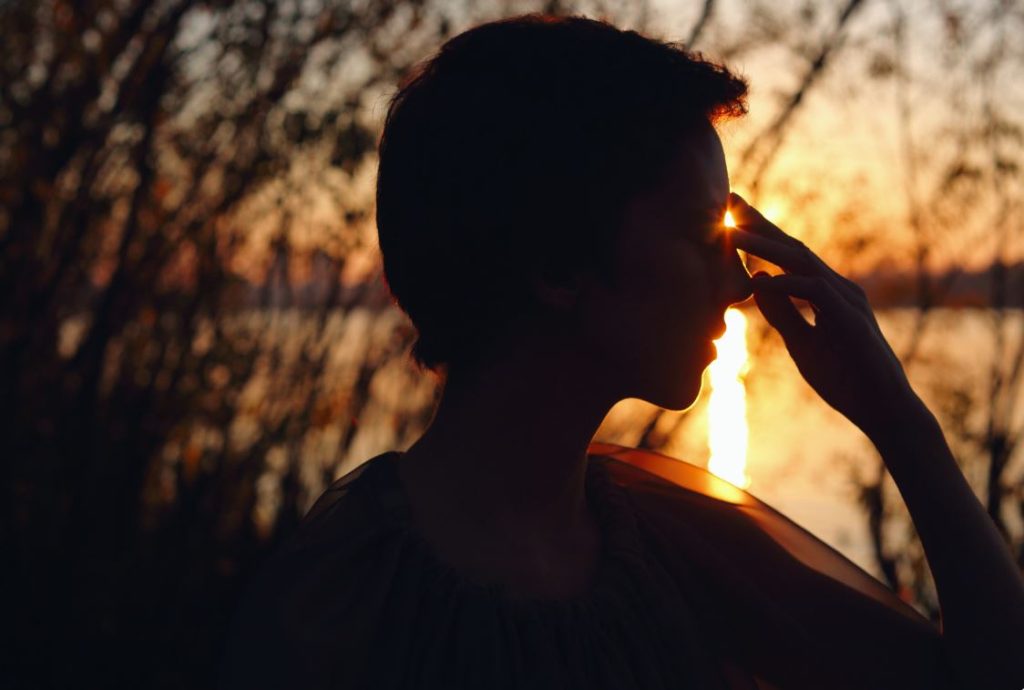
The third eye is a spiritual symbol associated with insight, discernment, inward attention and perception beyond ordinary appearances. In many modern chakra systems it is linked with Ajna, a Sanskrit term often translated as command, authority or perception. Teachings vary across yogic, Hindu, Buddhist and modern spiritual traditions, so one online diagram should not be treated as a universal spiritual anatomy.
What does the third eye mean?
The third eye commonly symbolizes the ability to observe thoughts, question assumptions, recognize patterns and seek a wider perspective. A grounded practice may use meditation, visualization, prayer, study, dream journaling or ethical reflection. It does not create a verified organ of clairvoyance, guarantee psychic powers or replace medical assessment, consent and evidence.
The six-part third eye reflection map
Context
Name the tradition, teacher or personal framework being used.
Ground
Check sleep, food, medication, stress and physical safety.
Focus
Choose a brief, comfortable attention practice.
Observe
Notice imagery, thought and sensation without forcing meaning.
Record
Separate the raw experience from interpretation.
Review
Use evidence, consent and ordinary functioning as limits.
Ajna and chakra traditions are varied
Chakra systems developed in diverse South Asian religious and philosophical settings. Historical texts and lineages describe different numbers, locations, deities, sounds, visual symbols and purposes. The familiar modern seven-chakra ladder is influential, but it is not the only map.
Ajna is commonly placed in the region between the eyebrows in modern teaching. It may be connected with concentration, command, subtle perception or the meeting of energetic channels. Interpretations depend on lineage and practice.
A respectful article distinguishes traditional teachings, modern adaptations and personal beliefs instead of presenting them as one unchanged doctrine.
Common third eye symbols
| Symbol | Common modern association | Important limit |
|---|---|---|
| Location between the eyebrows | Attention, insight and inward focus | It is a symbolic placement, not proof of a hidden physical eye |
| Indigo or deep blue | Intuition, contemplation and mental clarity | Color associations vary and do not diagnose balance |
| Two-petaled lotus | Duality, integration or subtle channels | Meanings differ by text and teacher |
| Om or another sacred sound | Concentration, prayer or vibration | Use culturally informed teaching and do not claim medical effects |
| Eye imagery | Witnessing, awareness or discernment | It does not verify mind reading or supernatural surveillance |
| Light or flame | Knowledge, awakening or attention | Never stare at the Sun or intense light |
The third eye is not the pineal gland
The pineal gland is a small endocrine structure in the brain involved in melatonin production and sleep-wake timing. The third eye is a spiritual concept. Some modern writers connect the two symbolically, but that does not make them anatomically identical or establish the pineal gland as a psychic receiver.
Avoid “decalcification” claims
- Do not ingest unregulated chemicals or extreme supplement doses.
- Do not stop fluoride exposure, medication or dental care based on a psychic claim.
- Do not use borax, bleach, industrial products or unknown detox mixtures.
- Do not assume headaches, insomnia or visual changes prove activation.
- Consult qualified healthcare for symptoms and supplement interactions.
What people mean by “opening” the third eye
Opening may describe increased self-observation, symbolic dreams, stronger interest in spirituality, creative imagery, intuition or a feeling of connection. It can also become a label applied after stress, sleep loss, meditation, expectation or exposure to suggestive content.
| Reported experience | Possible reflective meaning | Ordinary checks |
|---|---|---|
| Pressure between the eyebrows | Concentrated attention or symbolic focus | Muscle tension, sinus symptoms, eyestrain, headache and posture |
| Closed-eye colors or shapes | Imagery, creativity or meditation experience | Normal visual phenomena, light exposure, migraine or eye symptoms |
| Vivid dreams | Memory, emotion or spiritual reflection | Sleep schedule, stress, medication, substances and dream recall |
| Strong intuition | Pattern recognition or personal spiritual meaning | Prior knowledge, probability, bias and feedback |
| Feeling detached | A wish for perspective | Fatigue, panic, dissociation, substances or mental-health needs |
| Hearing a message | Inner speech, imagination or spiritual interpretation | Sleep transition, stress, medication, hearing and mental health |
Ordinary explanations do not make an experience meaningless. They limit what can responsibly be claimed about its source.
A five-minute third eye meditation
- Choose a safe, supported position.
- Keep the eyes open or softly closed according to comfort.
- Set a timer for five minutes.
- Let breathing remain natural.
- Notice the support beneath the body.
- Rest attention lightly near the brow or on a neutral visual object.
- Observe thoughts and images without chasing them.
- Return attention when it wanders.
- End by naming the date, place and next ordinary activity.
No special sensation is required
Do not press the forehead, cross the eyes, hold the breath or extend the session because nothing dramatic happened.
For a complete technique guide, read How to Meditate: Posture, Breathing and Daily Practice.
Eyes open or closed?
Closed eyes may support imagery but can increase sleepiness, panic or dissociation for some people. Eyes open can improve orientation. Choose the option that preserves comfort and control.
- Use ordinary, indirect lighting.
- Blink normally.
- Do not stare at a candle for a prolonged period.
- Never look at the Sun, laser or intense lamp.
- Stop for eye pain, headache, nausea or visual disturbance.
Visualization practice
You may imagine an indigo point, lotus, open sky or steady light. Treat the image as voluntary imagination rather than an external command.
“I am using this image to observe my attention. I can change it, stop it or choose another focus.”
If imagery becomes intrusive, threatening or difficult to stop, open the eyes, orient to the room and pause the practice.
Mantra and sound
Some modern Ajna practices use Om or another syllable, prayer or affirmation. Sacred sounds belong to particular traditions and may be practiced differently across communities. Learn pronunciation and context from credible teachers when practicing within a lineage.
- Use a comfortable volume.
- Do not strain the throat.
- Do not use rapid chanting to override distress.
- Respect shared spaces and sensory needs.
- A personal phrase or silent reflection is optional.
Breathwork limits
Natural breathing is sufficient. Forceful, rapid or prolonged breathing can cause tingling, dizziness, panic and feelings of unreality. Those effects are not proof that energy channels opened.
Stop altered breathing when symptoms appear
Return to ordinary breathing and seek appropriate care for chest pain, fainting, severe shortness of breath or persistent symptoms. People with cardiac, respiratory, neurological, pregnancy or trauma concerns should use individualized professional guidance before intensive breathwork.
Yoga and physical practice
Yoga may support concentration and body awareness when taught safely. No pose can guarantee third eye activation. Headstands and other inversions carry injury risk and are not required.
- Choose accessible positions.
- Use qualified instruction.
- Avoid forcing the neck, eyes or breath.
- Do not practice dangerous inversions alone.
- Stop for pain, numbness, dizziness or visual changes.
- Follow healthcare guidance for relevant conditions.
Dream journaling
Dreams may become part of a third eye practice. Record them before searching for meanings.
- Write the dream in plain language.
- Name the strongest emotion.
- List personal associations.
- Check recent events, media and stress.
- Consider more than one interpretation.
- Do not treat the dream as proof about another person.
- Choose only a safe, reversible response.
Intuition and fair testing
Intuition may combine rapid pattern recognition, memory, emotion and spiritual interpretation. Test checkable impressions before receiving feedback and keep misses.
Better test
- Write the prediction first
- Define the outcome precisely
- Set a deadline
- Prevent information leakage
- Record every attempt
- Review chance and alternatives
Weak test
- Remembering only hits
- Changing the meaning afterward
- Using broad emotional language
- Receiving clues before guessing
- Repeating until correct
- Counting coincidence as proof
Read Developing Intuition: Practice, Bias and Reality Checks.
Third eye and clairvoyance
Some spiritual practitioners associate the third eye with clairvoyance or inner seeing. A personal image may be meaningful, but it cannot verify a stranger’s identity, another person’s thoughts, a medical condition or a future event.
For broader claim limits, read Psychic Gifts: Claims, Myths and Safe Practice.
Third eye and synchronicity
Repeating numbers, songs, names or coincidences may feel more noticeable during spiritual practice. Attention also changes what the mind detects. Use a sign as a prompt for reflection, not as proof that a particular person or event is destined.
See Coincidence vs Synchronicity: Meaning, Bias and Context.
Crystals and symbolic objects
Amethyst, lapis lazuli, sodalite, labradorite and clear quartz are often marketed for third eye work. They may function as visual anchors or ritual objects. They do not activate a gland, diagnose illness or guarantee psychic perception.
Crystal safety
- Do not swallow stones or drink crystal-infused water.
- Keep small pieces away from children and pets.
- Do not place heavy or sharp stones on the face.
- Check jewelry materials for allergy.
- Avoid inflated prices tied to disaster predictions.
- Use sourcing information when it matters to you.
Essential oils and incense
Lavender, frankincense, sandalwood and other scents are sometimes used in meditation. Scent can trigger asthma, allergy, migraine or pet toxicity.
- Ventilate the space.
- Do not ingest essential oils.
- Dilute skin products appropriately.
- Keep products away from eyes.
- Protect children and pets.
- Use unscented practice when needed.
Food, fasting and supplements
No food, juice, herb or supplement has been established as a third eye activator. Choose nutrition according to health, culture, access and qualified guidance.
Avoid extreme activation plans
- Prolonged fasting
- Severe sleep restriction
- Large supplement doses
- Unverified detox products
- Medication changes without a clinician
- Claims that discomfort proves purification
Sleep is a safety boundary
Sleep loss can intensify imagery, emotion, unusual perceptions and certainty. Do not stay awake to force visions. If a practice disrupts sleep, shorten or stop it and restore ordinary routines.
Sensory deprivation and prolonged isolation
Extended darkness, silence or isolation may increase unusual experiences and disorientation. A beginner does not need a retreat, blindfold or dark-room ritual. Keep sessions brief, maintain access to food, water, medication and communication, and leave any setting that removes consent.
Psychedelics and other substances
Substances may alter perception and carry medical, psychological and legal risks. An intense experience does not verify a supernatural interpretation. Do not combine substances, drive, stop medication or follow unqualified dosing advice in pursuit of activation.
Forehead pressure, headaches and vision changes
Do not assume persistent pressure, pain or visual disturbance is spiritual. Consider eyestrain, migraine, sinus symptoms, muscle tension, medication effects and other medical causes.
Use prompt medical care for concerning symptoms
- Sudden severe headache
- Vision loss or a curtain-like shadow
- Many new flashes or floaters
- Weakness, numbness or speech change
- Fainting, seizure or confusion
- Eye injury or severe pain
Third eye practice and mental health
Meditation and spiritual language can coexist with mental-health care. Pause when practice increases paranoia, frightening voices, grandiosity, impulsivity, dissociation or inability to distinguish internal imagery from shared events.
Seek prompt support when
- Messages command harm or dangerous action.
- You feel watched, controlled or specially targeted.
- Sleep drops sharply and energy or impulsivity rises.
- You stop eating, working or caring for yourself.
- You become severely confused.
- You may harm yourself or another person.
Use local emergency or crisis services for immediate danger. Spiritual practice should not replace assessment or prescribed treatment.
Medication and treatment boundaries
Do not stop psychiatric, neurological, endocrine, sleep or other medication because a teacher says it blocks intuition. Discuss benefits, side effects and changes with the prescribing professional.
Third eye claims about other people
An impression cannot establish another person’s thoughts, fidelity, sexuality, pregnancy, diagnosis or intention. Ask directly and accept their answer. Never use a vision to justify stalking, surveillance, accusation or unwanted contact.
Love and relationship boundaries
- A third eye impression does not prove a soulmate or twin flame.
- Consent must be explicit and current.
- A breakup or no-contact request remains valid.
- Do not monitor devices or location.
- Do not excuse abuse as a spiritual lesson.
- Use direct agreements for exclusivity and sexual health.
Money and career boundaries
Third eye practice cannot guarantee hiring, business success, investments, lottery numbers or debt relief. Verify offers, contracts, fees and credentials. Do not send money because a vision supposedly reveals a deadline.
Reader and healer red flags
Leave when someone
- Guarantees activation or psychic powers
- Diagnoses a closed third eye as the cause of every problem
- Predicts disaster unless you purchase cleansing
- Claims only they can remove a block
- Pressures sleep loss, fasting or unsafe substances
- Requests sexual contact as energy work
- Tells you to stop healthcare or medication
- Demands gift cards, cryptocurrency, secrecy or repeated fees
Choosing a teacher or reader
- Ask which tradition or modern framework they use.
- Check training without assuming a title guarantees ethics.
- Review price and cancellation terms.
- Choose someone who accepts questions and disagreement.
- Confirm touch, privacy and recording policies.
- Avoid guaranteed powers or cures.
- Maintain access to outside relationships and professional care.
When spiritual practice becomes compulsive
Repeated readings, forehead checking, sign searching and activation rituals may briefly reduce uncertainty while strengthening anxiety. Set a time limit and return to ordinary activities. Seek qualified support when the practice interferes with sleep, work, money or relationships.
A seven-day grounded third eye practice
- Day 1: identify the tradition or personal meaning you are exploring.
- Day 2: use five minutes of comfortable meditation.
- Day 3: record one image or thought before interpreting it.
- Day 4: test one low-risk intuition fairly.
- Day 5: examine one assumption from another perspective.
- Day 6: choose one ethical, evidence-based action.
- Day 7: review sleep, mood, functioning and whether practice increased flexibility.
Discernment is more important than intensity
A grounded third eye practice should increase curiosity, ethics and perspective—not certainty that every thought is a message.
Related meditation and intuition guides
- How to Meditate
- Developing Intuition
- Psychic Gifts and Safe Practice
- Root Chakra Grounding
- Coincidence and Synchronicity
Frequently asked questions
1. What is the third eye?
It is a spiritual symbol commonly associated with insight, inward attention, intuition and discernment.
2. What is Ajna?
Ajna is the Sanskrit name commonly associated with the brow-center chakra in modern chakra systems, although teachings vary by tradition.
3. Is the third eye a physical organ?
No. It is a spiritual concept and should not be confused with a hidden anatomical eye.
4. Is the third eye the pineal gland?
No. The pineal gland is an endocrine organ; linking it with the third eye is a modern symbolic association rather than established anatomy.
5. How do I open the third eye?
Use the phrase as a metaphor for reflection through safe meditation, study, journaling and ethical self-observation rather than forcing unusual sensations.
6. What color is associated with it?
Indigo or deep blue is common in modern seven-chakra teaching, but color systems vary.
7. Does forehead pressure mean activation?
No. It may reflect attention, muscle tension, eyestrain, sinus symptoms or headache and should not be diagnosed spiritually.
8. Are visions proof of clairvoyance?
No. Imagery may arise from imagination, memory, visual processes, expectation or spiritual interpretation.
9. Can meditation be used safely?
Yes, when it is brief, comfortable and voluntary, with natural breathing and clear stopping rules.
10. Should I stare at a candle or the Sun?
Never stare at the Sun or intense light. Prolonged flame staring can also cause eyestrain and fire risk.
11. Can supplements decalcify the pineal gland?
No supplement should be assumed to activate psychic perception, and unregulated detox products may be harmful.
12. Can a third eye reading reveal another person’s thoughts?
No. Ask the person directly and respect their privacy, consent and boundaries.
13. What if practice disrupts sleep?
Shorten or stop it, restore normal sleep and seek support if unusual perceptions, energy or functioning worsen.
14. What are activation scam signs?
Guaranteed powers, curse claims, escalating fees, unsafe fasting, sexual pressure and instructions to stop healthcare are major warnings.
15. What is the safest goal?
Use third eye symbolism to practice curiosity and discernment while keeping facts, health, consent and ordinary functioning central.