

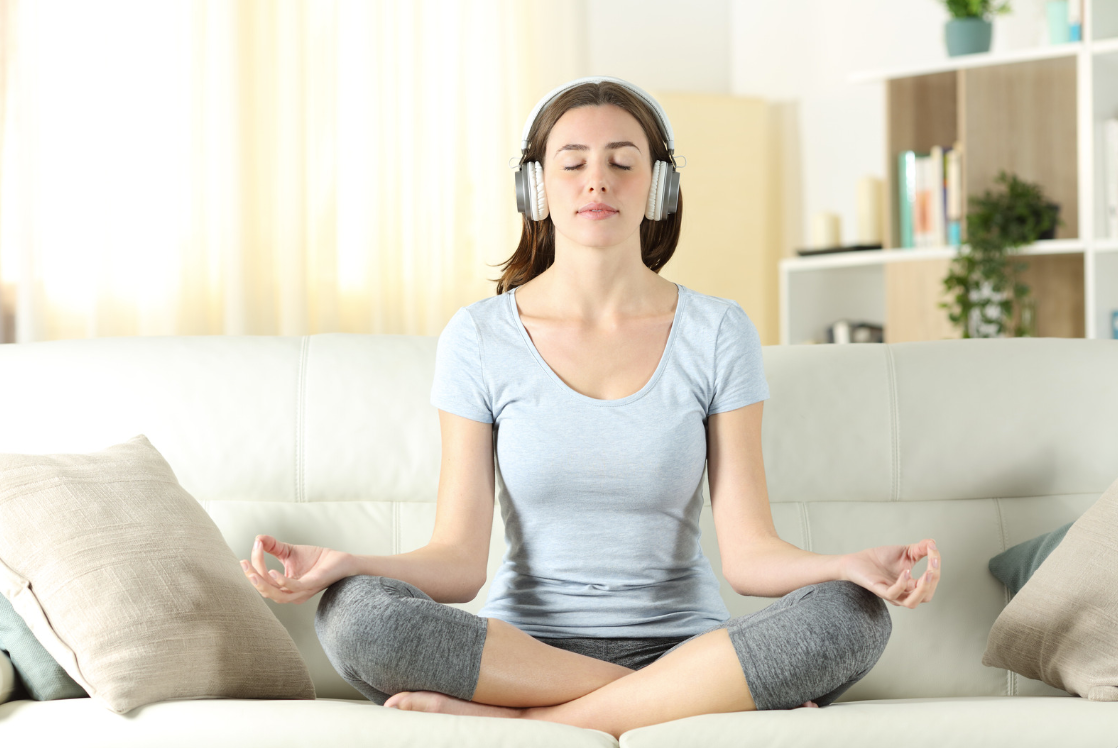
Meditation is a practice of deliberately placing attention, noticing when it wanders and returning without punishment. It does not require an empty mind, a cross-legged pose, special equipment or a dramatic spiritual experience. A useful session can last three minutes in a chair and still teach the central skill: notice, return and begin again.
How do you meditate?
Choose a physically comfortable position, let breathing remain natural, select one attention anchor and set a short timer. When thoughts, sounds or sensations pull attention away, acknowledge them and gently return. End by orienting to the room and deciding whether the practice supported or worsened your current state.
The six parts of a meditation session
Place
Choose a reasonably safe setting with manageable distractions.
Posture
Use a position your body can sustain without unnecessary pain.
Breath
Allow ordinary breathing rather than forcing a special rhythm.
Anchor
Select breath, sound, body, sight or a brief phrase.
Return
Notice wandering and come back without judging the mind.
Close
Open attention, move gently and return to ordinary activity.
What meditation is—and is not
Meditation can be used for attention training, reflection, spiritual practice or a deliberate pause. Methods differ across Buddhist, Hindu, Christian, Jewish, Muslim, secular mindfulness and other traditions. No single technique represents every tradition.
Meditation is not:
- A requirement to suppress all thought.
- A contest to tolerate pain or sit perfectly still.
- A proven way to predict the future or read another person’s mind.
- A replacement for sleep, food, medication, therapy or medical care.
- A guarantee of calm, healing, enlightenment or manifestation.
The related Meditation Benefits, Limits and Safe Practice Guide reviews benefit claims without duplicating the technique instructions on this page.
Choose a setting that supports attention
A completely silent room is not necessary. Choose a place where you are physically safe, unlikely to be interrupted by an emergency and free from driving or equipment responsibilities. Silence notifications when appropriate, but keep needed alarms and accessibility devices active.
- Use ordinary comfortable lighting.
- Keep open flames away from clothing, bedding and pets.
- Set a timer with a gentle, predictable sound.
- Tell another person when privacy is needed, if relevant.
- Keep a phone accessible when health or safety requires it.
Posture: comfort before appearance
The best posture is stable enough to support attention and comfortable enough to avoid unnecessary strain. An upright spine may help alertness, but “upright” does not mean rigid. Support the back, feet, knees, arms and head as needed.
| Position | How to set it up | When it may help | Possible adjustment |
|---|---|---|---|
| Chair | Feet supported, back resting or gently upright, hands on thighs or armrests | Most beginners, mobility limits, work breaks | Use a footrest, cushion or rolled towel |
| Floor cushion | Hips supported above knees, legs in a comfortable position | People already comfortable sitting on the floor | Sit against a wall or choose a chair instead |
| Kneeling bench | Weight supported by the bench rather than compressed ankles | Those who prefer kneeling and have suitable joint mobility | Stop for numbness, pain or circulation concerns |
| Lying down | Head, knees and painful areas supported | Fatigue, pain, disability or bedtime relaxation | Keep eyes open or bend knees if sleep or back discomfort is a concern |
| Standing | Feet comfortably apart, knees unlocked, support nearby | Short eyes-open practice or difficulty sitting | Avoid when dizzy or at fall risk |
| Walking | Use a safe, familiar route at an unhurried pace | Restlessness or preference for movement | Keep full attention on traffic, terrain and other people |
Pain, numbness and pins-and-needles are not signs of progress. Change position. People with injuries, pregnancy, balance concerns, chronic pain or other health conditions may need individualized advice from a qualified healthcare professional.
Should your eyes be open or closed?
Either option can work. Closed eyes reduce visual input but may increase sleepiness, imagery, panic or dissociation for some people. Eyes open with a soft, unfixed gaze may feel more grounding. Do not stare at the sun, bright lamps or a flame.
Eyes closed may suit you when
- You feel safe and remain oriented.
- Visual input is distracting.
- You are using body or breath awareness.
- You can reopen your eyes easily.
Eyes open may suit you when
- You become sleepy or detached.
- Closed-eye imagery is distressing.
- You are practicing in a public or clinical setting.
- You need greater orientation to the room.
Breathing: natural is enough
You do not need to breathe deeply. Notice the breath wherever it is easiest to feel: nostrils, chest, abdomen or the movement of clothing. Let the body choose the pace. If attention to breathing feels uncomfortable, use sound, touch or sight instead.
Forceful breathing, prolonged breath holding and hyperventilation can cause dizziness, tingling, chest discomfort, panic and feelings of unreality. Those sensations do not prove spiritual progress. Stop altered breathing and return to normal respiration.
Breathing safety
Seek medical help for chest pain, fainting, severe shortness of breath or symptoms that do not settle. People with respiratory, cardiac, neurological or pregnancy-related concerns should use appropriate clinical guidance before intensive breathwork.
Choose one attention anchor
An anchor is not meant to trap attention. It gives you a place to return.
Breath
Notice one inhale or exhale at a time without changing it.
Body contact
Feel feet, hands, seat or another neutral point of support.
Sound
Listen to nearby sounds without needing to name or remove them.
Visual object
Rest the gaze on a neutral, non-bright object without prolonged staring.
Phrase or mantra
Repeat a brief meaningful phrase at a comfortable pace.
Movement
Notice steps, stretching or another safe repetitive motion.
For phrase-based practice, read Meditation Mantras: Choosing, Repeating and Reflecting.
A five-minute meditation
- Set a timer for five minutes and choose a position.
- Notice the room, date and points of physical support.
- Let the face, shoulders and hands soften without forcing relaxation.
- Select one anchor.
- Notice one moment of contact with the anchor.
- When attention wanders, label it gently—“thinking,” “sound,” “planning” or “sensation.”
- Return to the anchor without arguing with the distraction.
- Repeat as many times as needed.
- When the timer ends, widen attention to the whole room.
- Move slowly and identify one next activity.
The return is the practice. A session with 50 distractions can contain 50 moments of noticing and returning.
What to do with thoughts
Thoughts do not need to stop. Trying to suppress them may make them more noticeable. Treat a thought as an event rather than an instruction.
- Notice: “A planning thought is here.”
- Allow: Do not debate or complete it during the session.
- Return: Bring attention back to the anchor.
- Record later: Write down a genuinely important task after the timer.
If a thought concerns immediate safety—such as a fire alarm, medical symptom or child needing help—end the meditation and respond appropriately.
What to do with emotions
Begin with emotions that are tolerable rather than the most overwhelming memory available. Notice where the emotion is felt, name it tentatively and maintain contact with the room. You can stop at any time.
Trauma, panic and dissociation may make sustained inward focus difficult. Eyes-open, externally focused or movement-based practice may be safer. A trauma-informed clinician can help choose a method and pace.
How long and how often?
Consistency matters more than duration. Three to ten minutes, three or more days a week, is a reasonable beginning. Increase by a few minutes only when the practice remains compatible with sleep, mood and daily functioning.
| Experience level | Suggested starting range | Primary goal |
|---|---|---|
| First week | 3–5 minutes | Learn setup, anchor and return |
| Early routine | 5–10 minutes | Practice consistently without strain |
| Established practice | 10–20 minutes if comfortable | Explore method depth while monitoring effects |
| Sensitive or difficult day | 30 seconds–3 minutes, eyes open | Orient and reduce overload |
Use the Meditation for Beginners: A Practical Seven-Day Plan for a structured first week.
Build a routine that can survive real life
- Attach meditation to an existing cue, such as after morning water or before opening email.
- Make the minimum session small enough to complete on a busy day.
- Keep the cushion, chair or timer easy to access.
- Track completion rather than chasing a particular feeling.
- Missed sessions do not need repayment through an extra-long session.
- Review monthly whether the practice still fits your needs.
Common beginner problems
I keep getting distracted
Distraction is expected. Shorten the session, use a clearer anchor and count every return as practice.
I fall asleep
Sit more upright, open the eyes, practice earlier or accept that rest may be the current need. Meditation should not replace sleep.
I feel restless
Try walking meditation, a shorter timer or an anchor with more sensory detail.
I feel nothing
No special sensation is required. Measure whether you practiced noticing and returning.
I feel worse
Stop, orient to the environment and choose a lower-intensity method. Persistent or severe distress deserves professional support.
Spiritual experiences during meditation
Some people report imagery, a sensed presence, insight, unity or sacred emotion. Interpretations vary by culture and belief. Record the experience without treating it as a command, diagnosis or guarantee. Maintain sleep, relationships, ordinary responsibilities and reality testing.
For belief-centered methods, see Spiritual Meditation: Meaning, Methods and Boundaries.
When meditation may not be the right tool
Pause and seek support when
- You lose substantial sleep or become unusually energized and impulsive.
- Panic, flashbacks or dissociation become more intense.
- Voices, visions or unusual beliefs become threatening or difficult to reality-check.
- You cannot work, care for yourself or maintain ordinary responsibilities.
- You have thoughts of harming yourself or someone else.
Use urgent or emergency services for immediate danger. In the United States and its territories, call or text 988 for crisis support.
The National Center for Complementary and Integrative Health discusses meditation evidence and reported adverse effects. The National Institute of Mental Health describes warning signs involving perception, sleep and functioning.
Medication and healthcare boundaries
Do not stop or change prescribed medication because a meditation feels powerful or because a teacher recommends it. Discuss symptoms, side effects and treatment changes with the prescribing clinician or pharmacist. Meditation may complement care when appropriate, but it is not a substitute for diagnosis or treatment.
How to evaluate whether meditation helps
Choose observable measures before beginning: session completion, sleep quality, ability to return to a task, time spent ruminating or tolerance of a specific low-risk situation. Review both benefits and harms. A practice that increases fear, insomnia, pain, dependency or financial pressure should be modified or stopped.
A balanced review
- What method and duration did I use?
- What changed during and after the session?
- How were sleep, mood and functioning over the next day?
- Did I become more flexible or more compulsive?
- What adjustment would reduce risk?
Related meditation guides
- Meditation for Beginners: A Practical Seven-Day Plan
- Spiritual Meditation: Meaning, Methods and Boundaries
- Meditation Mantras: Choosing, Repeating and Reflecting
- Meditation Benefits, Limits and Safe Practice Guide
- Channeling Meditation: Grounded Practice and Safety
Frequently asked questions
1. What is the simplest way to meditate?
Sit comfortably, notice natural breathing or another anchor for three to five minutes, and return whenever attention wanders.
2. Do I need to clear my mind?
No. The practice is noticing thoughts and returning, not eliminating thought.
3. Must I sit cross-legged?
No. A chair, supported floor position, lying down, standing or safe walking can work.
4. Should I breathe deeply?
Natural breathing is enough. Forced deep breathing can cause dizziness or panic in some people.
5. Should my eyes be open or closed?
Either is acceptable. Use eyes open when closed eyes increase sleepiness, fear, imagery or dissociation.
6. How long should a beginner meditate?
Three to five minutes is a practical starting range.
7. How often should I meditate?
Several short sessions a week can build consistency. Increase only when the practice remains helpful.
8. What should I focus on?
Choose breath, sound, body contact, a neutral object, movement or a brief phrase.
9. Is distraction a failure?
No. Noticing distraction and returning is the central skill.
10. What if meditation makes me sleepy?
Practice earlier, sit upright, open your eyes or prioritize sleep if rest is needed.
11. Can I meditate with chronic pain?
Use supportive posture and a tolerable anchor. Seek individualized medical guidance and stop if pain worsens.
12. Can meditation worsen anxiety?
It can for some people. Shorten, modify or stop the practice and seek support if distress persists.
13. Can meditation replace therapy or medication?
No. It may complement care but should not replace qualified treatment or prescribed medication.
14. What if I see images or hear words?
Record them neutrally and maintain reality checks. Seek help if experiences are threatening, persistent or hard to distinguish from external events.
15. How should I end a session?
Widen attention to the room, open your eyes if closed, move gently and identify the next ordinary activity.