

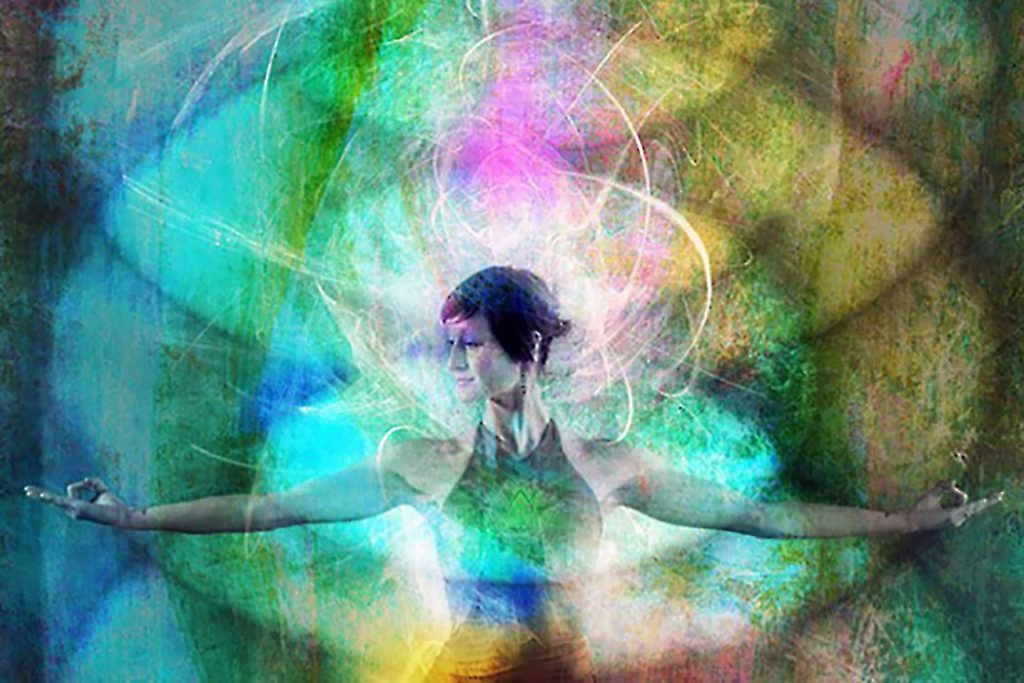
Some spiritual practitioners describe seeing an aura as noticing a soft outline, brightness or color near a person or object. Similar visual effects can also arise from contrast, afterimages, peripheral vision, lighting, eye fatigue and expectation. You can explore the experience safely as a brief observation exercise, but it should not be used to diagnose health, judge character or ignore new vision symptoms.
How can you practice seeing an aura?
Use a softly lit room and a plain neutral background. Look near—not directly at—the edge of your own hand for no more than twenty to thirty seconds, blink normally, then rest your eyes on another surface. Record the outline or color you noticed before interpreting it. Never stare at the sun, a bright lamp, laser, flame or intense screen.
The five-step safe viewing method
Light
Choose comfortable, even light without glare or darkness.
Background
Use a plain white, gray or beige wall with good contrast.
Soft gaze
Look beside the edge while blinking normally for under thirty seconds.
Rest
Look away, blink and stop if your eyes ache, blur or feel strained.
Record
Write the visual effect first and any spiritual meaning separately.
A beginner hand exercise
- Sit in ordinary room light with a plain wall behind your hand.
- Hold your hand about an arm’s length away rather than close to your eyes.
- Relax your shoulders and blink normally.
- Look at a point just beside one finger for ten to twenty seconds.
- Notice only what is observable: pale edge, blur, brightness, color or nothing.
- Look away at a neutral surface and rest for at least thirty seconds.
- Repeat only once if comfortable.
Do not rub your hands and hold them inches from your eyes, remain in a dark room for ten minutes or strain until colors appear. Longer staring makes ordinary visual adaptation more likely and does not make an interpretation more accurate.
Why outlines and colors may appear
| Visual experience | Possible visual explanation | Spiritual use, if desired |
|---|---|---|
| A pale glow at an edge | Contrast between the hand and background, light scatter or peripheral sensitivity | Use it as a cue to pause and notice your present mood. |
| A complementary color after looking away | Temporary adaptation of color-sensitive cells can create an afterimage | Do not assume the color is a fixed aura trait. |
| An outline that seems to move | Small eye movements, blinking and shifting attention can change the edge | Record the movement without assigning a message. |
| Transparent strands or spots | Floaters may become noticeable against a bright wall or sky | Do not interpret sudden new floaters as spirits or energy. |
| Colors influenced by clothing | Reflected color and contrast from nearby surfaces | Change the clothing or background and compare. |
| Different results each session | Lighting, fatigue, focus, expectation and environment vary | Treat the experience as subjective rather than a stable measurement. |
What is an afterimage?
After looking at a color or high-contrast edge, a temporary image may remain or appear in a complementary color when you look elsewhere. This is a normal visual effect in many circumstances. It can be especially noticeable after staring without blinking. An afterimage is not evidence of an aura and should not be prolonged deliberately.
Test the effect
- Change the wall color.
- Change clothing or remove colored objects.
- Use shorter viewing time.
- Compare direct and peripheral gaze.
- Ask whether the color follows your vision when you look away.
Protect your eyes
- Blink normally.
- Use comfortable light.
- Stop with pain, headache or persistent blur.
- Wear prescribed corrective lenses.
- Do not practice while driving or walking near hazards.
Seeing another person’s aura
Ask for consent before staring at or interpreting someone. Have the person stand comfortably against a neutral wall in ordinary light. Look briefly near the shoulder rather than fixing on the eyes. Do not announce health, trauma, dishonesty or danger from a color. The observer’s expectations, the subject’s clothing and the room all affect what is perceived.
A visual impression cannot tell you who someone is
Use communication and behavior to evaluate trust, consent and compatibility. A pleasant color does not prove safety, and a dark or unclear outline does not prove illness or bad character.
Can cameras photograph an aura?
Commercial aura portraits generally add colored overlays based on sensors, software or a chosen interpretation system. Kirlian photography records electrical corona discharge under high voltage. These images may be artistic or spiritually meaningful, but neither method provides a medical or personality diagnosis. The Aura Meaning guide explains the difference.
Floaters and flashes are not aura colors
Floaters can look like spots, threads, squiggly lines or cobwebs and may be more visible against white paper or a blue sky. The National Eye Institute explains that many floaters are related to normal eye changes, but sudden new floaters can also signal a serious condition.
Get urgent eye care for sudden warning signs
Seek an eye doctor or emergency room right away for many new floaters that appear suddenly, flashes of light, a dark curtain or shadow, a new blurry area, sudden loss of vision, or symptoms after an eye injury. A retinal tear or detachment can be a medical emergency. Do not wait for an aura reading or cleansing.
Other symptoms that need evaluation
Persistent halos, double vision, eye pain, severe headache, new light sensitivity, visual distortion or recurring unexplained changes deserve qualified assessment. Migraine, medication, eye conditions and neurological issues can affect vision. Only a clinician can evaluate the cause.
What not to use for aura practice
- The sun, eclipse or reflected sunlight
- Lasers or high-intensity flashlights
- Bright candles or flames used as staring targets
- High-voltage Kirlian equipment without appropriate technical expertise
- Dark rooms where falls or panic are possible
- Practice while intoxicated, sleep deprived or driving
How to keep a viewing journal
Create separate columns for conditions and meaning:
| Conditions | Observation | Interpretation | Check |
|---|---|---|---|
| Gray wall, daylight, white sleeve, 15 seconds | Pale blue edge near fingers | Blue reminds me of calm communication | Repeat with a different sleeve and shorter gaze |
| Warm lamp, dark shirt, tired eyes | Yellow outline that followed gaze | Initially felt energetic | Likely afterimage; rest eyes |
This structure lets a spiritual association remain meaningful without confusing it with a repeatable visual fact.
Should children practice aura viewing?
Do not encourage prolonged staring or tell a child that ordinary visual effects prove special powers. A child who reports flashes, shadows, vision loss or distress needs calm adult support and appropriate eye or medical care. Spiritual ideas can be presented as stories or beliefs rather than tests of identity.
When aura practice becomes unhelpful
Stop if the exercise causes headaches, anxiety, compulsive checking, sleep loss or fear of people based on colors. Also pause if you feel watched, controlled or commanded by visual experiences. Seek qualified mental-health or medical support when perception changes interfere with daily life.
Frequently asked questions
1. Can everyone learn to see an aura?
People may notice outlines or colors with practice, but these experiences are subjective and can be influenced by ordinary visual effects.
2. What is the easiest aura exercise?
Look briefly beside your hand against a neutral wall in comfortable light, blink normally and rest after twenty to thirty seconds.
3. Why do I see a white outline around my hand?
Contrast, light scatter and peripheral vision can create a pale edge. It may still be used as a reflective prompt without treating it as proof.
4. Why does the color change when I look away?
A color that follows your gaze or changes on another surface is often an afterimage caused by visual adaptation.
5. Should I practice in a dark room?
No. Use comfortable ordinary light. Darkness can increase strain, uncertainty and fall risk.
6. How long should I stare?
Do not stare. Use a soft gaze for no more than twenty to thirty seconds and blink normally.
7. Can I see an aura around a magnet?
You may notice contrast or visual effects around any object. That does not show a spiritual or magnetic field visible to the eye.
8. Can aura colors reveal health?
No. Aura colors cannot diagnose physical or mental conditions. Seek qualified care for symptoms.
9. Can aura colors reveal whether someone is lying?
No. Evaluate truth through evidence, consistency and communication.
10. What are floaters?
They are spots, threads or cobweb-like shapes that drift across vision, often more visible against a bright background.
11. When are floaters urgent?
Get urgent care for many sudden new floaters, flashes, a curtain or shadow, new blur or vision loss.
12. Is aura photography the same as seeing an aura?
No. Commercial systems generate colored images through sensors or software, while human viewing is a subjective visual experience.
13. Can glasses or contacts affect the exercise?
Yes. Use prescribed correction and do not remove it merely to create blur or color effects.
14. Why do I get a headache?
Eye strain, lighting, posture, migraine or another issue may contribute. Stop the exercise and seek care if headaches are severe or recurring.
15. Can I interpret someone else without permission?
Avoid prolonged observation or personal claims without consent. Never use a color impression to diagnose or accuse someone.