


A hallmark of a real partnership is trust and honest communication. When a habit around phones starts to bother you, talk about the conduct you can describe and the agreement you would like to make together.
A screen lock protects work information, financial details and other people’s private messages. Each partner can choose to keep a passcode private.
Phones connect us to work, family and friends. If one of you starts checking messages through a conversation or cancels shared plans to keep chatting online, you can discuss that change and how it affects your time together.
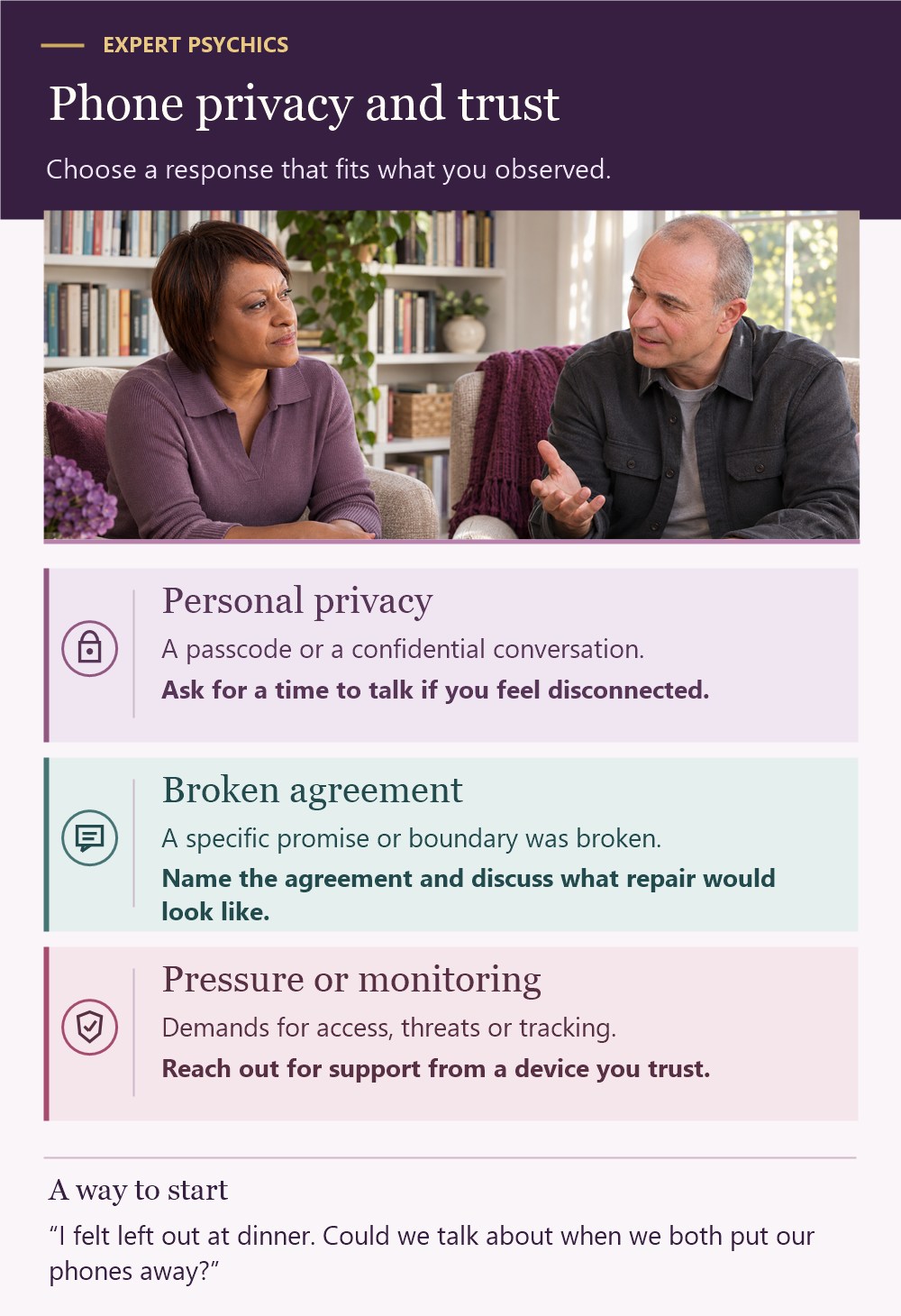
Start by identifying what you observed. A phone on silent, a broken promise and a demand to inspect messages raise different questions.
What are you actually concerned about?
Privacy. A partner may keep a passcode private because their phone holds work information or a friend’s confidence. You can ask for more shared attention or talk about what you expect from each other. See love is respect’s guide to digital boundaries for examples of phone and account boundaries.
A broken agreement. If there’s a specific promise you both understood and one person broke it, name the agreement and the behavior you know about. Ask what repair would mean in practice, including what each person can choose and how you’ll review the arrangement.
Pressure or monitoring. Demands for access, tracking or threats can be part of a pattern of control. If you feel unsafe, you can seek confidential help using a device you trust. The National Domestic Violence Hotline has guidance on technology-facilitated abuse and safety planning.
Talk about the concern behind the password request.
If you feel tempted to check a partner’s messages, ask what you want to know. A conversation about an agreement you made together gives both people a chance to explain what happened and what they can do next.
Phones can create separate realities.
Phones and their apps can build a separate reality. It is no secret that there is an attractiveness to the anonymity of the internet and phones make this incredibly tempting.
Since it is so tempting, a phone can become an extension of the person. If you don’t trust your partner to stay in reality with you because of the temptation of the phone, perhaps you aren’t in the right relationship.
It’s not an extra limb.
Some people are so connected to their phones it’s almost as if it is part of their body. While it is important to be connected a phone should not get in the way of reality.
Do you love them?
Make sure that you are with someone that you can love and trust. Trust between partners is the most important thing that can happen in a relationship. Without trust, the relationship will never be as strong and as special as you hope that it can be.
If you want to build a life together, decide how you will protect time for each other and handle concerns as they come up. Each person can be open about commitments while respecting personal information and the privacy of people who message them.
How to start the conversation
When you want more attention at dinner
Say what you observed and make a request both people can answer. “We paused our conversation three times for messages last night. Could we put our phones aside until we finish eating?” If one person expects an urgent call, agree ahead of time how to handle it.
When a specific promise needs repair
Suppose you both agreed to tell each other if you resumed talking to a former partner. If you learn the conversation started again, you can say, “We agreed we’d tell each other if that happened. I’d like to understand what changed and whether we still agree on that boundary.” Pay attention to the response and what follows over time.
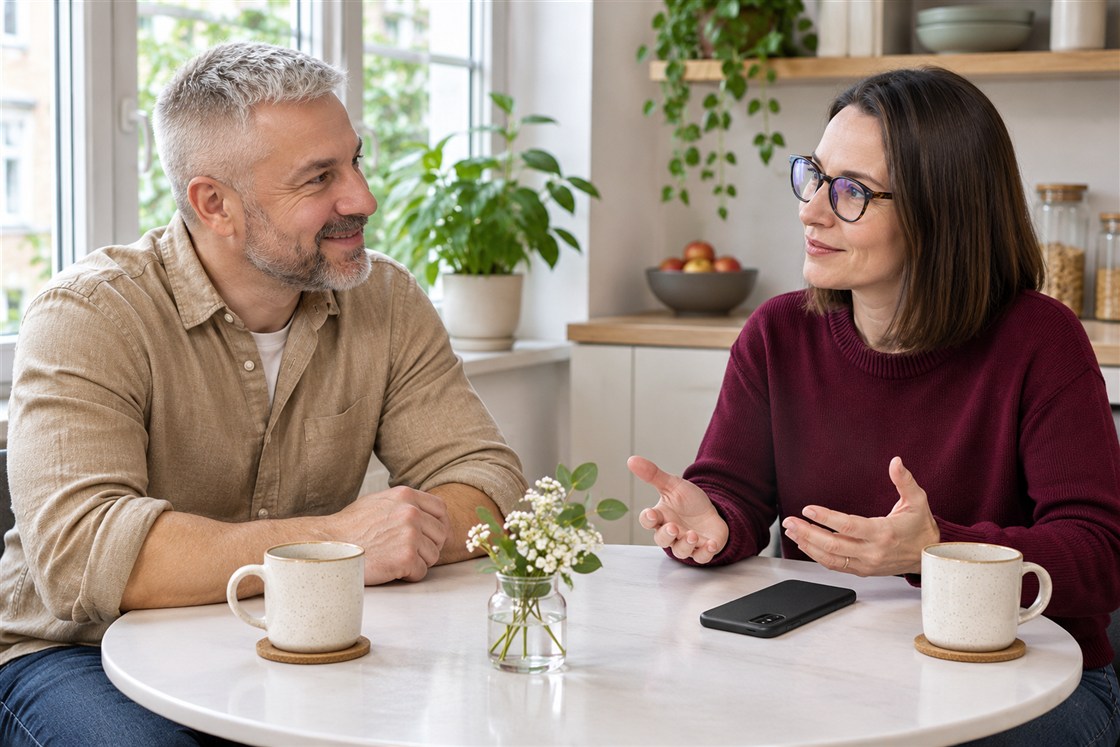
Agree on the boundaries you actually need
Talk through three subjects separately. Decide when you want phone-free time together, what you each want to keep private and which services or devices you use jointly. If you share a calendar or account, discuss who can see it and how either person can change the arrangement. Revisit the agreement after you’ve tried it for a week.
Psychic Love Experts – Supernatural Readings
Frequently asked questions
1. Is it normal for partners to keep their phone passcodes private?
Yes. People can protect work messages, a friend’s confidence or other personal information while being honest about their relationship agreements.
2. Does putting a phone face down mean someone is cheating?
A face-down phone can mean many things, including an attempt to avoid notifications. If what concerns you is a change in how much attention you get, talk about that behavior and ask what has changed.
3. How can I raise a concern about phone use without demanding access?
Choose a moment when you can both talk and name the behavior you saw. You might say, “We were talking at dinner and you kept checking messages. Could we agree when to put our phones away?”
4. What if we disagree about what counts as private?
Talk about specific situations, including work messages, friends’ confidences, shared accounts and location sharing. Agree on what each person can choose independently and when to revisit a shared arrangement.
5. What if my partner broke a specific agreement?
Name the agreement and the conduct that broke it. Ask what would need to change and decide whether the follow-through you see gives you enough reason to rebuild trust.
6. What if my partner demands my passwords or tracks my phone?
If you feel unsafe or monitored, use a device you trust to seek confidential support from a domestic violence advocate or another person you trust. An advocate can help you weigh options and plan for safety.